









OSAKA — Safety protocols for Osaka’s centuries-old “danjiri” festivals are under intense scrutiny this week following a pair of tragic accidents that left two participants dead. The fatalities, which occurred just hours apart on October 10, have ignited a polarized public debate over whether these high-stakes cultural traditions can be maintained in the modern era or if they should be abolished entirely.
The danjiri festivals are iconic for their massive, intricately carved wooden floats, which can reach heights of four meters and weigh several tons. The highlight of the events involves teams of men hauling the floats through narrow city streets at high speeds, executing daring, sharp-angled turns that draw thunderous applause from local crowds.
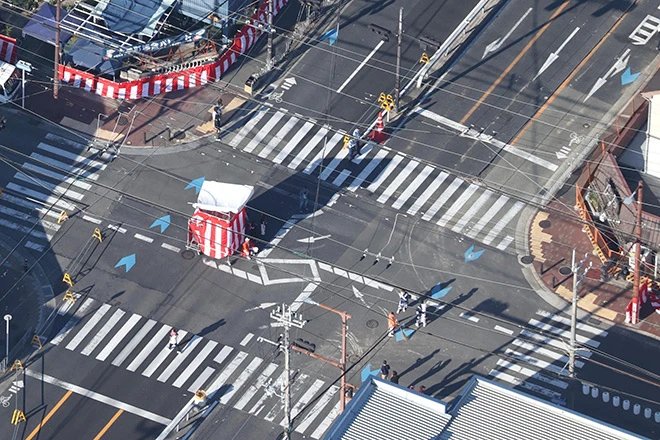
However, the thrill of the maneuver turned to horror on Thursday. In the city of Izumiotsu, a 48-year-old man was killed when his team’s float lost its balance and overturned while attempting a right turn. Just 16 kilometers away in Izumisano, another man, aged 51, died under similar circumstances when his float collapsed during a turn. Witnesses at both scenes described the collapses as sudden and catastrophic.
The incidents were captured on video and quickly went viral on social media, sparking immediate backlash. Critics argued that the inherent risks of the maneuvers are no longer justifiable, with many calling for an immediate end to the tradition. Conversely, many residents expressed that abandoning the historic festivals would be a devastating blow to the local heritage.
The accidents have also highlighted a murky landscape of responsibility. In Izumiotsu, the local board of education provides annual subsidies for the event, yet officials insist that the city has little control over safety logistics, leaving the burden on neighborhood associations. Experts suggest this decentralized oversight is part of a growing problem.
Hisao Arimoto, an associate professor of sociology at Konan Women’s University, noted that the intensity of these festivals has shifted over the decades. Since the late 1980s, many festivals began prioritizing speed and aggressive maneuvers to attract younger participants. While the famous Kishiwada Danjiri Festival employs a strict, centralized safety hierarchy, surrounding municipalities—often lacking similar manpower or professional organization—have struggled to replicate those standards.
“There will be a need for even greater consideration for safety measures from now on,” Arimoto stated, noting that the instant, global visibility provided by social media means that local organizers can no longer operate under the radar when things go wrong.
As local authorities grapple with the aftermath of the tragedies, organizers face the daunting challenge of modernizing centuries-old customs to prevent further loss of life without extinguishing the spirit of the event. For now, the question remains whether the price of tradition has finally become too high to pay.
Disclaimer: This content is auto-generated for informational purposes only.
Source: Read Original News