








HONG KONG—China’s economy recorded a 4.5% growth rate for the July-September quarter, a stronger-than-expected performance driven by a surge in exports. The data, released Monday, marks an acceleration from the 4.3% growth recorded in the second quarter—the country’s slowest expansion in over three years—and places Beijing closer to achieving its official annual growth target of 4.5% to 5%.
While the headline figures suggest stability, economists warn that the numbers mask deeper structural vulnerabilities. The growth trajectory is heavily reliant on a trade engine that is increasingly causing friction with global partners. With domestic demand suppressed by a prolonged property market downturn and dampened household wealth, China has leaned heavily into manufacturing and exports to sustain its momentum.
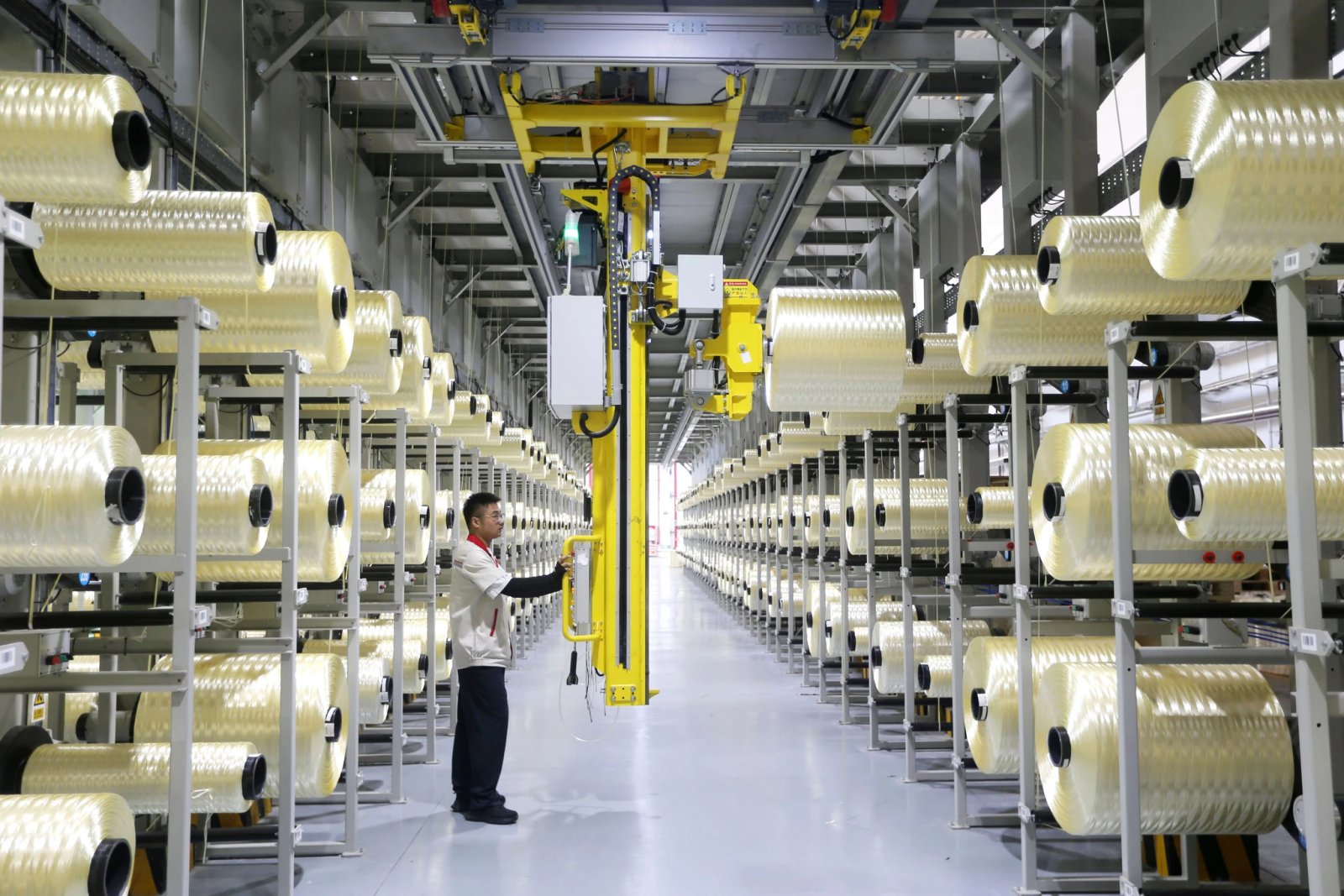
This strategy has yielded massive results: China logged a 36% growth in exports last month alone, pushing its global trade surplus for the first nine months of the year to $938 billion. The country is now on track to surpass last year’s record $1.2 trillion surplus. High-tech sectors, particularly semiconductors and electric vehicles, have become the primary drivers of this expansion. These industries have benefited from significant government subsidies, allowing China to scale production rapidly despite weakening consumption at home.
However, this export-heavy model is drawing significant international scrutiny. As Chinese goods flood global markets at highly competitive prices, trading partners are increasingly voicing concerns over the impact on their own domestic industries.
“It is untenable and unsustainable for the world’s second-largest economy to rely on foreign demand to prop up its own growth,” said Eswar Prasad, a professor of economics and trade policy at Cornell University. Prasad argued that by maintaining persistent and outsized trade surpluses, China has become a “drag on world growth” rather than an engine for it.
The European Union, which currently faces a trade deficit with China exceeding $1.1 billion per day, has been particularly vocal. The bloc recently reached an agreement to curtail imports of Chinese hybrid vehicles in an effort to rebalance trade. Meanwhile, elevated U.S. tariffs have forced Beijing to pivot its export focus toward Southeast Asia, Latin America, and Europe, even as it pursues greater self-sufficiency to insulate itself from Western trade controls.
Analysts caution that the official GDP figures are becoming an unreliable metric for the broader economic health of the nation. “The headline official growth figure is an increasingly poor indicator of how the broader economy is performing,” said Max Zenglein, Asia Pacific senior economist at The Conference Board. He noted that the data hides widening disparities across different regions and households.
As Beijing approaches the end of the year, it faces a complex balancing act: while the current strategy keeps it on track to meet annual growth targets, the resulting international tensions and domestic economic imbalances present long-term challenges that may prove far more difficult to manage than the external pressures currently fueling its export surge.
Disclaimer: This content is auto-generated for informational purposes only.
Source: Read Original News