









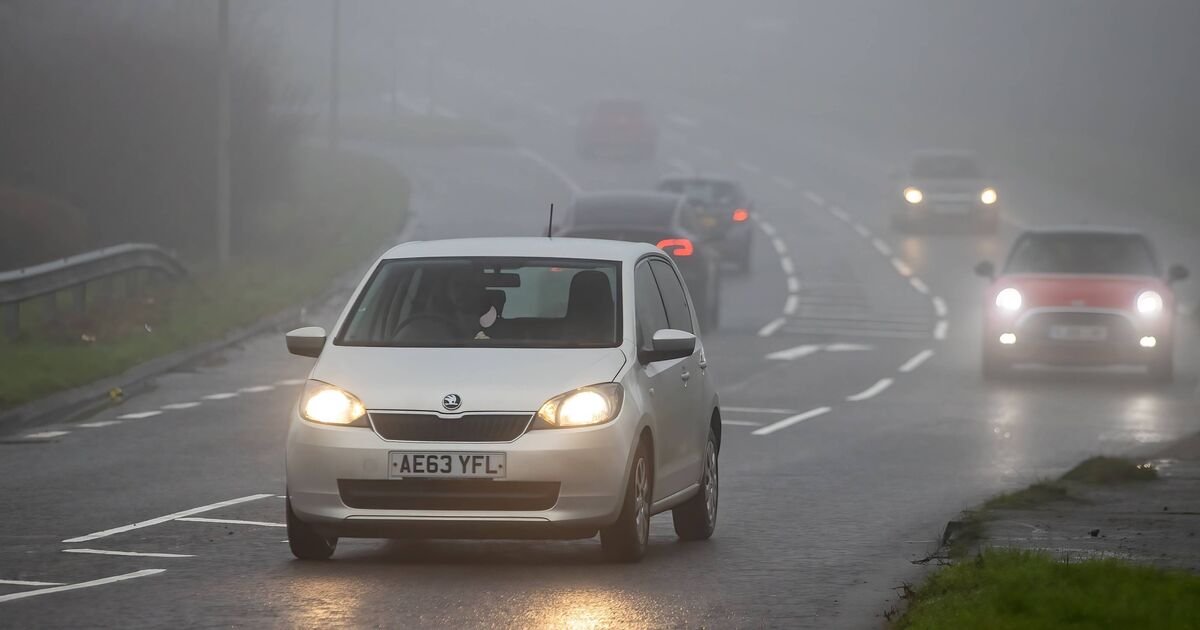
The return of autumn brings a unique set of challenges to our daily routines. While we might be trading our light jackets for heavier coats and enjoying the crunch of fallen leaves, the shift in weather patterns also means navigating thick, unpredictable fog on our morning commutes. It is easy to feel confident behind the wheel when you know the route like the back of your hand, but low-visibility days require a significant change in how we approach our time on the road. Staying safe during these misty mornings is less about complex maneuvers and more about adjusting your habits to account for the lack of light.
Mastering the three-second rule
When the sun is shining and the roads are dry, most of us follow the standard advice of maintaining a two-second gap between our vehicle and the one ahead. However, when the world turns grey and hazy, that distance simply is not enough. Road safety experts suggest bumping this up to a three-second gap. This extra breathing room provides you with the precious time needed to react if the car in front of you brakes suddenly. In thick fog, your perception of speed and distance is skewed, making it hard to tell if a vehicle ahead is moving or stationary. By lengthening your following distance, you create a buffer that keeps you and your fellow travelers out of harm’s way.
The truth about automatic headlights
Many of us have grown accustomed to the convenience of modern vehicle technology, especially automatic headlights. We tend to trust that our cars know exactly when to illuminate the path ahead. In reality, these systems often fail us during foggy daylight hours. Many sensors are programmed to detect darkness rather than poor visibility, meaning your lights may stay off even when you are essentially driving through a thick cloud. Relying on daytime running lights is another common trap, as these often fail to illuminate the rear of your car, leaving you invisible to those behind you. Take manual control of your dashboard settings. Turn on your dipped headlights to ensure you can clearly see the road and, perhaps more importantly, that other drivers can spot your silhouette in the haze.
Navigating fog lights and visibility
Fog lights are your best friend when the world turns opaque, but they come with a strict set of etiquette rules. While they are essential for severe visibility issues, they are also incredibly bright. If you leave them on after the mist clears, you risk dazzling oncoming drivers and masking your own brake lights. This creates a dangerous scenario where the person behind you cannot tell when you are slowing down. Since autumn weather is notoriously patchy—one minute you are in a thick blanket of white and the next you are in clear sunlight—be prepared to flick those switches frequently. Think of your fog lights as a tool for extreme conditions only, and treat them with the respect they deserve by switching them off the moment the view improves.
Listening for danger at junctions
Junctions are always high-stakes areas, but they become particularly treacherous when you cannot see past the next fifty yards. When you approach a junction in dense fog, the best strategy is to slow down significantly and give yourself more time to evaluate your surroundings. In quiet areas, you can even crack your window open to listen for the sound of approaching engines or tires on the pavement. This auditory check serves as an additional layer of protection. Remember, though, that this is just a backup plan. Never pull out into traffic until you have performed a thorough visual check. There is no reward for shaving a few minutes off your travel time if it means rushing into an intersection without complete certainty. Slowing down and driving to the limits of what you can actually see is the smartest way to arrive at your destination in one piece.
Disclaimer: This content is auto-generated for informational purposes only.
Source: Read Original News