








From Crisis to Core Strategy: How Jamaica’s Edmund Bartlett is Rewriting the Global Tourism Agenda
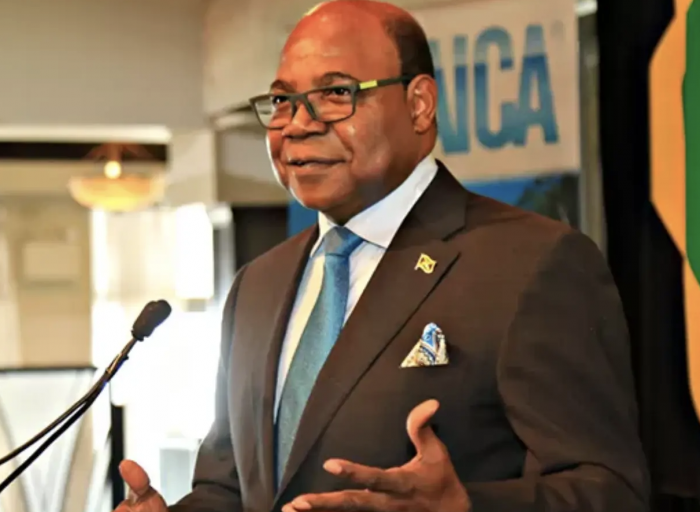
As the travel and tourism industry faces an era of unprecedented volatility, the concept of “resilience” has graduated from a corporate buzzword to the cornerstone of global economic policy. At the forefront of this shift is Jamaica’s Minister of Tourism, the Hon. Edmund Bartlett, who has long championed the integration of resilience into the very fabric of tourism strategy.
In a milestone for both the industry and his own diplomatic career, Minister Bartlett has been invited to co-chair the World Economic Forum’s Beyond Tourism Day 2026 in Geneva on September 25th. This high-level, closed-door gathering will convene approximately 80 global leaders from government, finance, and civil society under the theme “Resilient Growth. Renewed Impact.”
Moving Beyond Recovery
For Minister Bartlett, the appointment represents the culmination of years of advocacy. “Resilience can no longer be treated as an abstract concept or a response mechanism activated after a crisis,” he told Breaking Travel News. “It must become part of the operating architecture of global tourism.”
The agenda in Geneva is set to address the structural hurdles currently hampering the sector, including workforce shortages, rapid technological disruption, climate-related constraints, and the geopolitical tensions that have increasingly disrupted global transit.
A Sector Under Pressure
The urgency for this shift is clear. The tourism industry—which contributed a staggering $11.6 trillion to the global economy in 2025—is uniquely vulnerable to “horizontal” risks. Whether it is a regional conflict disrupting aviation fuel supply chains, a cyberattack paralyzing an airline’s infrastructure, or extreme weather events rendering a destination inaccessible, the interconnected nature of the modern world means that a local shock often leads to global tremors.
The current Gulf crisis serves as a stark reminder of these systemic fragilities. With air corridors restricted and fuel costs rising, regional forecasts indicate a temporary contraction, even as the Middle East remains the world’s fastest-growing long-term tourism market.
The Architect of Resilience
Minister Bartlett’s global influence began with a domestic vision. In 2018, he established the Global Tourism Resilience and Crisis Management Centre (GTRCMC) in Jamaica, creating an institutional framework for research, data analysis, and policy development. His efforts eventually led to the United Nations’ official designation of February 17th as Global Tourism Resilience Day, a movement that has since expanded from the Caribbean to conferences in Nairobi and beyond.
Justin Cooke, Editor-in-Chief of Breaking Travel News, notes that the industry’s adoption of resilience is reflected in a fivefold increase in search interest since 2022. “Minister Bartlett understood this earlier than most,” says Cooke. “He recognized that resilience is not simply about recovering from the last crisis. It is about developing the intelligence, agility, and institutional capacity required to anticipate the next one.”
The Road Ahead
Ahead of the Geneva forum, Minister Bartlett will pivot toward human capital as a key pillar of the resilience agenda at WTM Spotlight Riyadh in early September. There, he will join leaders to discuss the workforce development required to support the massive growth targets set by Saudi Arabia, emphasizing that physical infrastructure is meaningless without a skilled, protected, and empowered labor force.
Looking toward the future, the Minister is now advocating for a Global Tourism Resilience Fund. Such a vehicle would provide the financial backing for early-warning systems, cybersecurity, and rapid technical assistance—moving the industry from a reactive state to one of proactive, sustained growth.
As the global community converges in Geneva, the message from Jamaica is clear: in an age of continuous disruption, the ability to navigate change is the ultimate competitive advantage. The rise of resilience is, quite simply, the new blueprint for global growth.