






A drought is when there is a longer than expected period of dry weather, leading to a shortage of water.
Drought can affect people, plants and animals, and can cause rivers and lakes to dry up.
You can read more about droughts and what they mean here.
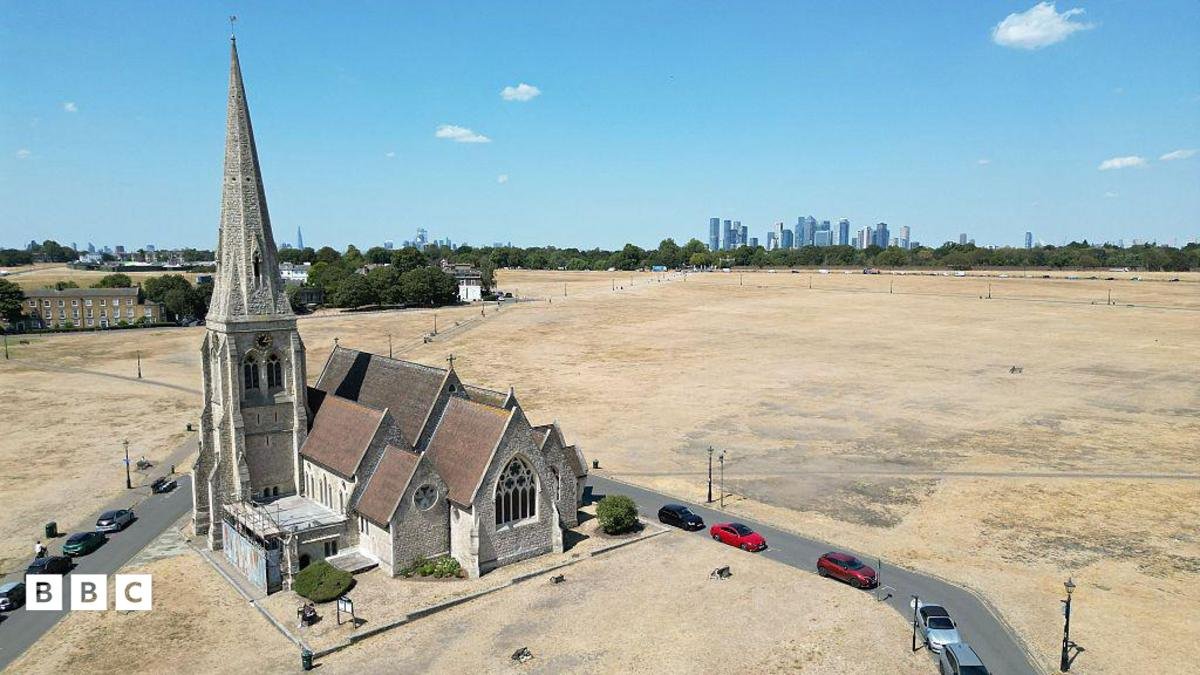
This summer has been especially hot and dry across much of the UK, with three widespread heatwaves and some parts of the country going more than a month without rainfall.
England, Wales and eastern Scotland have been the driest areas over recent weeks, and this follows a very dry spring in similar regions.
A lack of rainfall can be one cause of drought, but high temperatures can also contribute by causing water to evaporate from the soil.
Across the UK, water is collected in places called reservoirs which help supply clean, fresh water to homes and businesses around the country throughout the year.
But if there is a long time with little to no rain, then reservoirs may not have enough water to go around.
While droughts happen naturally, scientists say that climate change is increasing the risks, with higher summer temperatures drying out soils more quickly.
This can lead to more severe and longer-lasting droughts.