









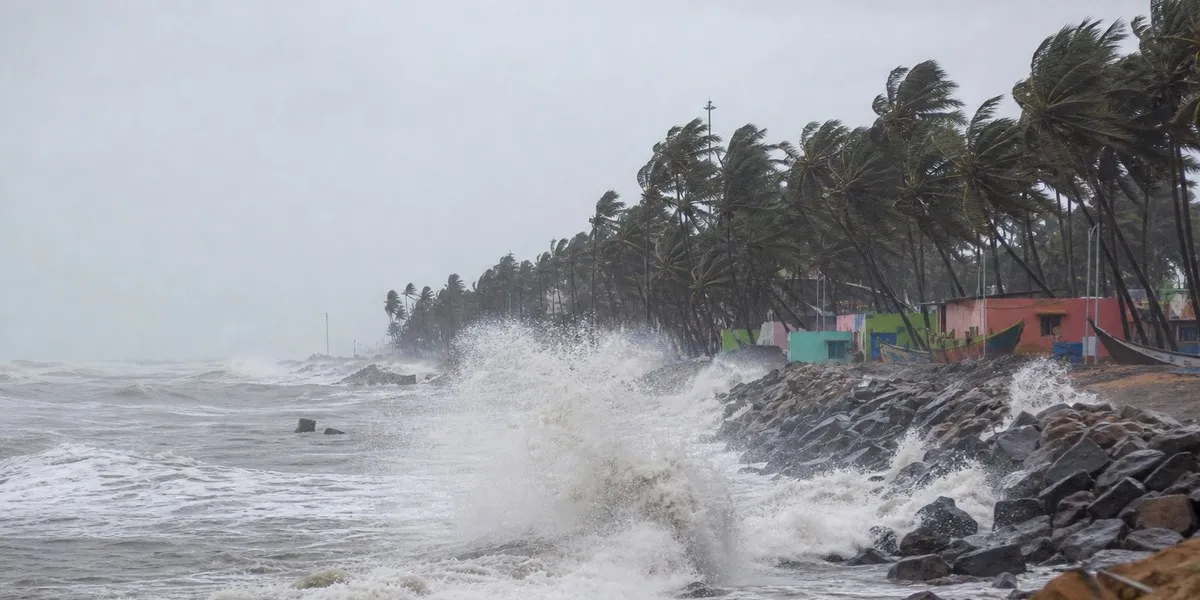
Cyclone Murasu Strikes Andhra Pradesh Coast: State on High Alert as Power Infrastructure Faces Threat
VIJAYAWADA – A severe cyclonic storm, named Murasu, slammed into the southern coastline of Andhra Pradesh early Tuesday morning, ushering in a period of intense atmospheric instability across the region. The India Meteorological Department (IMD) confirmed that the storm’s landfall commenced at approximately 1:00 a.m. local time, bringing with it ferocious winds and torrential downpours.
Landfall and Meteorological Impact
According to the latest bulletins issued by the IMD, the cyclone’s eyewall began crossing the coast during the early hours, with the storm’s core centered directly over the state’s southern districts. The weather system has been whipping the coastline with wind speeds reaching up to 110 km/h, causing widespread concern for coastal infrastructure and residential areas. The landfall process remained ongoing through the early morning, with meteorologists closely monitoring the storm’s trajectory and intensity as it pushes inland.
The arrival of Murasu follows closely on the heels of Cyclone Arnab, which struck the southern coast just days prior. That previous storm left a trail of destruction in its wake, tragically claiming five lives and highlighting the precarious nature of the region’s current weather pattern.
Emergency Response and Evacuation Efforts
In anticipation of the severe weather, Andhra Pradesh Chief Minister Chandrababu Naidu convened emergency meetings with top state officials to oversee disaster mitigation strategies. The government has directed administrative machinery to remain on high alert to handle any exigencies caused by the storm.
Local authorities have been working tirelessly to move residents from low-lying areas and vulnerable coastal settlements to government-designated relief camps. The scale of the precautionary efforts extends beyond state borders; in neighboring Odisha, local authorities successfully relocated 151,434 people to safer, high-ground facilities to prevent loss of life in the event of flooding or storm surges.
Infrastructure at Risk
A primary concern for the state administration is the preservation of the electrical grid. Preliminary damage assessments conducted by energy department officials indicate that Cyclone Murasu poses a significant risk to the state’s power infrastructure.
“We are bracing for substantial damage to our distribution network,” stated a government spokesperson. Current estimates suggest that the cyclone could potentially snap or uproot between 6,000 and 8,000 electricity poles. Such widespread damage would likely lead to prolonged power outages across affected districts, complicating recovery operations and impacting public services. Disaster response teams are reportedly stationed at strategic locations, equipped with the necessary machinery to initiate rapid restoration efforts as soon as weather conditions permit.
As the state grapples with the impact of Murasu, the government has urged citizens to remain indoors and follow official safety directives. The Meteorological Department continues to monitor the storm’s path, with warnings of heavy rainfall and high-velocity winds expected to persist in inland areas throughout the day. Officials remain hopeful that the proactive evacuation measures will significantly reduce the potential for human casualties.
Disclaimer: This content is auto-generated for informational purposes only.
Source: Read Original News