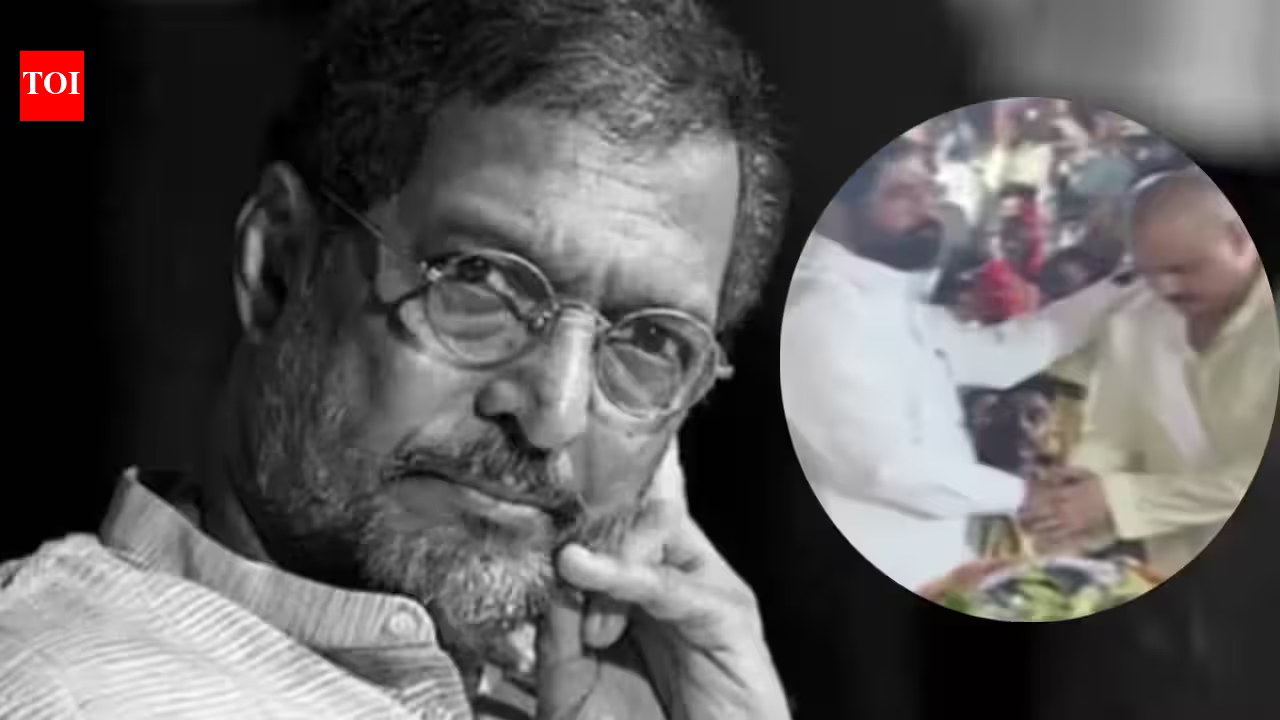







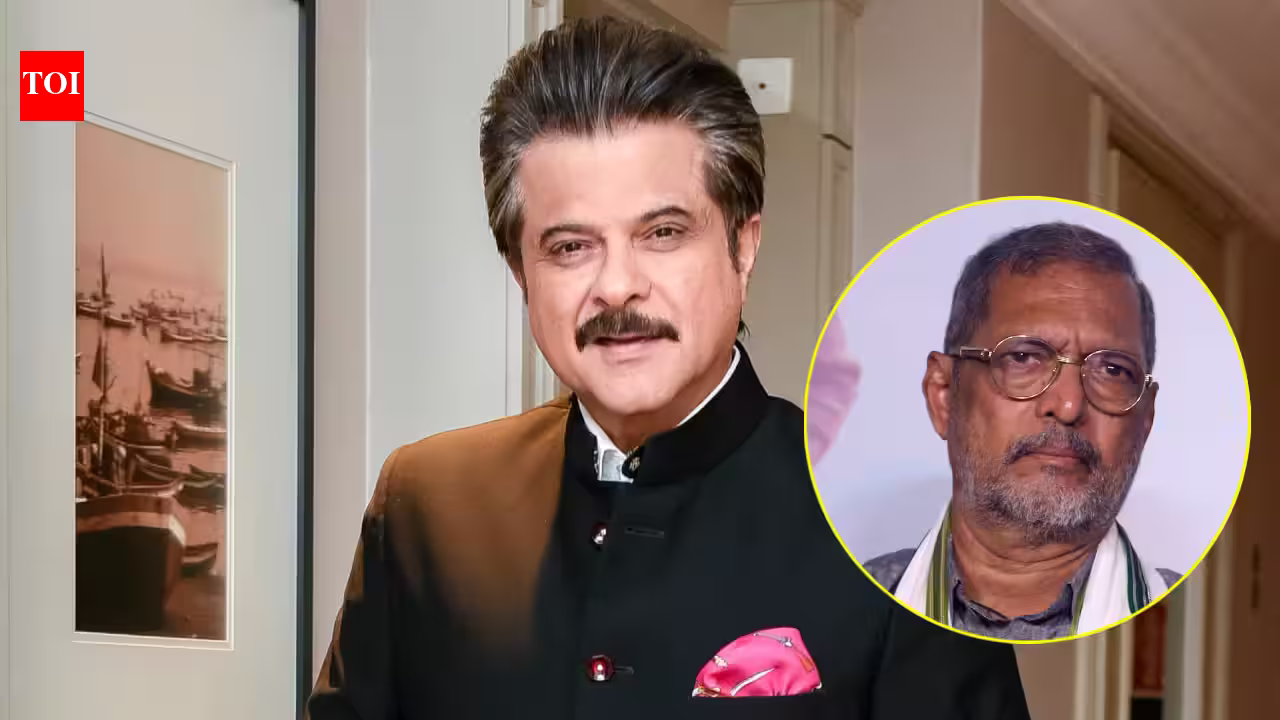
The corridors of Indian cinema feel significantly emptier today. As the news of Nana Patekar’s passing at the age of 75 rippled through the industry on the morning of October 8, the silence that followed was heavy with the weight of a monumental loss. For an actor who carved his identity out of intensity, raw grit, and an unmatched gravitas, his departure marks the end of an era that redefined the archetype of the “angry young man” and evolved it into something far more nuanced and human.
Among the outpouring of grief from fans and colleagues, one tribute stood out for its visceral, unfiltered sorrow: a heartfelt note from Anil Kapoor.
A Bond Forged in the Crucible of Cinema
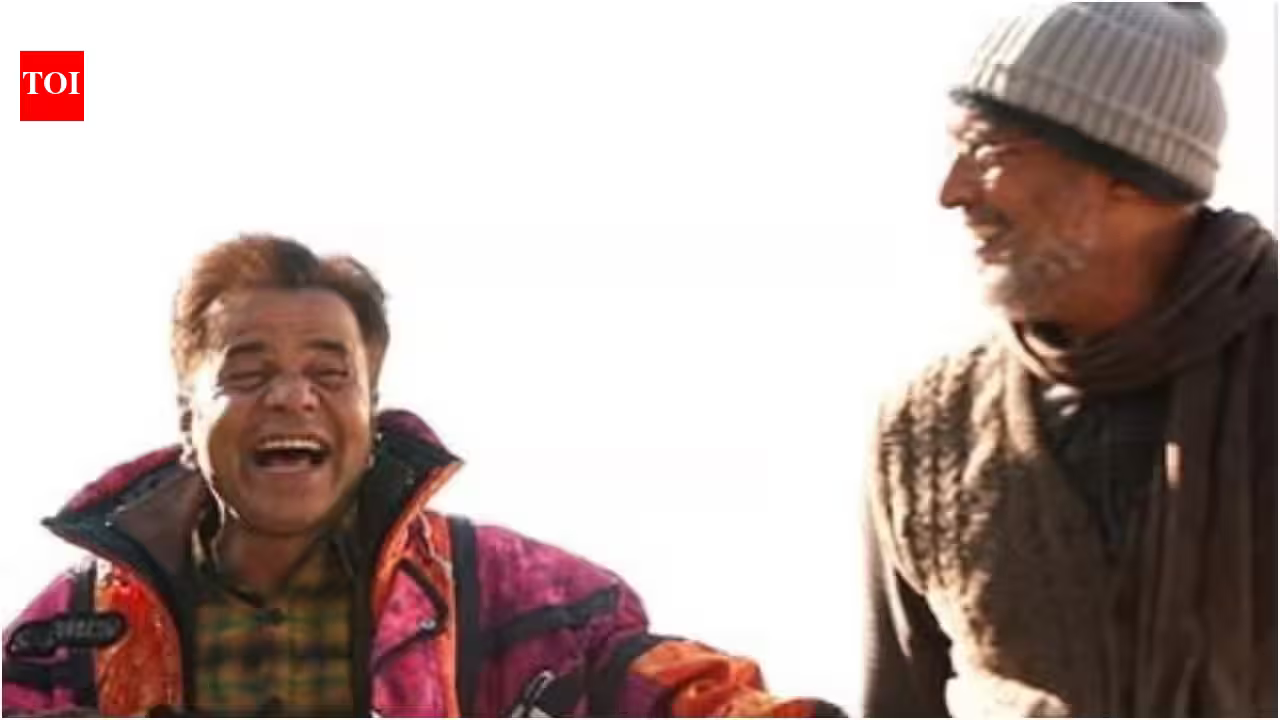
Anil Kapoor’s relationship with Nana Patekar was not merely one of professional rivalry or occasional collaboration; it was a deep-rooted brotherhood that spanned decades. Posting a candid photograph of the two men—a poignant, behind-the-scenes shot of them holding hands on a film set—Kapoor’s words captured a private pain that the public rarely sees.
“Mera dost mujhe chhodkar chala gaya… pehle Satish aur ab mera Nanya,” Kapoor wrote, referring to the late Satish Kaushik, another industry pillar lost recently. The lament continued, “Nanya, tu achanak bohot jaldi chala gaya… Duniya ka sabse bada kalakaar, humein chhodkar hamesha-hamesha ke liye chala gaya.”
It is a rare vulnerability for a star of Kapoor’s stature to openly mourn in such a personal capacity. By calling him “Nanya”—a term of endearment that stripped away the legendary status of the actor and left only the man—Kapoor underscored the void left in his own life. The promise that he would miss him “on the sets, on the phone, and on the big screen” serves as a reminder that the celluloid magic we consume is fueled by real, deeply human connections that survive long after the cameras stop rolling.
The Morning the Legend Faded
The circumstances of Patekar’s passing were as abrupt as they were tragic. Reports confirm that the actor suffered a cardiac arrest at his home in Goa on Thursday morning. After complaining of sudden, severe chest pain, he was rushed to Manipal Hospital, where medical teams fought valiantly to revive him. Despite their efforts, he was declared dead at 5:20 am.
The sudden nature of his passing left the industry in a state of shock. There was no prolonged illness that prepared his friends or his audience for this day. It was a swift exit for a man who spent his life commandingly holding the center stage, leaving his peers and millions of admirers grappling with the sudden finality of it all.
A Final Homecoming in Pune
Following his passing in Goa, arrangements were made to transport his mortal remains to Pune, the city that held a special place in his heart. It was at his farmhouse in Donje, Pune, that Nana Patekar was laid to rest.
The funeral was a somber yet fitting tribute to a man who commanded immense respect from both the Hindi and Marathi film industries. He was cremated with full state honors, a recognition of his contribution not just to entertainment, but to the cultural fabric of Maharashtra. The presence of colleagues and industry stalwarts served as a silent acknowledgment of the void his absence leaves. As the ceremonial gun salute echoed over his final resting place, it was clear that while the man had departed, the icon had become immortalized.
A Legacy of Uncompromising Brilliance
To discuss Nana Patekar’s career is to revisit the history of modern Indian acting. He was never an actor who relied on vanity or the safety of formulaic roles. Whether he was playing the volatile protagonist in Parinda, the tormented artist in Khamoshi: The Musical, or the cynical underworld don in Welcome, Patekar brought an unpredictable, electric energy to every frame.
He possessed a unique ability to switch from a whisper to a roar in a single scene, keeping audiences on the edge of their seats. He didn’t just act; he inhabited, often infusing his characters with a rugged, earthy realism that made them feel like people you might encounter on a dusty street in Mumbai or in the hidden corners of a rural village. His work in Marathi cinema, in particular, remained a testament to his roots, proving that he could oscillate between commercial potboilers and gritty, social-commentary dramas with equal dexterity.
The Empty Chair on the Set
In the aftermath of his death, the tributes pouring in—from veteran directors to young actors—all echo a singular sentiment: Nana Patekar was one of a kind. He was known for being a man of few words off-screen, a bit of a recluse who preferred the peace of his farm to the glitz of red carpets. Yet, he remained a mentor to many, a stickler for perfection, and a friend who valued loyalty above everything else.
As the industry mourns, the focus shifts from the accolades and the awards to the person behind the persona. The photograph shared by Anil Kapoor remains the defining image of this tragedy—not the posters of the films they made together, but the sight of two friends, hands clasped, navigating the high-pressure world of cinema together.
For the audiences, the movies remain. We can revisit the iconic dialogues, the brilliant performances, and the moments that defined a generation. But for those who knew him, the silence in the industry is deafening. Nana Patekar may have left the stage, but the echoes of his performance will continue to resonate in the hearts of those who understood that behind the gruff exterior was a heart that cared deeply for his friends, his craft, and his country.
Rest in peace, Nanya. The curtains have fallen, but the applause will never truly die.
Disclaimer: This content is auto-generated for informational purposes only.
Source: Read Original News