






Promoting Indian Languages: Union Health Minister Emphasizes Hindi for Better Healthcare Delivery
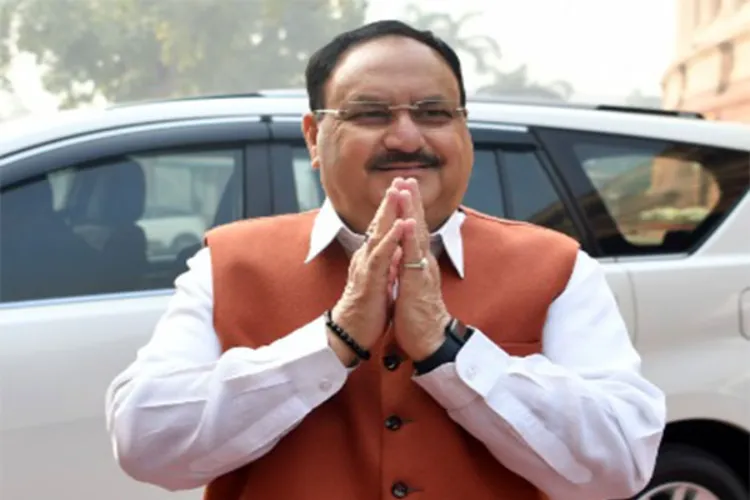
New Delhi: Union Health Minister J.P. Nadda has issued a strong directive to enhance the integration of Hindi and other regional languages within the health sector. During the second meeting of the Ministry’s Hindi Advisory Committee held in the capital, Nadda asserted that communicating with citizens in their native languages is a pivotal step toward expanding the reach and effectiveness of national healthcare services.
Highlighting a strategic shift away from colonial-era administrative frameworks, Nadda stated that the promotion of Indian languages is essential to strengthening the nation’s cultural identity, or “Indianness.” He pointed to Prime Minister Narendra Modi’s consistent use of Hindi at prestigious international forums as a model for this vision.
A Roadmap for Linguistic Inclusion
The meeting served as a comprehensive review of the current status of Hindi as an official language within the ministry and its subordinate bodies. To accelerate its adoption, the Health Minister outlined several key action plans:
- Human Resource Optimization: Nadda ordered an immediate audit of vacant ‘official-language’ posts, directing officials to prepare a priority list for submission to the Finance Ministry to ensure timely recruitment.
- Skill Development: He proposed the organization of structured one-week workshops and training courses to equip ministry staff with the proficiency to conduct daily official work in Hindi.
- Media and Documentation: The Minister set a target to ensure that at least 50% of articles in ministry journals are published in Hindi, while also calling for an increase in Hindi content across health bulletins.
- Simplification: In a move to make the language more accessible, Nadda advocated for a practical approach to vocabulary. “Instead of searching for complex equivalents, we should embrace commonly used, simple words that have already been assimilated into Hindi,” he remarked.
Bridging the Gap in Medical Education
A significant highlight of the meeting was the discussion regarding the feasibility of medical education in regional languages. Citing the ongoing experiment at Bhopal Medical College, where medical instruction is being imparted in Hindi, Nadda suggested that the committee study the model to determine its scalability.
Recognizing that health is a state subject, he proposed that once a concrete action plan is drafted, it should be discussed with state health ministers to explore the adoption of Hindi and other regional languages in medical curricula nationwide.
Recognition and Institutional Support
The event concluded with the recognition of staff members who have demonstrated exceptional dedication to using Hindi in their administrative tasks. Additionally, the book “Aish Shabd Sanket,” published by the All India Institute of Speech and Hearing, Mysuru, was officially released.
Minister of State for Health Prataprao Jadhav reinforced the ministry’s commitment, noting that proactive measures are being taken to institutionalize Hindi across all levels of operation. The meeting was attended by a high-level delegation, including Minister of State Anupriya Patel, senior parliamentarian Bhartruhari Mahtab, and various administrative secretaries.
As the government continues to champion the use of Indian languages as a key to expanding healthcare reach, the committee remains focused on balancing official compliance with the practical need to serve a diverse, multilingual population.