






The Titan’s Arrival: Why Hanuman is the Heartbeat of the ‘Ramayana’ Cinematic Universe
In an era where the term “superhero universe” is dominated by sleek spandex and high-tech gadgets, Nitesh Tiwari and producer Namit Malhotra are turning the clock back—not to the past, but to the eternal. With the explosive success of Ramayana: Part 1, the Indian film industry has officially entered a new epoch of epic storytelling. But while the spectacle of the first installment has captivated audiences, the real conversation buzzing in the corridors of Bollywood is about the figure who barely graced the screen: the Mighty Hanuman.
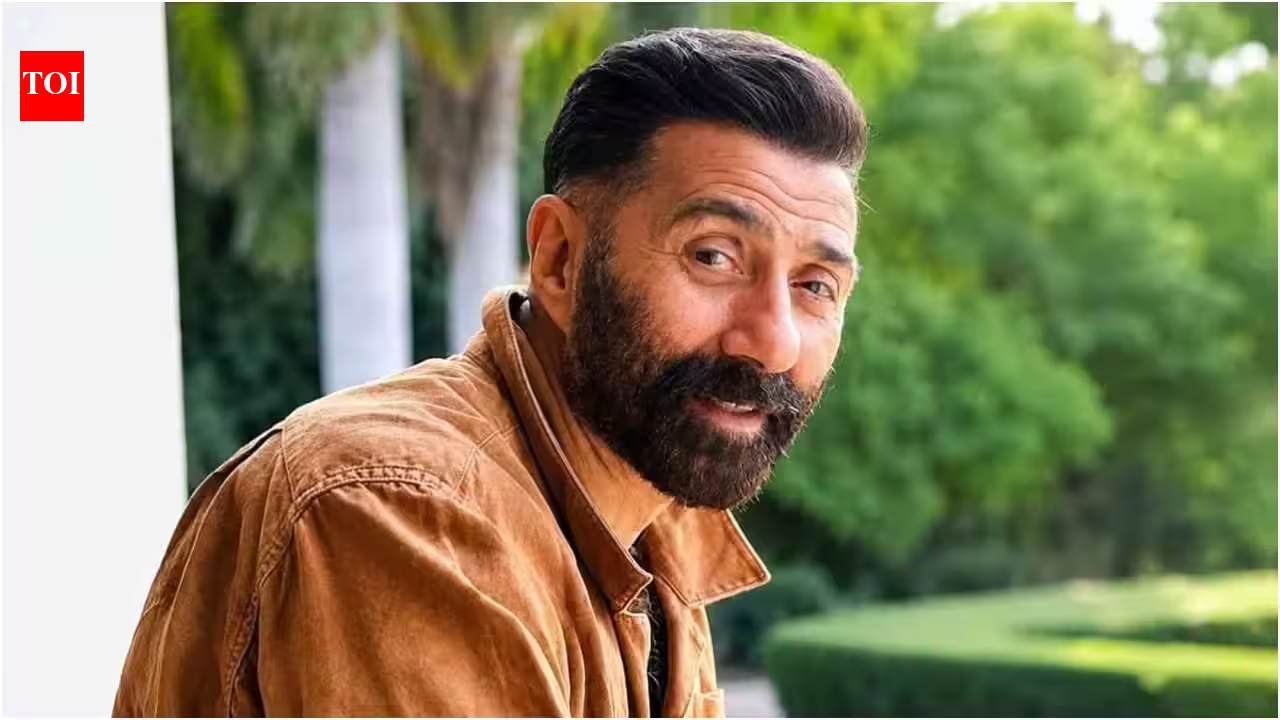
That singular, goosebump-inducing moment during the mid-credits—where Sunny Deol’s silhouette leaps toward the horizon and his roar of “Jai Shree Ram” echoes through the theater—has set the stage for what promises to be the most ambitious cinematic event in Indian history. As the dust settles on the opening chapter’s historic box office run, the architects of this vision are finally peeling back the curtain on the creative gamble behind their most pivotal character.
The Architect’s Vision: Holding Back the Storm
For Namit Malhotra, the decision to keep Hanuman in the shadows for the majority of the first film was a calculated masterstroke. In a recent interview with Gold Derby, Malhotra articulated a perspective that frames the character not just as a mythological deity, but as the quintessential Indian icon.
“Hanuman is our Iron Man,” Malhotra explained. It is a bold comparison, yet one that rings true in the context of Indian cultural iconography. Much like the foundation of the MCU was built on the charisma and presence of Robert Downey Jr.’s Tony Stark, Malhotra views Hanuman as the gravitational anchor of the Ramayana trilogy.
The strategy was simple: don’t rush the legend. By positioning Hanuman as the mid-credits surprise, the makers did more than just provide a fan-service cameo. They established a clear trajectory for the sequel. Malhotra revealed that they wanted the audience to leave the theater not just satisfied, but hungry for a different kind of intensity. By withholding the full weight of Hanuman’s presence, the production team ensured that when he finally descends in Part II, it won’t just be an appearance—it will be a seismic shift in the story’s stakes.
The Shadow of a Giant: Stepping into the Legacy
Few roles in Indian cinema carry the cultural weight of Lord Hanuman. For generations, the image of the late, great Dara Singh has remained the gold standard, his portrayal in the original Ramayana television series etched into the collective consciousness of the country. Stepping into that mantle is a daunting task, yet director Nitesh Tiwari remains unshakeable in his conviction that Sunny Deol was the only choice.
“In India, we have a history of popular actors playing Lord Hanuman,” Tiwari noted, acknowledging the heavy legacy. However, he emphasized that the role requires a very specific, almost paradoxical set of traits. The character must embody a profound, almost child-like innocence and approachability, yet possess a dormant volatility that, when ignited, can quite literally shake mountains.
This duality is the trademark of Sunny Deol’s storied career. For decades, Deol has been the man audiences turn to when they want to see the underdog transform into an unstoppable force. Tiwari’s assessment is astute: “That’s the kind of image that Sunny Deol enjoys in our country. We felt he was the person who could best do justice to this immortal character.”
The Superhero We Never Knew We Had
Namit Malhotra’s analysis of the casting choice touches on a fascinating psychological aspect of Indian fandom. Malhotra pointed out that while Sunny Deol has never donned a cape in the traditional comic-book sense, his filmography has effectively turned him into an unconventional superhero.
“He has appeared in numerous films where his character transforms from sweet and innocent to someone who shakes mountains,” Malhotra observed. This transition—from a place of quiet devotion to righteous fury—is exactly the core of the Hanuman narrative. By casting Deol, the team isn’t just hiring a star; they are tapping into the audience’s pre-existing emotional bond with the actor. They are leveraging decades of “Deol-ism”—the sheer, raw intensity that has defined his career—to bridge the gap between ancient mythology and modern blockbuster sensibilities.
Scaling the Heights: Looking Toward 2028
While fans are currently reeling from the impact of the first film, the news that Ramayana: Part II has been pushed to Diwali 2028 has ignited a debate. While a three-year wait might seem like an eternity in the fast-paced world of social media, the creators are firm in their commitment to quality.
Malhotra and Tiwari are not interested in a churn-and-burn approach. They view the first film as merely the prologue—the stage-setting that was necessary to earn the audience’s trust. The creative team has promised that the next installment will scale up both the technical ambition and the narrative depth. They view the true “epic” of the Ramayana as beginning exactly where the first film left off.
For now, the roar of “Jai Shree Ram” remains in the ears of millions of cinemagoers. As the industry recalibrates to match the scale of Nitesh Tiwari’s vision, one thing is certain: the wait for 2028 won’t just be about watching a movie. It will be about witnessing the return of an icon, reimagined for a new generation, with the ferocity that only Sunny Deol could bring to the screen. The stage is set, the Hanuman of the modern era has been revealed, and the world is watching, waiting for the mountains to shake.
Disclaimer: This content is auto-generated for informational purposes only.
Source: Read Original News