








A Modern Tribute to Analog Photography
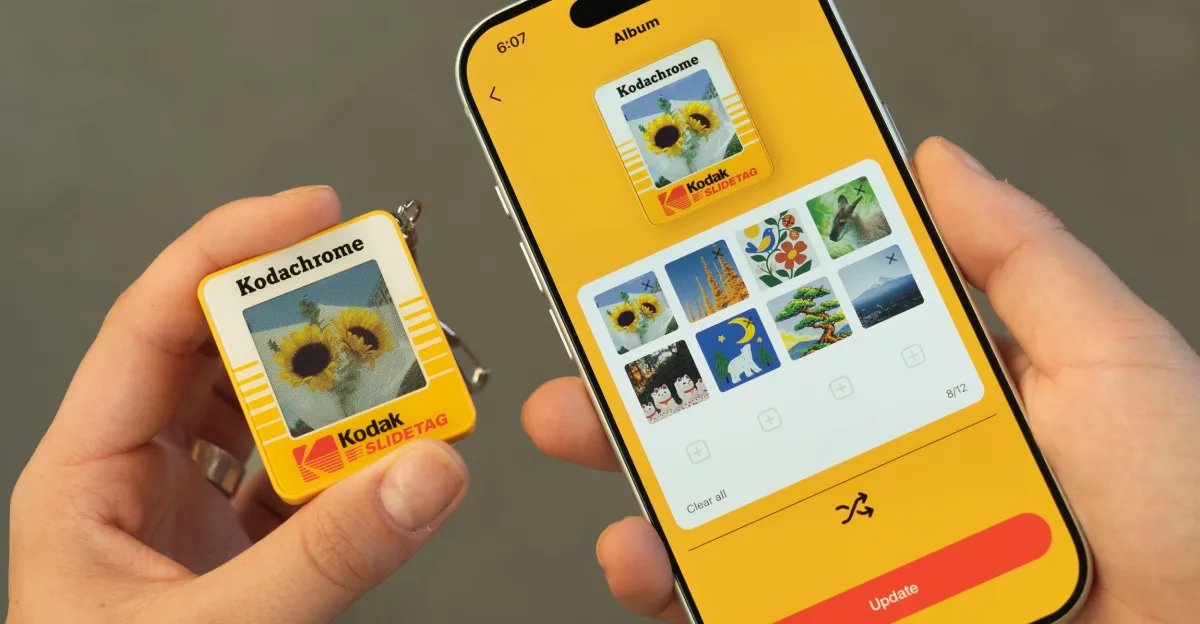
Kodak has introduced the SlideTag, a device that bridges the gap between mid-century analog aesthetics and contemporary personal utility. Designed to mimic the form factor of physical film slides once used in carousel projectors, the SlideTag serves as a hybrid between a digital photograph display and a proximity tracking device. For many, the SlideTag acts as a nostalgic nod to the era of film, while for others, it provides a functional, albeit stylized, method for managing small items or displaying digital information in a low-power format.
The hardware design is intentionally retro, echoing the thick, rigid plastic mounts of vintage photographic slides. However, rather than holding a strip of celluloid, the device houses a 1.54-inch color E Ink screen. This screen utilizes a sophisticated six-pigment ink system, enabling it to render color imagery at a resolution of 240 x 240 pixels. While the color fidelity and depth do not compete with the high-density OLED or LCD panels found on modern smartphones, the E Ink technology offers a distinct, paper-like matte finish that is highly legible in bright ambient light and consumes negligible power to maintain a static image.
Technical Capabilities and Display Management
The primary interface for the SlideTag is the companion Memory Link application, which connects to the device via Bluetooth. Users can synchronize up to 12 individual images to the device, which can then be cycled through manually or set to rotate. This functionality transforms the tracker into a portable digital locket or a compact informational display. Beyond photographs, the software allows for the customization of the E Ink display to show utilitarian content. This includes dynamic to-do lists, essential contact information for luggage identification, countdown timers for time-sensitive tasks, or static QR codes that can direct scanners to websites, social media profiles, or digital business cards.
From a performance standpoint, the integration of E Ink is a strategic choice. Because the display only requires power when the image is refreshed, the device can maintain a static visual without draining its battery. This design philosophy prioritizes longevity and visual stability, making it well-suited for displaying information that remains constant for long periods, such as a contact card or a recurring reminder.
Tracking Functionality and Hardware Specifications
While the SlideTag is marketed in the same category as other proximity trackers, its primary focus remains aesthetic and informational rather than high-precision location tracking. Unlike industry leaders such as Apple’s AirTag or Google’s Pixel Tag, which utilize Ultra Wideband (UWB) technology and Channel Sounding to provide centimeter-level accuracy and directional guidance, the SlideTag relies on standard Bluetooth connectivity.
In open environments, the Bluetooth range extends to approximately 30 meters. To assist with retrieval when the item is nearby, the device features a 75-decibel buzzer. While this may be less sophisticated than the precision-finding capabilities found in more specialized tracking hardware, it provides a straightforward, audible confirmation of the item’s location. The device is powered by a standard CR2032 coin cell battery. This choice is significant for long-term maintenance, as these batteries are widely available, inexpensive, and designed to be easily replaced by the user without requiring specialized tools. Battery longevity is highly dependent on the frequency of image refreshes and the use of the buzzer, but given the low power draw of E Ink technology, users can expect substantial intervals between replacements.
Collectible Appeal and Market Strategy
Kodak is positioning the SlideTag as a lifestyle accessory rather than a purely utility-driven piece of hardware. The rollout strategy leverages the “mystery box” format, where individual units are sold with randomized retro-themed exterior designs. This approach creates a collectible market, encouraging users to trade or purchase multiple units to complete the full set of eight classic designs.
For those who prefer a more predictable acquisition path, a complete set of all eight designs is available for purchase as a single collection. Adding a layer of exclusivity, the company has included a ninth “secret edition” within the individual mystery boxes, which features a premium metallic finish. This gamification of the purchasing process aligns with the current trend of collectible tech accessories, where the physical appearance of the device is considered as valuable as the internal software functions.
Practical Use Cases and Environmental Impact
The versatility of the SlideTag allows it to serve several niche applications. As a luggage tag, it provides a durable, readable display for contact details that can be updated instantly via the Memory Link app if travel plans change. In a workplace setting, the display of a QR code can simplify networking by allowing others to scan for professional details immediately. The countdown timer functionality is also useful for small-scale project management, offering a constant, visible reminder of upcoming deadlines that does not require the battery-draining presence of a smartphone screen.
By combining the low-energy profile of E Ink with the utility of Bluetooth, Kodak has produced a device that minimizes electronic waste associated with frequent charging. Its reliance on user-replaceable batteries and its ability to serve multiple functions—ranging from a personal accessory to a digital identification tool—highlights a shift toward modular, long-lasting hardware. As the market for IoT devices continues to expand, the SlideTag represents a unique intersection of legacy photography branding and modern digital convenience, providing a localized solution for tracking and information display that prioritizes design and power efficiency.
Disclaimer: This content is auto-generated for informational purposes only.
Source: Read Original News