








Echoes of ‘Agni Sakshi’: Unpacking the Legend of Nana and Manisha
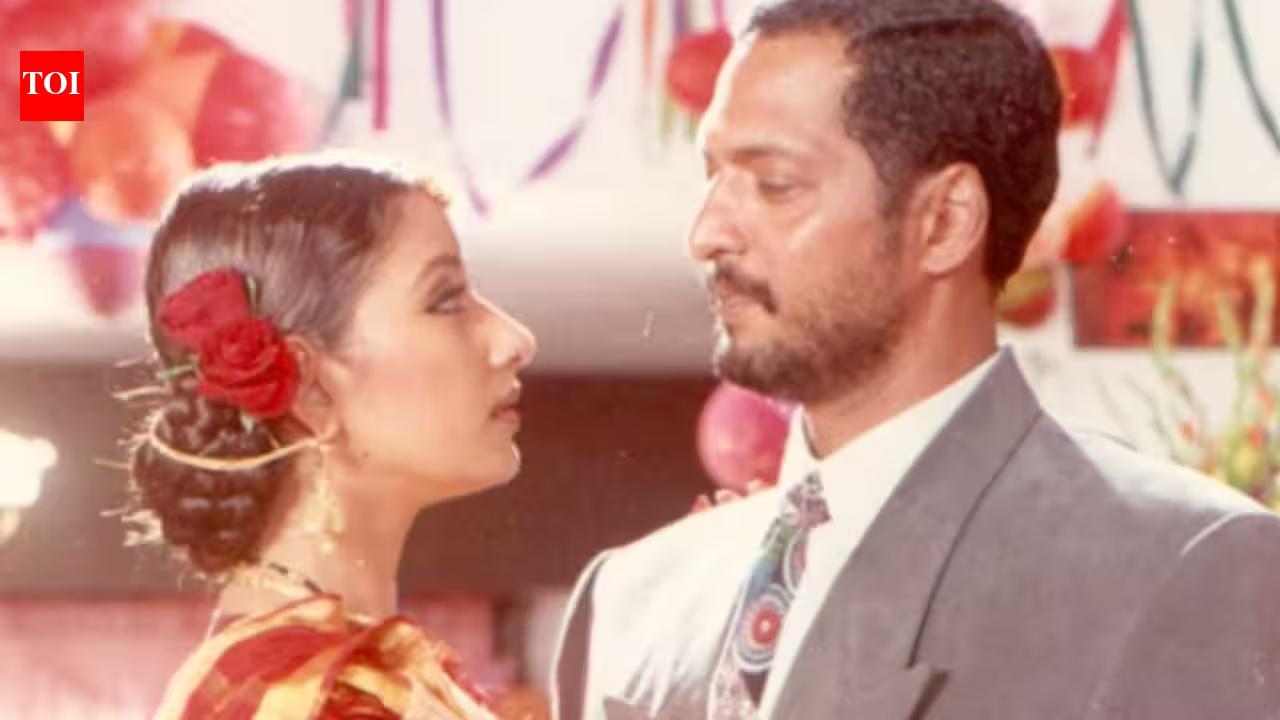
In the pantheon of 90s Bollywood lore, few rumors have proven as resilient as the alleged romance between Nana Patekar and Manisha Koirala. It is a story that has simmered in the background of Indian cinema for nearly three decades—a narrative often whispered in the corridors of film studios and splashed across the gossip columns of yesteryear. The intrigue centers largely on their electric, often harrowing chemistry in Partho Ghosh’s 1996 psychological thriller, Agni Sakshi. While the film was a massive commercial and critical success, it was the off-screen proximity of its leads that truly captured the public imagination.
For years, fans and observers have tried to decode whether their connection was merely the byproduct of two seasoned actors finding a rhythm, or if something more profound was unfolding behind the scenes. Now, decades later, the man who penned the script that brought them together is finally peeling back the curtain.
The Writer’s Perspective: Separating Fact from Tabloid Fiction
Ranbir Pushp, the screenwriter behind the gripping narrative of Agni Sakshi, recently sat down with host Siddharth Kannan to revisit the period that defined a significant chunk of his career. When prodded about the persistent rumors involving his lead stars, Pushp offered a perspective that is notably grounded, contrasting sharply with the sensationalism that historically surrounded the pair.
Pushp didn’t deny the proximity; in fact, he validated it, confirming that there was a palpable closeness between the two. However, he was quick to categorize that closeness through a lens of professional intimacy rather than romantic intrigue. “Haan yeh hua hai, ab isko romance kahe ya dosti, that God knows,” he mused. “But dono kareeb the. Aapas mein understanding thi.”
For a writer, the primary concern is the translation of words into performance. Pushp emphasized that the chemistry audiences witnessed on screen was a byproduct of a deep, collaborative understanding. They were two artists committed to their craft, constantly discussing the psychological nuances of their characters before the cameras rolled. According to Pushp, that dedication is exactly what manifested as the intense chemistry viewers saw on the silver screen.
The Myth of ‘More Than Friendship’
One of the most revealing moments in the interview occurred when Pushp was directly challenged on whether he, as an observer of human behavior, ever sensed that their bond had crossed the threshold from friendship into something more romantic. His response was categorical: “Nahi, kabhi nahi.”
Pushp admitted that the rumors eventually caught up with him—he wasn’t living in a vacuum, and the ink of the tabloid press was impossible to ignore—but his personal experience remained untainted by the hearsay. He viewed the speculation as a narrative that grew legs outside of the film set, often cultivated by media outlets rather than the actors themselves.
His account provides a sobering counter-narrative to the romanticized mythology that has built up around Patekar and Koirala. By centering the relationship on “dosti” (friendship) and “understanding” (professional synergy), he strips away the tabloid gloss, suggesting that what the public perceived as a grand romance was, in reality, a focused, intense professional collaboration between two titans of the industry at the peak of their powers.
The Professional Grind: Why the Rumors Didn’t Stick
Perhaps the most humanizing element of Pushp’s testimony is his admission of his own preoccupation. As a screenwriter on a project of such high stakes, he wasn’t standing on the sidelines acting as a moral arbiter or a gossip columnist. He was busy.
“Zyaada mera kaam se matlab hota tha,” he confessed, explaining that his process involved delivering scenes, observing the production for short stints, and moving on to the next task. This professional distance allowed him to see the actors not as characters in a drama, but as colleagues navigating the demanding environment of a movie set.
In the film industry, the line between performance and reality is frequently blurred by design. When an actor and actress share the kind of intense, volatile scenes required in a psychological thriller like Agni Sakshi, the audience almost needs to believe there is something real behind the friction. It makes the viewing experience more visceral. Pushp’s account suggests that we, the audience, were perhaps projecting our desires onto a performance that was simply, and impressively, well-executed.
A Legacy Defined by Craft, Not Controversy
Agni Sakshi remains a milestone in 1990s Indian cinema, not just for the rumors surrounding its cast, but for the bravery of the performances delivered. Nana Patekar’s portrayal of a possessive, abusive husband and Manisha Koirala’s transformation from victim to a woman seeking reclamation are legendary. If there was a “deep friendship,” as Pushp confirms, it was likely the safety net that allowed these two actors to venture into the dark, uncomfortable places the script demanded.
In retrospect, the obsession with their personal lives feels like a distraction from their artistic contributions. While the whispers of a romance provided fodder for magazine covers in the late 90s, the enduring legacy of the film is its contribution to the genre and the caliber of the acting.
Ranbir Pushp’s reflections provide a refreshing sense of closure. By reframing the “Patekar-Koirala saga” as a story of mutual respect and creative collaboration, he reminds us that sometimes, the most profound chemistry isn’t found in a hidden romance, but in the quiet, focused dedication of two professionals working in perfect harmony to bring a story to life. Whether the world chooses to believe the tabloid versions or the writer’s grounded reality is a choice for the fans—but for those who were on set, the truth was never as scandalous as the headlines made it seem.
Disclaimer: This content is auto-generated for informational purposes only.
Source: Read Original News