








DUBAI — The post-match celebrations at the Women’s Asia Cup final were supposed to be an unadulterated tribute to India’s cricketing dominance. After dispatching Sri Lanka by a commanding 72 runs, the Indian side stood ready to accept their rightful honors as champions of the continent. However, what should have been a moment of pure sporting exaltation morphed into a diplomatic standoff that has left the corridors of the Asian Cricket Council (ACC) in an uncomfortable spotlight.
The ceremony stalled, the tension thickened, and for the second time in recent memory, an Indian side signaled their refusal to accept the championship trophy from the hands of ACC President and Pakistan Cricket Board (PCB) chief, Mohsin Naqvi.
## A Repeat of Protocol Precedent
This latest incident in Dubai mirrors an almost identical scene from last year’s men’s Asia Cup final, where the Indian men’s team famously bypassed a trophy presentation involving the same administrator. The repetition of this behavior on the women’s stage has transformed a singular diplomatic hiccup into an undeniable pattern.
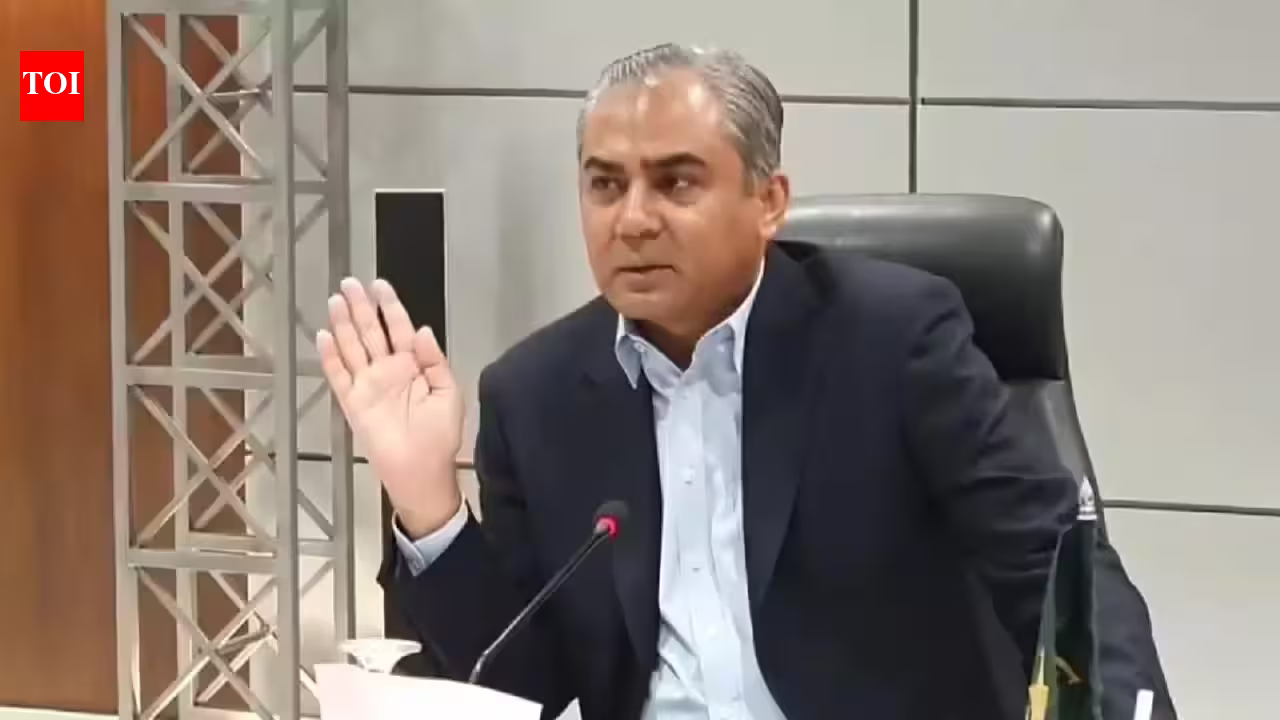
Mohsin Naqvi, a figure who straddles the highest echelons of power in Pakistan as the nation’s Interior Minister while simultaneously heading its cricket board and presiding over the ACC, found himself standing on the podium as the Indian players remained notably distant. While the formalities eventually concluded, the optics of the event were undeniably fractured, overshadowing the tactical brilliance displayed by India’s women on the pitch.
## Mohammad Kaif Sounds the Alarm
The fallout was swift and sharp, with former Indian international Mohammad Kaif emerging as the most prominent voice questioning the feasibility of Naqvi’s dual-track career. Speaking during a broadcast analysis, Kaif did not mince words regarding the conflict of interest inherent in Naqvi’s expansive portfolio.
“Are they living in the past? Don’t they have a reality check? Mohsin Naqvi is in politics. He is the boss of the board,” Kaif remarked during a segment on Cricbuzz. “If you are in cricket, then you have to be in cricket. You have to go to two places. It’s a difficult job. You won’t be able to give time.”
Kaif’s criticism centers on the lack of institutional focus required to steer a major cricketing nation. Comparing the administrative structures to that of the Board of Control for Cricket in India (BCCI), Kaif emphasized that modern sports governance is a full-time endeavor that leaves no room for the demands of a high-stakes ministerial role.
“You have so many political commitments. You have to run the cricket board. You have to see what’s going on inside. You have to stop at one place and invest time,” Kaif argued. “If you look at any body, if you compare it with the BCCI, or look at it from the outside, nobody does two things.”
## The Crisis of Administrative Focus
Beyond the symbolic snub at the trophy ceremony, Kaif used the controversy to address the broader structural issues currently plaguing Pakistan cricket. He pushed back against the narrative that the country lacks the raw material for success. Instead, he painted a picture of a system starved of proper guidance, arguing that administrative distraction at the top is trickling down to the grassroots level.
“Players aren’t bad. You need people who make players. There is a lot of talent in Pakistan,” Kaif said, suggesting that while the nation remains a hotbed of natural ability, it lacks the professional infrastructure and sustained focus required to transition that talent into global consistency.
By suggesting that Naqvi must choose between his political career and his cricketing obligations, Kaif has touched on a nerve that resonates far beyond the cricket pitch. The intersection of sport and politics has always been precarious in the context of India-Pakistan relations, but the integration of an active government official into the highest level of cricket administration has clearly created a friction point that the ACC seems unable—or unwilling—to mitigate.
## A Legacy of Ambiguity
As the dust settles on the Women’s Asia Cup, the discourse has shifted away from the impressive 72-run margin of victory and toward the uncomfortable realities of modern sports diplomacy. The repeated reluctance of Indian squads to interact with Naqvi at the trophy presentation serves as a potent reminder that, in the world of South Asian cricket, the game on the field is rarely the only contest taking place.
With the ACC’s leadership now firmly under the microscope, the question remains: Can a cricket administrator truly serve the sport effectively while holding the heavy mantle of national political office? For the Indian players, the answer, articulated through their actions on the podium, appears to be a resolute, silent “no.”
Until the administration addresses these concerns or separates these roles, it is likely that future Asia Cup ceremonies will remain high-stakes events where the tension between politics and sport is on full, unflattering display. The Women’s Asia Cup victory will be celebrated in the record books, but for the spectators in Dubai and millions watching at home, the memory of the final will be forever linked to an awkward silence, a trophy held in limbo, and a growing divide that shows no sign of closing.
Disclaimer: This content is auto-generated for informational purposes only.
Source: Read Original News