








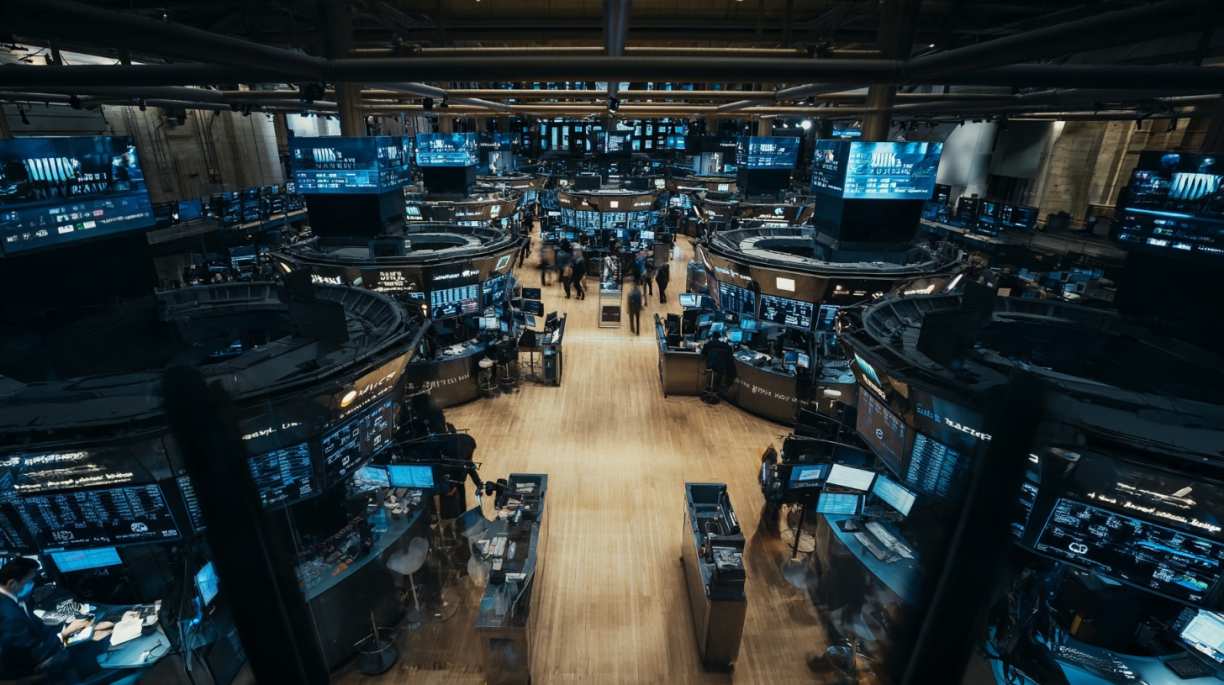
U.S. equity markets staged a complex recovery on Tuesday, November 3, 2026, as investors navigated a landscape defined by aggressive semiconductor growth, geopolitical volatility, and the looming uncertainty of congressional elections. While the tech-heavy Nasdaq Composite climbed 0.9%, snapping a three-day losing streak, the broader market narrative remained bifurcated, with institutional capital favoring AI infrastructure providers over consumer hardware giants.
The S&P 500 rose 0.4%, but the Dow Jones Industrial Average bucked the upward trend, shedding 197.26 points (0.38%) to finish at 51,786.72. This divergence highlights a cooling of sentiment toward legacy industrial components in favor of high-growth technology sectors.
## Semiconductors and the AI Infrastructure Gap
The market’s primary engine on Tuesday was the semiconductor industry, which demonstrated why AI-driven capital expenditure remains a vital pillar of the current economy. Nvidia and Broadcom led the rally, with gains of 2.3% and 3.1%, respectively. These figures underscore a critical shift in the AI investment cycle: while device manufacturers face immediate headwinds, the “picks and shovels” of the AI revolution—chipmakers—continue to see robust demand.
Apple, by contrast, saw its shares slide 1.9%. The decline was largely attributed to ongoing global memory-chip shortages, which have constrained supply chains and throttled the tech giant’s ability to meet hardware demand. This performance gap reveals a structural tension in the tech sector: companies building the foundational layers of AI computing are thriving, while those dependent on consumer-facing hardware supply chains are increasingly vulnerable to global resource scarcity.
## Mixed Signals in Cloud and Data Intelligence
The tech sector’s volatility extended into after-hours trading, where AMD shares climbed following a quarterly report that outpaced revenue expectations. Reporting $13.4 billion in sales, the company signaled that its pivot toward data centers is gaining significant traction, providing a positive outlook for the future of cloud infrastructure.
However, the market reacted more cautiously to Palantir. Despite posting staggering year-over-year revenue growth of 96% and raising its full-year guidance, the stock fell 1.6%. Investors appear to be looking past headline growth, focusing instead on the long-term sustainability of AI contracts and the company’s massive resource requirements. CEO Alexander Karp’s framing of the company’s mission as a “moral imperative” in national security did little to satisfy Wall Street’s fundamental questions regarding contract durability and operational profitability.
## Geopolitics and Macro-Election Uncertainty
Beyond individual stocks, macro pressures continue to exert a heavy influence on global sentiment. Crude oil prices remained erratic as tensions in the Middle East intensified following reports of U.S. military strikes on Iran’s Qeshm Island. The volatility in Brent and WTI highlights the fragility of global energy markets in the face of escalating conflict, keeping risk assets under constant pressure.
Simultaneously, political uncertainty added another layer of complexity. With prediction markets placing a high probability—roughly 72% to 74%—on a Democratic sweep of the upcoming congressional elections, investors are beginning to price in the possibility of legislative gridlock. Market analysts suggest that a standoff between a Democratic-led Congress and the Trump administration could stall major fiscal policy, shifting the burden of economic guidance back onto the shoulders of earnings reports and interest rate cycles.
As markets digest these intersecting variables, the overarching theme for the remainder of the year remains clear: technological dominance in the AI space will continue to reward the suppliers of computing power, but macroeconomic stability remains at the mercy of both geopolitical events and the unpredictability of the domestic political climate.
Disclaimer: This content is auto-generated for informational purposes only.
Source: Read Original News