






India Calls for Urgent De-escalation in West Asia Following US Strikes on Qeshm Island
NEW DELHI: Expressing profound concern over the rapidly deteriorating security landscape in West Asia, India on Tuesday issued a fresh appeal for all warring factions to abandon military aggression in favor of dialogue and diplomacy. The statement from the Ministry of External Affairs (MEA) comes in the immediate aftermath of US military strikes targeting Iran’s Qeshm Island, an action that has heightened fears of a broader regional conflagration.
Growing Global and Humanitarian Toll
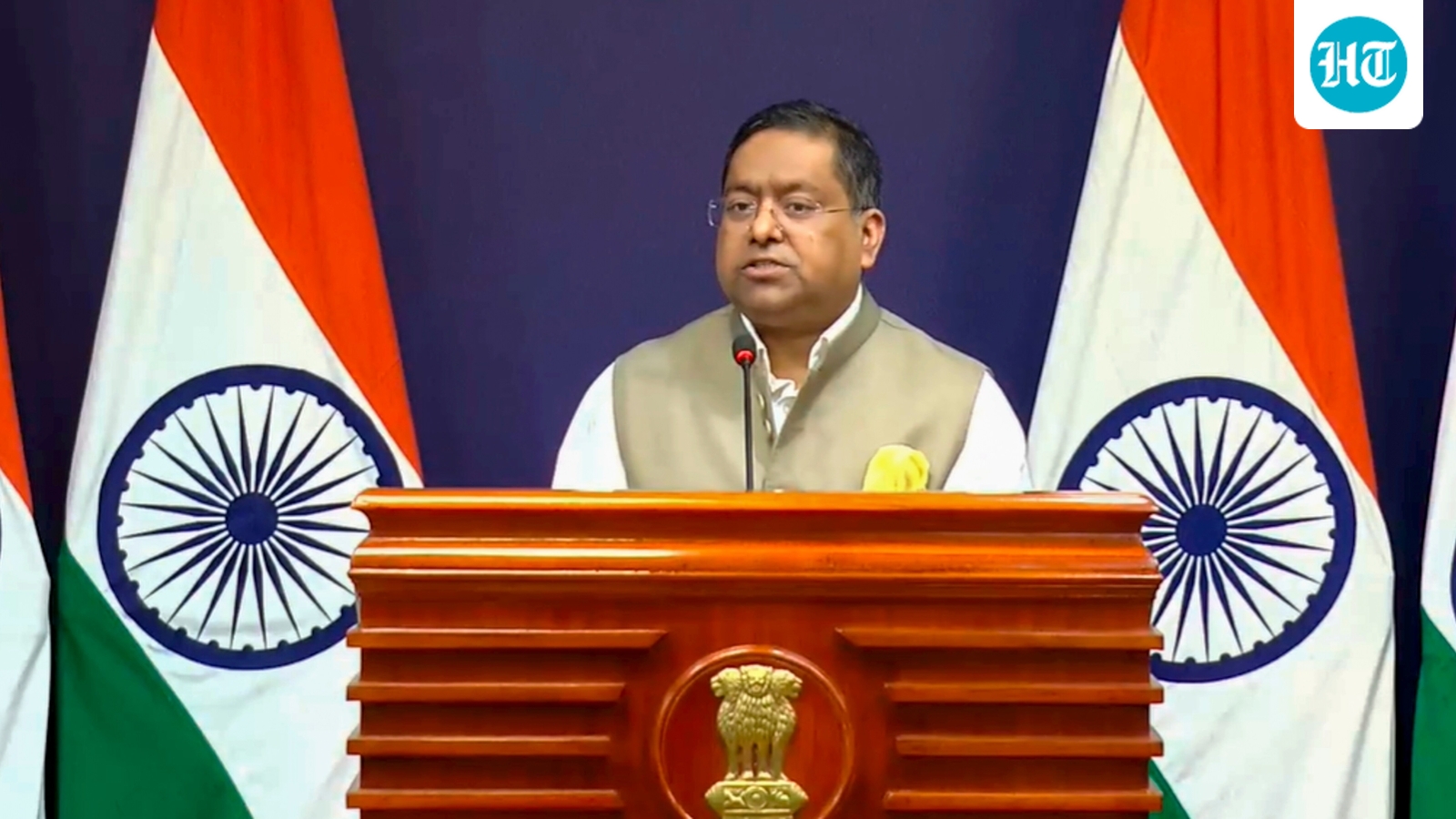
Speaking at a weekly media briefing, MEA spokesperson Randhir Jaiswal underscored that the ongoing conflict has exacted a “very heavy toll,” not only in terms of human lives but also by destabilizing the global economy.
“We are keeping a close watch on these developments. We reiterate our call for dialogue and diplomacy among all parties to restore peace and stability,” Jaiswal stated. He highlighted that the hostilities have caused a “debilitating impact” on critical supply chains, specifically mentioning the disruption of global fuel, food, and fertilizer flows.
For India, the crisis is not merely a geopolitical concern but a direct humanitarian issue. With over 10 million Indian citizens residing in West Asian nations and approximately 18,000 Indian seafarers operating on merchant vessels throughout the region’s volatile waterways, the risk to Indian lives remains a top priority for New Delhi.
Mounting Casualty Count and Maritime Safety
The urgency of India’s diplomatic intervention is underscored by the rising casualty count among its own citizens. Official figures indicate that 23 Indians have lost their lives since the inception of the current phase of the conflict, a grim toll that includes 15 seafarers who perished in various maritime incidents.
The most recent tragedy involved the dhow MSV Al Jusufi, which was struck by a projectile off the coast of Oman on Monday. Of the 14 Indian crew members aboard the vessel, one sailor lost his life, while 13 were successfully rescued by the Omani Coast Guard.
Addressing this incident, Jaiswal reiterated India’s strong stance against the targeting of merchant shipping. “Freedom of navigation through international waterways must be restored and must be guaranteed,” he emphasized, signaling that the safety of the global maritime trade route is non-negotiable.
India’s Delicate Diplomatic Tightrope
The worsening situation in West Asia places India in a complex position. As New Delhi navigates its multifaceted foreign policy, it must balance its growing economic and strategic partnerships with Israel, its historic and cultural ties with Iran, and its vital energy interests across the region.
India’s consistent policy has been to advocate for the cessation of hostilities to prevent further regional instability. By pushing for a return to the negotiating table, New Delhi seeks to protect its strategic interests while ensuring the safety of its vast diaspora. As the US and Iran continue to exchange blows, India remains committed to the principle that regional security can only be achieved through sustained diplomatic engagement rather than military escalation.
Disclaimer: This content is auto-generated for informational purposes only.
Source: Read Original News