









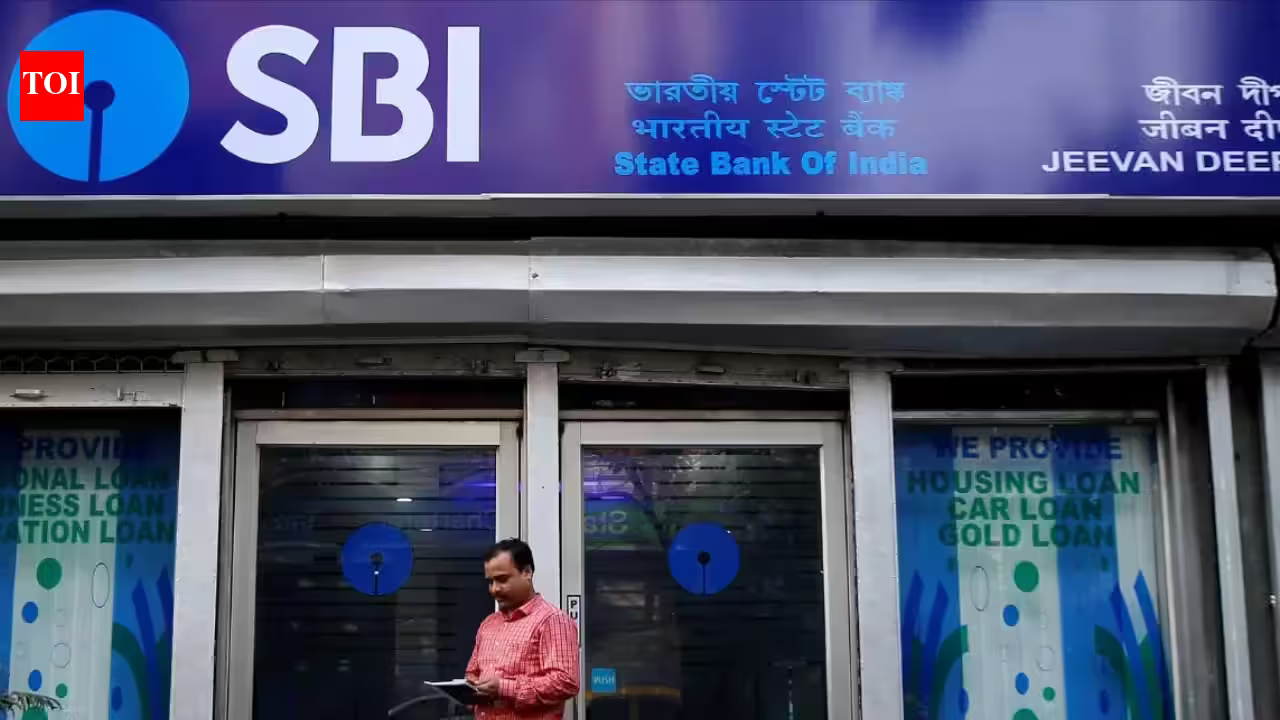
Dissecting the Q2FY27 Performance: A Balanced View of Growth and Challenges
The latest financial results from the State Bank of India (SBI) for the second quarter of the fiscal year 2027 offer a nuanced perspective on the current state of the Indian banking sector. With a net profit of Rs 23,038 crore, reflecting a 14.3% year-on-year increase, the nation’s largest lender has demonstrated resilience in core banking operations. This performance was underpinned by a robust 14.7% rise in net interest income (NII), which reached Rs 49,143 crore, and a healthy improvement in net interest margins (NIM) to 3.1%.
However, the divergence between the bank’s profit growth and its share price reaction highlights the complexity of market expectations. Despite the bottom-line strength, SBI shares recorded a 1.8% decline, closing at Rs 969. This movement underscores investor caution regarding operating profit growth, which decelerated to 7.3%, totaling Rs 34,226 crore. The primary drag on this metric was a significant 24% decline in “other income,” which fell to Rs 11,777 crore. This highlights that while core lending activities remain strong, the volatility in non-interest income—often derived from treasury operations, fees, and commission—remains a factor that investors monitor closely when valuing banking stocks.
Asset Quality and Operational Resilience
A critical pillar of SBI’s performance in this quarter was the tangible improvement in asset quality, which directly contributed to the bottom line by reducing the necessity for large provisions. The bank reported a 33% decline in loan loss provisions, which plummeted to Rs 2,759 crore. This reduction is a testament to more disciplined credit underwriting and improved recovery mechanisms within the bank’s sprawling loan portfolio. In the context of the Indian economy, where corporate credit demand is shifting, the ability to maintain a clean balance sheet while expanding the loan book is a key competitive advantage.
The reduction in provisioning costs serves as a buffer, allowing the bank to maintain profitability even when macroeconomic pressures or market cycles affect non-interest income streams. For investors, this shift indicates that SBI is successfully navigating the transition toward a more sustainable growth model where reliance on interest income is bolstered by high-quality assets rather than speculative trading income. The management’s focus on maintaining stable asset quality suggests that the bank is well-positioned to withstand potential volatility in the credit environment throughout the remainder of the fiscal year.
Credit Growth Strategy and the Macroeconomic Link
Chairman CS Setty’s commentary regarding the bank’s credit growth guidance of 14-15% provides valuable insight into how India’s largest lender aligns its strategy with the broader macroeconomic trajectory. By pegging credit growth to nominal GDP expansion—typically aiming for 3 to 4 percentage points above the nominal GDP growth rate of approximately 12% to 12.5%—SBI is essentially acting as a proxy for the domestic economy. This strategy acknowledges that as India seeks to maintain its status as one of the fastest-growing major economies, its banking system must provide the liquidity necessary to fuel industrial and consumer spending.
The existence of a corporate loan pipeline worth Rs 7.8 lakh crore serves as a significant lead indicator. This pipeline suggests that despite fluctuations in global markets and domestic policy settings, the demand for capital from India’s corporate sector remains substantial. This demand is likely driven by capital expenditure cycles, infrastructure projects, and the ongoing digitization of the Indian supply chain. By maintaining a firm grip on credit expansion, SBI is ensuring that it remains the primary financial partner for the country’s growth-oriented enterprises.
Liquidity Management and the Deposit Environment
One of the most noteworthy takeaways from the earnings call is the bank’s current stance on deposit rates. Amid concerns regarding a tight liquidity environment in the broader banking sector, SBI has signaled that it does not feel compelled to aggressively hike deposit rates. This confidence stems from a comfortable liquidity position, evidenced by excess statutory liquidity ratio (SLR) holdings exceeding Rs 4 lakh crore as of September 30.
This liquidity buffer is a critical tool for the bank. By not rushing to raise deposit rates, SBI is protecting its net interest margins, which have already shown a positive trend to 3.1%. In the competitive landscape of Indian retail banking, where private sector banks often engage in deposit rate wars to capture market share, SBI’s ability to fund its credit expansion without straining its cost of funds provides it with a structural advantage. This strategy also implies that the bank expects the current interest rate environment to remain stable enough to support its deposit growth target of 10-11%, ensuring that the liability side of the balance sheet remains aligned with its asset growth objectives.
Strategic Implications for the Indian Banking Sector
The performance of SBI serves as a benchmark for the rest of the Indian financial industry. As the largest institution, its operational priorities—ranging from technology adoption to rigorous risk management—often set the standard for smaller public and private sector banks. The Q2FY27 results demonstrate that even with the massive scale of SBI, there is still significant room for operational efficiency and profitability improvements.
Looking ahead, the interplay between credit growth, asset quality, and liquidity will define the health of the sector. The market’s reaction to SBI’s results, while tempered, suggests that institutional investors are increasingly looking past headline profit numbers and focusing on the consistency of operating metrics. As the bank navigates the remainder of the fiscal year, its ability to convert the massive corporate loan pipeline into actual disbursements while keeping non-interest income stable will be a focal point. For the Indian market, SBI remains a critical barometer of success, representing the balance between fueling national growth and maintaining the fiscal discipline required in a rapidly changing global financial landscape.
Disclaimer: This content is auto-generated for informational purposes only.
Source: Read Original News