








India Rejects UN Rights Office Criticism Over Recent Protests in Delhi
By Express Web Desk
Updated: Oct 11, 2026, 12:06 AM IST
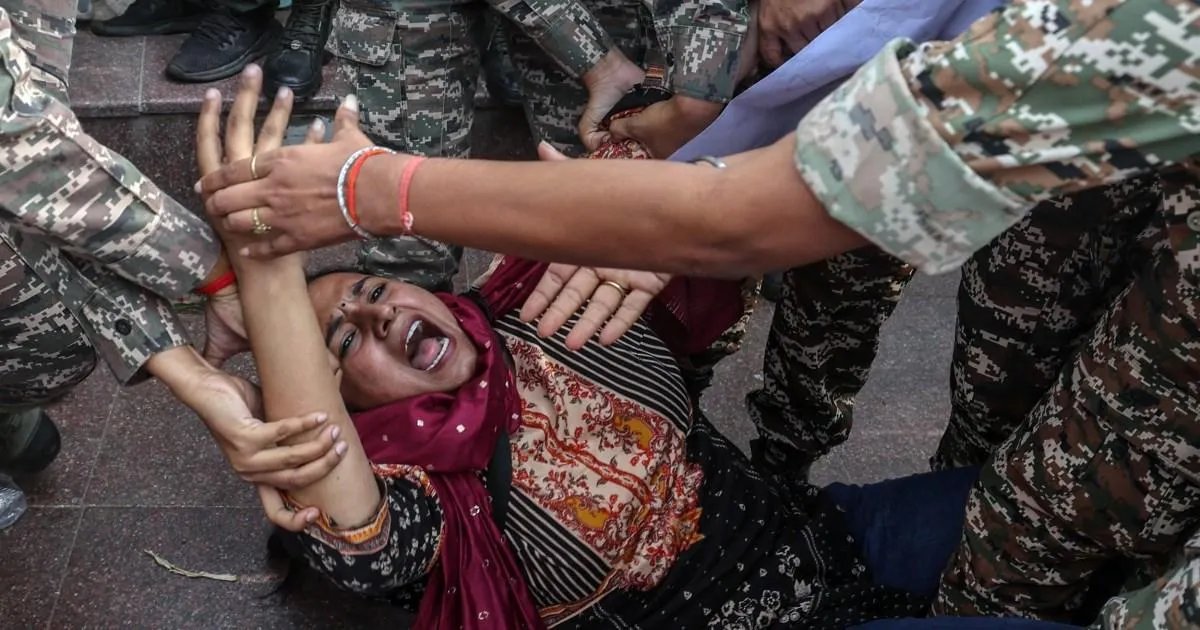
The Indian government has issued a sharp rebuttal to the United Nations Office of the High Commissioner for Human Rights (OHCHR) following the organization’s public expression of concern regarding the handling of recent demonstrations in New Delhi. The UN agency had earlier raised alarms over reports of mass detentions involving civil society activists, lawyers, journalists, and various protesters during Saturday’s civil unrest.
Strengthening the Stance on National Sovereignty
In a swift response, the Permanent Mission of India to the UN in Geneva categorized the OHCHR’s remarks as both “misplaced” and an “unwarranted interference” in the internal affairs of the nation. New Delhi maintained that its governance model remains robust, emphasizing that India is the world’s largest democracy, underpinned by a constitutional framework that protects the rights of its citizens.
The official statement highlighted that while the Indian Constitution explicitly guarantees the right to peaceful assembly, such rights are subject to “reasonable restrictions” necessitated by the requirements of public order. Government officials underscored that all actions taken by law enforcement during the demonstrations were strictly in accordance with legal protocols.
Judicial Redressal and Democratic Institutions
The Indian mission further asserted that the nation’s democratic health is supported by a sophisticated network of independent institutions. Specifically, the government pointed to an independent judiciary that remains accessible to all citizens, allowing any individual or group to seek legal redressal if they believe their rights have been infringed upon.
“India is the world’s largest democracy, where the right to peaceful assembly is guaranteed by our Constitution and safeguarded by robust institutions, an independent judiciary and a free media,” the statement noted. By highlighting these pillars, the government sought to reassure the international community that the democratic process is functioning correctly and that institutional oversight is firmly in place.
A Call for Impartiality
Beyond defending its own internal policies, the Indian government utilized the platform to cast doubt on the consistency of the UN office’s focus. The mission urged the OHCHR to exercise greater impartiality and non-selectivity in its reporting.
The statement pointedly suggested that the UN human rights body should dedicate similar scrutiny to large-scale protests occurring in other parts of the world, rather than isolating India for criticism. This demand for parity reflects New Delhi’s growing frustration with what it perceives as a biased international narrative regarding its domestic law-and-order challenges.
Background of the Tensions
The controversy stems from the heavy security deployment and subsequent detentions that took place during Saturday’s events in the capital. While civil society groups argued that the crackdown suppressed legitimate dissent and curtailed the freedom of the press, the state maintained that the measures were vital to prevent the breakdown of public order in a volatile urban environment.
As the situation remains fluid, the exchange reflects a broader geopolitical friction between India’s assertion of domestic policy autonomy and the growing pressure from international bodies to adhere to specific global standards of civil rights enforcement. The Ministry of External Affairs has made it clear that while it engages with international platforms, it will continue to resist what it labels as intrusive scrutiny into its sovereign administrative affairs.
Disclaimer: This content is auto-generated for informational purposes only.
Source: Read Original News