







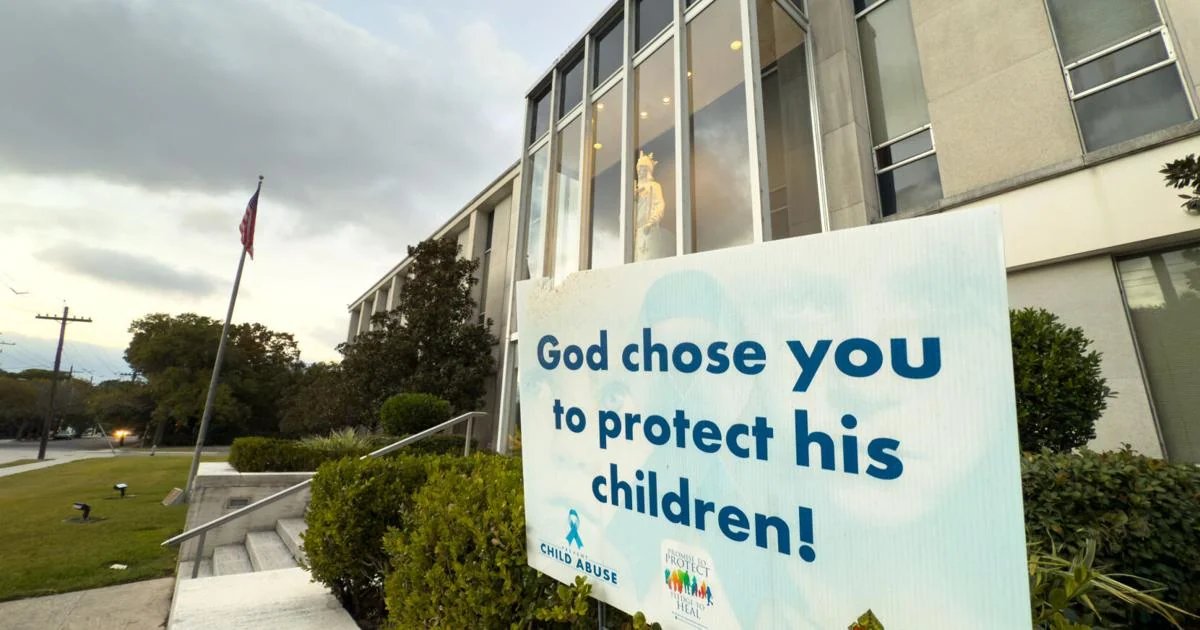
The Archdiocese of New Orleans has expanded its public database of clergy credibly accused of child sexual abuse by adding 27 names, marking the most significant update since the initial disclosure in 2018. This expansion, triggered by the discovery of legacy claims during the archdiocese’s recent bankruptcy proceedings, brings to light historical patterns of abuse that persisted for decades across urban, suburban, and rural parishes.
The newly released names exclusively involve deceased clergy. Among those listed are several prominent figures who once held influential roles in the region’s Catholic school system, including former Archdiocesan School Superintendent Msgr. Henry Bezou and multiple former chaplains at notable local high schools.
### A Commitment to Transparency Amid Scrutiny
Archbishop James Checchio, who succeeded former Archbishop Gregory Aymond in early 2025, emphasized that the decision to release these names is a vital step toward fulfilling the Church’s promises of accountability. Following a $300 million settlement reached in the archdiocese’s bankruptcy case, the institution committed to improved transparency and the implementation of rigorous child protection protocols.
The update to the list comes after sharp criticism from the independent bankruptcy trustee, attorney Don Massey. Earlier this fall, Massey characterized the archdiocese’s previous failure to publish the names of clergy deemed credible by the Internal Review Board as “morally repugnant.” In response, Checchio directed a renewed investigation into all clergy mentioned in bankruptcy claims, leading to Friday’s disclosure.
### Digital Accessibility and Historical Reckoning
The archdiocese is currently working to migrate this data into a comprehensive public database, which is expected to be hosted at Louisiana State University (LSU). This shift toward a digital-first approach for victim archives reflects a broader trend in institutional transparency, where large organizations are increasingly leveraging data management technology to catalog historical liabilities and ensure that sensitive records remain accessible for public review.
While the inclusion of these 27 names provides a more complete picture of a long-standing scandal, the archdiocese notes that these allegations are not new. The individuals cited were named by survivors during the bankruptcy claims process, and because the accused are deceased, these disclosures do not open new avenues for litigation. Instead, the move serves as a form of institutional acknowledgment of the long-term trauma endured by victims.
### The Role of Investigative Records
The list includes 10 diocesan priests and 17 members of various religious orders—such as the Dominicans and Jesuits—or visiting clergy from other dioceses. By consolidating these records, the archdiocese aims to provide a centralized resource for the public. This process highlights the complexities of modern institutional record-keeping, where decentralized archives from different religious orders must be reconciled into a unified, transparent format.
Archbishop Checchio, who has spent much of his first year navigating the fallout of the bankruptcy, continues to face the dual challenge of managing the administrative requirements of the settlement while attempting to rebuild trust with the archdiocese’s 500,000 congregants. As the Church formalizes these findings into its public-facing digital repositories, the focus remains on ensuring that the history of abuse is not obscured by institutional silence.
The archdiocese maintains that this is an ongoing process, as investigators continue to evaluate records and claims surfacing from the era before the current reforms. For survivors, the inclusion of these names serves as a tangible, if belated, validation of their experiences within the Catholic school system and parish life.
Disclaimer: This content is auto-generated for informational purposes only.
Source: Read Original News