






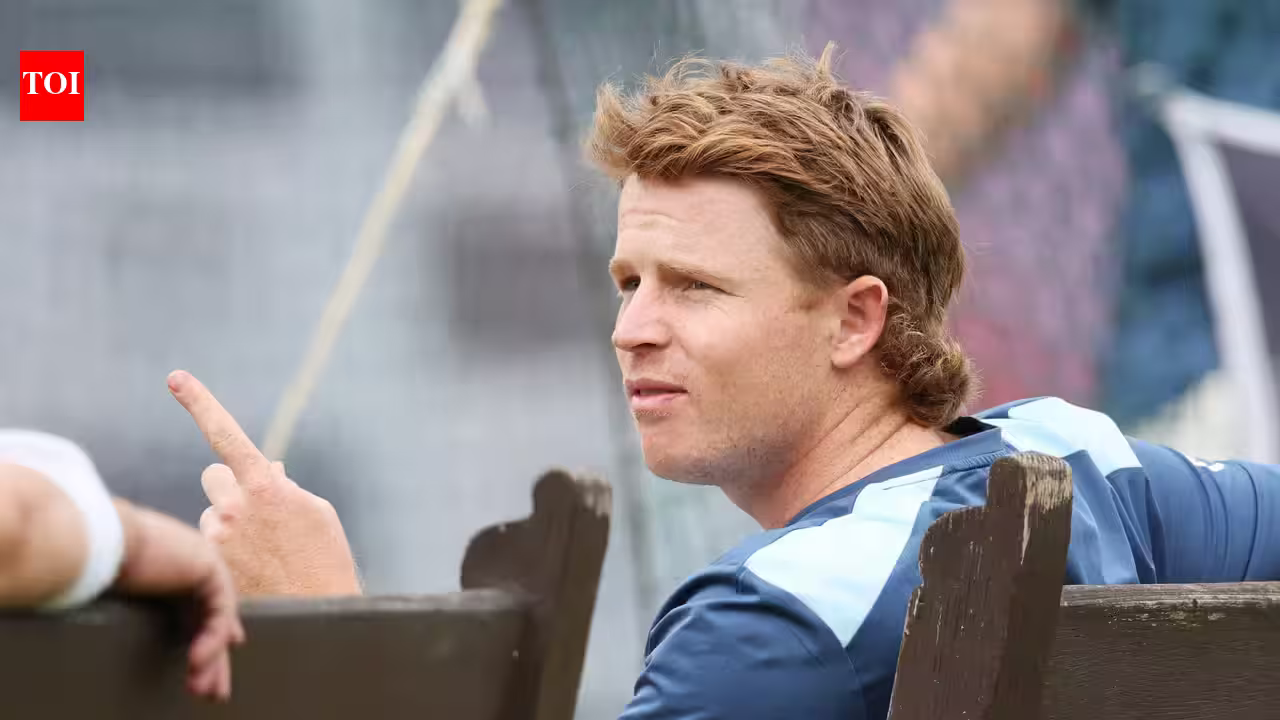
Ollie Pope has officially withdrawn his name from the draft for the inaugural Afghanistan Premier League (APL), a decision that casts a sharp spotlight on the complex intersection of professional sport, personal conscience, and international human rights. The tournament, slated to take place in the United Arab Emirates later this year, is now navigating the fallout of a growing moral debate regarding the Taliban’s restrictive policies toward women and girls in Afghanistan.
Pope, who was the only centrally contracted England player initially slated for the draft, pulled out amidst intensifying scrutiny over whether English cricketers should lend their presence to a league associated with the Afghan regime. Sources close to the situation confirm that the decision to withdraw was entirely Pope’s own, made independently of the England and Wales Cricket Board (ECB) or discussions with director of cricket Rob Key.
The Complexity of the Moral Mandate
The participation of international players in leagues linked to Afghanistan has become a flashpoint for the sport. While the ECB has maintained a firm stance against arranging bilateral series against Afghanistan since the Taliban’s return to power in 2021, the cricket community remains deeply divided on how to approach domestic leagues and global tournaments.
Rob Key, the ECB’s director of cricket, has been vocal about the precarious position players find themselves in. While legal frameworks make it difficult for governing bodies to block players from signing with overseas franchises—provided they obtain the mandatory No Objection Certificate (NOC)—the onus of the “moral judgement” has been placed squarely on the athletes.
“Legally, it is hard to stop players from going over and playing in these competitions,” Key stated during an appearance on the Test Match Special podcast. “It becomes a moral judgement, and players have to be prepared to take the right moral stance. Personally, and it is easy for me to say, I would not go and play. But it is down to the player to make that decision.”
Key reiterated his personal opposition to the Taliban’s governance, specifically the systemic exclusion of women from public life and education. “I don’t agree with the way women have been treated in Afghanistan,” he added. “The way things happen out there is not something I agree with, so it is not something I would go and do.”
The Professional Dilemma: Morality vs. Livelihood
While Pope has stepped away, other high-profile English cricketers have remained in the draft, highlighting the immense pressure professional athletes face when their career opportunities conflict with geopolitical crises. Players such as Dawid Malan, Moeen Ali, James Vince, and James Rew have all put their names forward for the APL.
The situation has created a palpable tension within the locker room and the broader cricketing fraternity. Dawid Malan, in particular, has been candid about the difficult position athletes are in, noting the disparity between individual responsibility and institutional inconsistency.
“As a player, it is tough because you have what is morally right and what is by the law,” Malan said, emphasizing that players often look to their governing bodies to provide a clearer framework rather than leaving the decision to individuals. Malan raised a significant point of contention regarding the status quo: if the sport deems it unacceptable to associate with the Afghan cricket system, why do international teams continue to face Afghanistan in ICC-sanctioned events like the World Cup and the Champions Trophy?
“Why are players expected to make individual decisions when England continues to play Afghanistan in global tournaments?” Malan questioned.
A Fractured Landscape
The debate underscores a broader hypocrisy that many feel exists within international cricket. By participating in ICC-sanctioned World Cups, boards effectively legitimize the Afghan team on the global stage, yet individual players are then pressured to navigate the moral gray areas of franchise cricket independently.
For the ECB, the situation is a delicate balancing act. They have, to date, consistently refused to host or visit Afghanistan for bilateral matches, citing the humanitarian crisis. However, they are bound by ICC regulations to compete against them in major tournaments. This inconsistency has left players like Pope in an uncomfortable spotlight, forcing them to balance their professional ambitions with the gaze of a public increasingly concerned with the humanitarian ramifications of the Taliban’s regime.
As the inaugural APL draft approaches, the cricket world remains divided. Pope’s withdrawal signals a prioritization of values, but for many other players, the answer is not so simple. As the sport grapples with its responsibility to influence global human rights, the question remains: at what point does a player’s decision become a collective board mandate? Until that line is drawn by the governing bodies themselves, the players will continue to be the ones forced to walk a difficult, and often lonely, moral path.
Disclaimer: This content is auto-generated for informational purposes only.
Source: Read Original News