





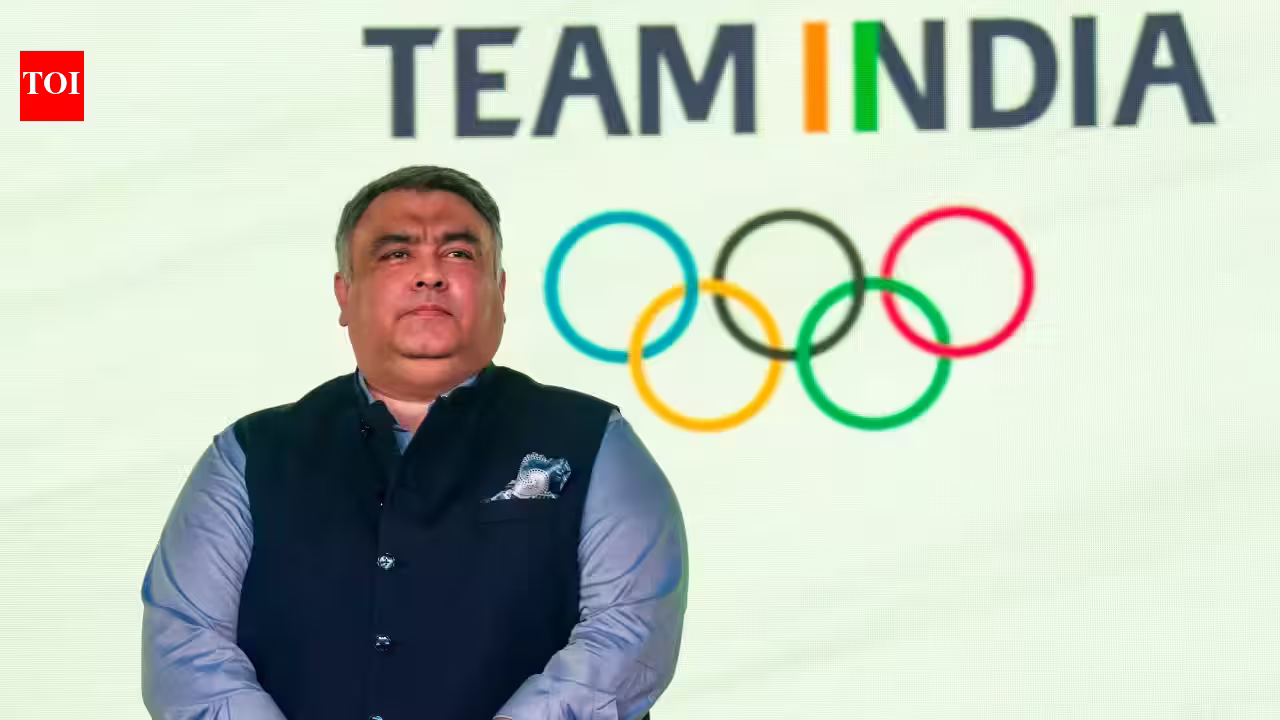
NEW DELHI: The landscape of Indian sports administration has shifted dramatically overnight, as the Indian Olympic Association (IOA) braces for a leadership transition that will fundamentally reshape the country’s sporting future. In a move that has sent shockwaves through the corridors of the Qutub Institutional Area, incumbent president PT Usha—the legendary track and field icon—has opted to step away, effectively signaling the end of her tenure and clearing the path for a new era in Indian sports governance.
The drama unfolded on Tuesday, the final day for filing nominations, culminating in a flurry of activity that has now set the stage for a high-stakes electoral battle on December 5. As the 4:30 pm deadline elapsed, it became clear that the IOA would be undergoing a profound changing of the guard.
## A New Trio in the Hunt for the Top Job
With the seat of the president now vacant, three prominent figures have emerged as the primary contenders for the highest office in Indian sports. London Olympics bronze medallist Gagan Narang, whose transition from the shooting range to administration has been marked by strategic alliances, leads the charge. Narang’s candidacy is widely viewed as a sophisticated play, bolstered by his recent relocation to Ahmedabad—a move seen as aligning with India’s growing sporting ambitions, specifically regarding the 2030 Commonwealth Games and the audacious bid for the 2036 Olympic Games.
Narang’s bid is formidable, carrying significant momentum from government circles and key national sports federations. His nomination was formally proposed by All India Football Federation (AIFF) president Kalyan Chaubey and seconded by Ajay Patel, placing him in a strong position as the front-runner.
However, Narang does not stand alone. He faces stiff competition from the Archery Association of India (AAI) chief, Virendra Sachdeva, and Rajeev Mehta, who had filed his nomination papers a day earlier. Sachdeva’s candidacy, supported by prominent figures such as hockey legend Rani Rampal, represents a broad base of support from within the federation ranks.
## The PT Usha Enigma
The most striking development remains the absence of PT Usha from the fray. The “Payyoli Express,” who had navigated a complex path back into the electoral process after a disappointing fifth-place finish as a Sportsperson of Outstanding Merit (SOM), appeared positioned to fight for her re-election after being nominated as the female representative from the Ice Hockey Association of India (IHAI).
Her sudden withdrawal before the deadline has fueled intense speculation. While Usha had faced challenges regarding her standing within the SOM criteria, her entry through the IHAI route suggested a resolve to retain control. By choosing not to file her nomination, Usha has effectively exited the IOA power structure, leaving observers to wonder what spurred this late-stage departure.
## A Crowded Field of Contenders
While the presidential race captures the headlines, the supporting roles within the IOA Executive Council have attracted a wealth of talent, representing a mix of seasoned administrators and celebrated former athletes.
The battle for the senior vice-president’s chair is set to be a three-way contest between Mona Manish Shah, Ajay Patel, and Vagish Pathak. Meanwhile, the vice-president positions, which are constitutionally divided into male and female quotas, have drawn a high-profile crowd. Legends of the game including Anju Bobby George, Olympic bronze medalist Vijender Singh, and current administrators like Sachdeva are all in the mix, alongside Bhavneet Handoo and Suman Kaushik.
The financial oversight of the organization will fall to Kamlesh Mehta, who has emerged as the sole nominee for the treasurer’s position, having successfully cleared the vetting process as one of the four unopposed male SOM candidates. The roles of joint secretary have also drawn competitive interest, with a showdown brewing between Amitabh Sharma and Harjinder Singh for the male position, and a contest between Sunaina Kumari and Purnima Mahto for the female role.
Furthermore, the Executive Council will feature star power in the form of former wrestling titan Yogeshwar Dutt, former archer Dola Banerjee, and hockey star Rani Rampal, all of whom have filed their nominations under the SOM category.
## Implications for India’s Sporting Future
The election on December 5 is not merely about assigning titles; it is about steering the nation toward its stated goals of hosting global events and improving India’s medal tally on the international stage. Gagan Narang’s emergence as the primary candidate reflects an administrative shift toward “athlete-centric” governance, emphasizing the need for leaders who possess an intimate understanding of the rigors of elite competition.
As the candidates hit the campaign trail, the focus will inevitably shift toward how the new board plans to reconcile the internal friction that has periodically hampered the IOA in recent years. With a blend of political acumen and sporting pedigree now filling the nomination lists, the IOA is poised for a significant transformation. Whether the new leadership can successfully carry the torch and deliver on the promise of the 2036 Olympic bid remains the primary question on every stakeholder’s mind as the countdown to December 5 begins.
Disclaimer: This content is auto-generated for informational purposes only.
Source: Read Original News