







Legal Framework and the Senior Citizens Act in India
The Maintenance and Welfare of Parents and Senior Citizens Act, 2007, was enacted in India to provide a structured legal mechanism for the protection and welfare of the elderly. This legislation recognizes the importance of family support systems while acknowledging that state-led social security may not be sufficient for everyone. Under this Act, senior citizens who are unable to maintain themselves from their own earnings or property have the right to claim maintenance from their children or grandchildren.
However, the legal interpretation of these rights is not absolute. As seen in the recent ruling by the Kerala High Court, the judiciary evaluates the practical realities of the parties involved. The Act intends to prevent destitution among the elderly, not to facilitate the acquisition of wealth or the redistribution of assets from struggling family members to those who are already financially secure. The Kerala High Court’s decision serves as a critical precedent in distinguishing between the obligation of maintenance and the pursuit of unreasonable financial claims against dependent relatives.
Defining Obligations in Multi-Generational Families
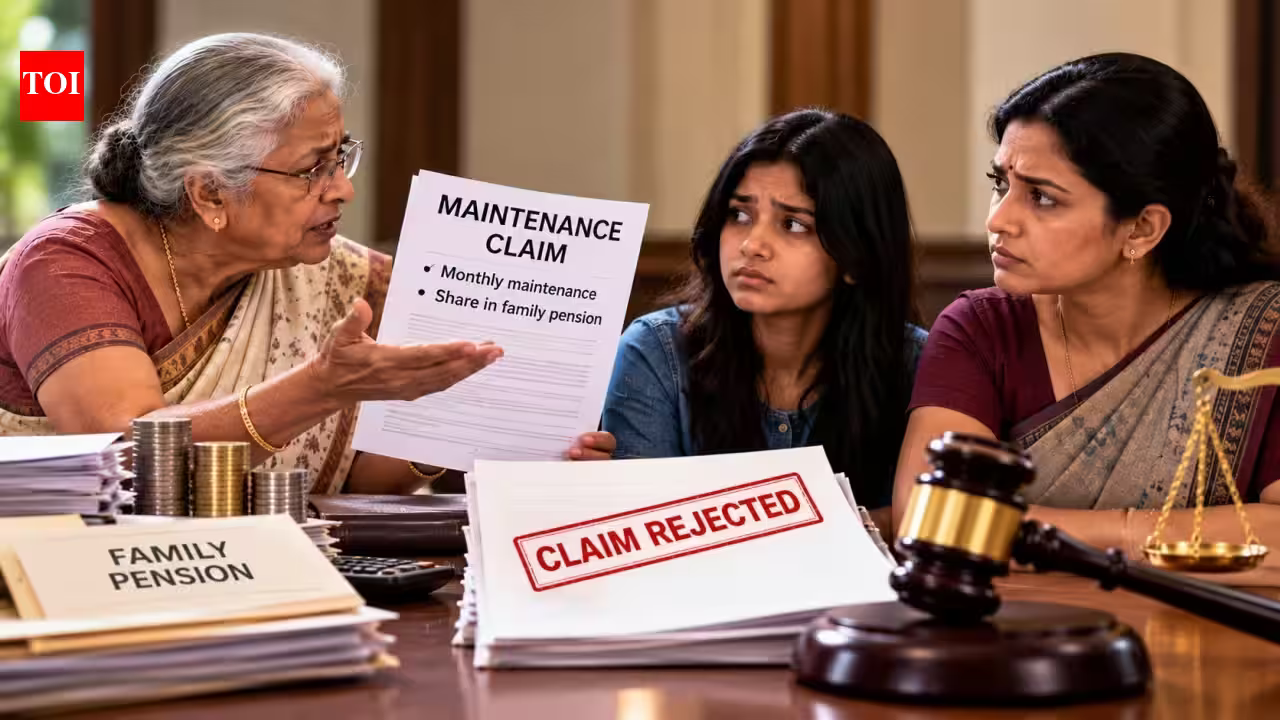
A central point of contention in this case involved the interpretation of “children” and “relatives” under the 2007 Act. The petitioner sought to define her granddaughter as a person responsible for her maintenance, despite the granddaughter being a college student who relies on bank loans to fund her education. The court’s rejection of this claim highlights a fundamental aspect of Indian law: the distinction between legal definitions and the capacity to pay.
In the Indian socio-economic context, family structures are complex. While adult children often hold a legal and moral duty to support their parents, this obligation does not necessarily extend to grandchildren who have no independent source of income. By ruling that a student granddaughter cannot be compelled to pay maintenance, the court has clarified that the Act does not permit the burden of elder care to be shifted to younger members who are still in the process of building their own financial foundation. Furthermore, the exclusion of the daughter-in-law from the statutory definition of those liable for maintenance underscores the limits of the law regarding the familial reach of financial responsibility.
Financial Prudence and the Misuse of Legal Channels
The Kerala High Court ruling also addresses the issue of financial overreach. The petitioner was already a recipient of a government pension, having retired from the Fisheries Department. Additionally, she had received a significant sum of Rs 12.28 lakh as a portion of the death benefits following the passing of her son. These facts are crucial from an analytical standpoint because they demonstrate that the petitioner was not in a state of penury.
The attempt to claim a share of the widow’s family pension—an asset specifically intended to support the surviving spouse and children of a deceased employee—represents a misunderstanding of how terminal and service benefits are structured. In India, family pension is typically designed to replace the lost income of the primary breadwinner to sustain their immediate dependents. The court’s decision to dismiss the claim protects the integrity of these social security benefits. It reinforces the principle that legal provisions for maintenance are intended to ensure a basic standard of living rather than functioning as a tool for disputing the distribution of inherited funds or pension entitlements.
Systemic Implications for Pension and Terminal Benefits
Terminal benefits and family pensions in India are subject to specific government and private sector regulations. When an employee passes away, the distribution of these funds often involves complex legal questions regarding nominees and legal heirs. The court’s stance in this case provides clarity on the boundaries of such claims. By confirming that the grandmother had no entitlement to the widow’s pension under the Senior Citizens Act, the court has shielded the widow from unnecessary litigation.
This decision serves as a reminder to families that legal remedies should be sought only when there is a genuine lack of financial support, rather than as a means to challenge a settlement that has already been adjudicated or disbursed. For the legal community and financial planners, this case highlights that the courts will assess the financial standing of both the claimant and the respondents. A claimant who possesses independent means, such as a government pension, faces a higher burden of proof when seeking additional maintenance from family members who are demonstrably struggling or are in the early stages of their careers.
Balancing Senior Welfare with Economic Realities
As India’s demographic profile shifts toward an aging population, the pressure on social welfare systems and familial support structures is expected to grow. The Maintenance and Welfare of Parents and Senior Citizens Act remains a vital piece of legislation, yet its application must be balanced with economic reality. This case demonstrates the judiciary’s role in curbing the potential misuse of the law.
Effective dispute resolution in these matters requires an objective assessment of the assets of all parties. The fact that the granddaughter was pursuing her education via a bank loan was a decisive factor, as it proved a lack of disposable income. For legal practitioners, the key takeaway is that the court will not grant maintenance orders that would result in undue hardship for the younger generation. The ruling affirms that while the law prioritizes the dignity of the elderly, it simultaneously prevents the extraction of financial resources from those who are not legally or economically positioned to provide such support. This equilibrium is essential for maintaining familial harmony and ensuring that the legal system functions with equity for all generations.
Disclaimer: This content is auto-generated for informational purposes only.
Source: Read Original News