








PM Modi Challenges India’s Space Startups to Revolutionize Everyday Life as Sector Eyes $44 Billion Growth
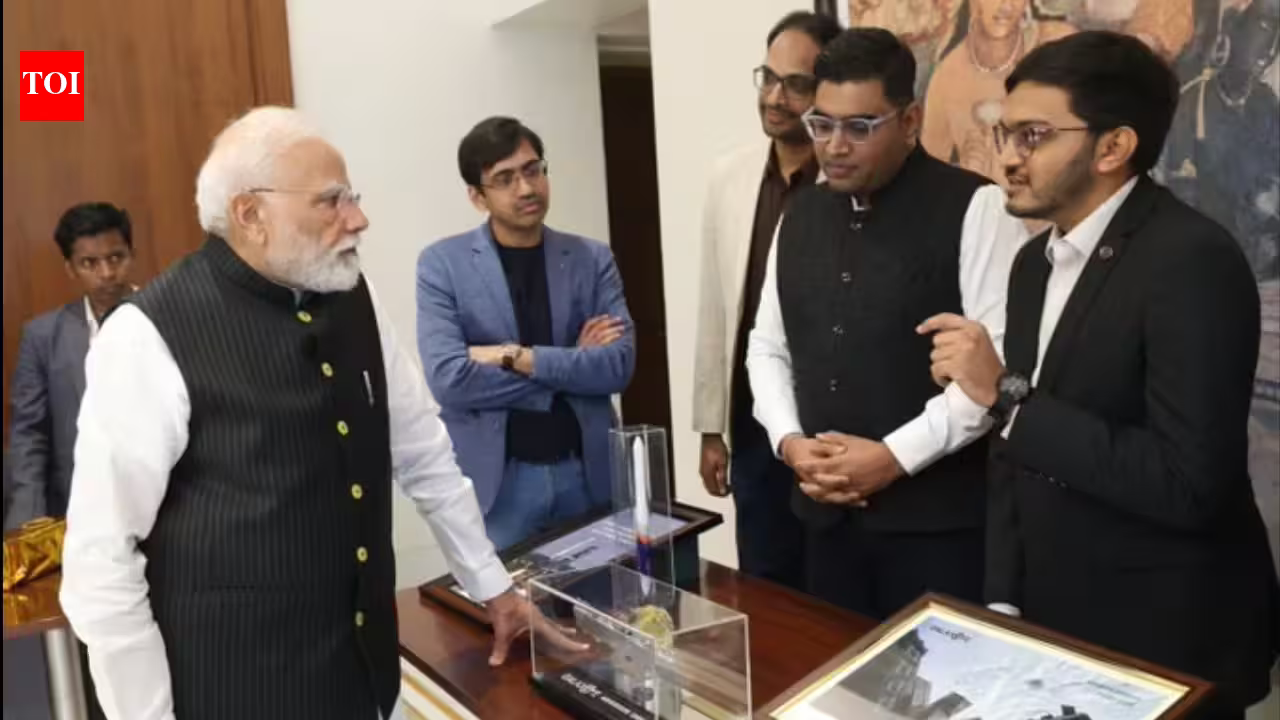
NEW DELHI: In a high-level meeting that underscores India’s rapidly evolving ambitions in the cosmos, Prime Minister Narendra Modi engaged with the founders and CEOs of 20 pioneering space startups on Friday. The interaction served as a clarion call for the private sector to move beyond satellite launches and focus on practical, ground-level applications that can transform the daily lives of citizens.
The meeting featured leaders from several of India’s most promising firms, including Skyroot Aerospace, Agnikul Cosmos, Pixxel, Dhruva Space, GalaxEye, PierSight, Bellatrix Aerospace, and Digantara.
A New Frontier for Innovation
During the dialogue, PM Modi emphasized the need for deep integration between space technology and traditional sectors such as agriculture, livestock management, dairy, and environmental protection. He urged the entrepreneurs to leverage their ingenuity to create solutions that address real-world challenges, noting that the private space ecosystem has the potential to become a powerhouse both domestically and globally.
Reflecting on the meeting, the Prime Minister praised the "yuva urja" (youth energy) of the sector. Posting on X, he stated, "These young entrepreneurs and innovators have shown remarkable courage by entering a new and demanding domain. They have taken risks, trusted the reform process, and remained consistent in their efforts. Due to this, India has achieved a lot in the space sector in the last few years."
Beyond industry, the PM encouraged space leaders to collaborate with Atal Tinkering Labs, aiming to foster a spirit of curiosity about space exploration among the nation’s youth.
The Road to a $44 Billion Economy
The meeting coincided with a significant outlook presented at a business conclave by Vivek Goenka, Chairman of IN-SPACe, the nation’s space regulator. According to Goenka, India is poised for a massive commercial scaling phase, with the country’s space sector projected to grow from its current $8 billion valuation to space startups worth $44 billion by 2033. Projections suggest that $11 billion of this total will be driven by international demand.
The ecosystem is maturing rapidly. Out of nearly 450 registered space startups, at least 20 have already entered the commercial phase. Industry successes are evident:
- Skyroot Aerospace: Currently reports a robust order book spanning the next 2-3 years.
- Agnikul Cosmos: Leading the charge with India’s first reusable rocket technology.
- Pixxel: Developing an advanced constellation of earth observation satellites via a public-private partnership.
- Digantara: Scaling critical infrastructure for space situational and domain awareness.
Three Pillars of Growth
Goenka outlined three primary engines driving this expansion:
- Government as an Anchor Customer: The state continues to act as a primary driver, with the defense sector placing orders for 31 dedicated military surveillance satellites to be produced by domestic private firms, alongside 21 to be manufactured by ISRO.
- Cross-Sector Adoption: Expanding space technology usage into mining, fisheries, automotive, and weather forecasting.
- Global Market Access: Strengthening India’s position as a preferred hub for international satellite launches and data services.
As these startups witness business growth rates of 2x to 3x, the synergy between government policy, private ingenuity, and national requirements suggests that India’s footprint in the final frontier is only set to expand.