








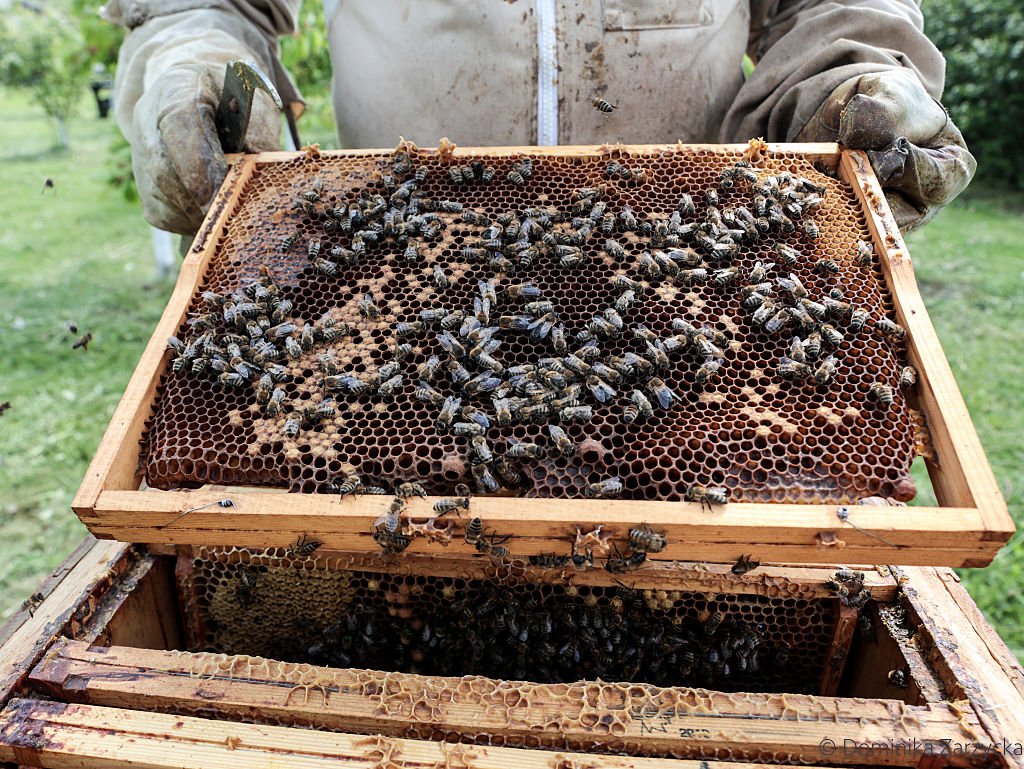
Polish beekeepers are abuzz over reported government plans to curb honeybee activity in protected areas as part of a wider nature restoration strategy – allegations Warsaw has dismissed as disinformation.
Implementation of the EU nature restoration regulation, one of the bloc’s most politically contentious environmental laws in recent years, is already proving controversial in Poland.
Like all EU capitals, Warsaw must submit a national implementation plan by September 2026.
In recent weeks, Polish media and beekeeper organisations have reported on a draft government plan that would tighten certain beekeeping activities in protected areas, where honeybees may compete with wild pollinators for limited food resources.
The Polish government has since pushed back strongly against the claims. Earlier this month, the climate ministry dismissed reports of planned beekeeping restrictions as “disinformation“.
On Wednesday, Deputy Climate Minister Urszula Zielińska reassured lawmakers and beekeepers in parliament that there would be no restrictions on honeybee numbers or bans in protected areas. She said that work on the nature restoration plan would be carried out jointly with the agriculture ministry.
“There are no regulations banning apiaries in public places,” the deputy minister was quoted as saying by public broadcaster TVP, adding that updated versions of the draft plan would be published and opened to public consultation starting in July.
However, Zielińska acknowledged concerns “when hives are placed where there is a lack of adequate food for bees.”
More nectar instead of fewer bees
The debate touches on a long-running ecological dispute over whether large concentrations of managed honeybees can put pressure on wild bee populations in sensitive ecosystems by competing for nectar and pollen.
Last month, Polish beekeeper associations wrote to the environment minister, warning that honeybees should not be treated as a threat to wild insect populations.
“It should be clearly stated that the blame lies with the use of agricultural and forestry chemicals and the loss of habitats,” they added.
The groups instead called for measures to expand nectar sources for bees through the planting of more trees and other melliferous plants, rather than imposing restrictions on apiaries.
(adm, aw)