







The Unearthing of F-Stop: A Lost Chapter in Gaming History
The annals of gaming development are often populated by cancelled projects, but few remain as shrouded in mystery as Valve’s internal prototype known as F-Stop. Originally developed in the mid-2000s, this title was intended to be the prequel to the original Portal. For nearly two decades, it existed only as a whisper in developer interviews and vague references within game files. However, thanks to a massive data leak and the persistence of the Valve Cut Content community, a playable version of this lost experiment has finally emerged.
The project originated during a period Valve termed the Directed Design Experiments. In a unique organizational approach, Valve split its internal staff into five distinct teams, each tasked with building a fully functional prototype over the course of three months. While other teams focused on projects that eventually fed into the broader Half-Life and Portal ecosystems, the F-Stop team pursued a radical mechanics-driven puzzle concept. Despite its innovative core, the project was ultimately shelved, and the team transitioned to other tasks, leaving F-Stop to become one of the industry’s most significant “lost” pieces of software.
Decoding the Mechanics: The Camera as a Tool
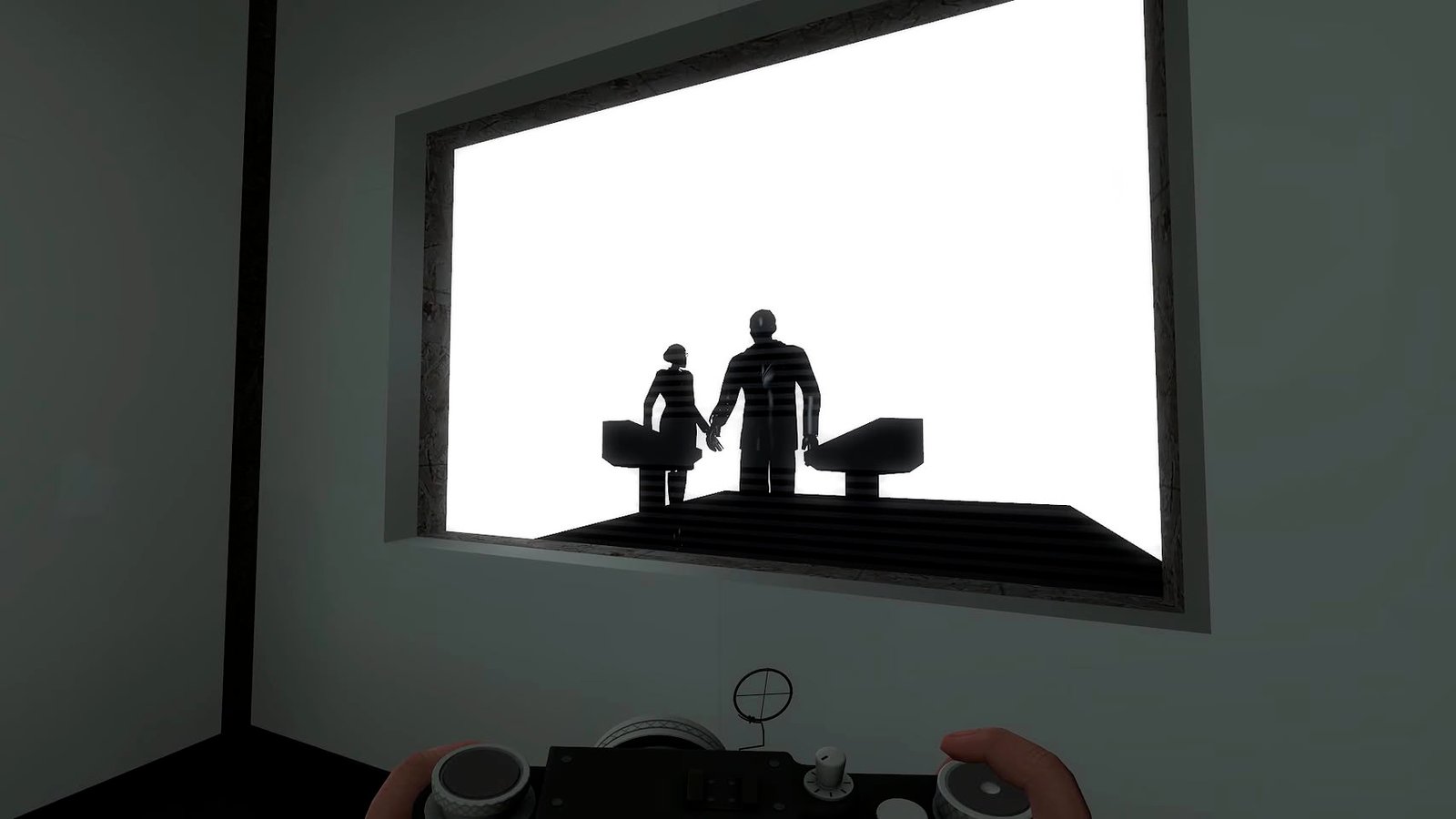
The foundational technology behind F-Stop centers on a unique camera mechanic. Unlike the portal gun, which creates interconnected spatial rifts, the F-Stop camera allows players to photograph specific objects and “place” them back into the game world at different scales or orientations. This concept functions as a spatial manipulation engine, requiring players to think critically about perspective and physical placement.
In modern gaming terms, this logic is strikingly similar to the mechanics seen in the 2023 title Viewfinder, which tasks players with manipulating reality through captured images. By capturing a static representation of a 3D object and re-projecting it into the game environment, F-Stop enabled a variety of puzzles that tested the spatial reasoning of early testers. The implementation demonstrates a high level of technical sophistication for the mid-2000s, showcasing how Valve’s developers were pushing the boundaries of the Source engine long before such mechanics became a standard trope in the puzzle-platformer genre.
The Anatomy of the Leak and Assembly
The restoration of F-Stop was made possible by an unprecedented event in the gaming industry: the leak of a massive 12-terabyte archive containing years of Valve’s internal development data. This dump, which surfaced in August, contained vast amounts of source code, textures, and assets, yet it lacked the critical mapsrc data—the raw source files used to construct the game’s levels.
The Valve Cut Content project, a dedicated group of researchers and enthusiasts, spent months cross-referencing these files. The missing links—the executable code and the specific map source files—eventually appeared on their internal communication channels. By integrating these files into a single, cohesive build, the team successfully bridged the gap between raw data and a playable experience. While the build currently lacks certain environmental textures and definitive voice-over tracks, the game’s logic remains largely intact, allowing users to progress through the intended campaign in under an hour.
Technical Challenges and Current Status
Despite the success of the restoration, the F-Stop build remains a “work-in-progress” snapshot of a prototype. Players who have successfully managed to run the build report a stable, albeit unpolished, experience. Because this was an internal prototype rather than a near-final product, the game features placeholder assets and early versions of characters. Notably, the iteration of Cave Johnson present in the prototype lacks the iconic voice acting of J.K. Simmons, providing a rare look at the iterative development process of Valve’s writing team.
Accessing this software is restricted due to the sensitive nature of the leaked data and the community’s desire to manage the distribution carefully. Following a surge in interest, the primary hosting channels for the project transitioned to invite-only status to prevent the rapid, uncontrolled spread of proprietary developer assets. This gatekeeping reflects a tension between digital preservation and the legal complexities of using material that was never intended for public consumption.
Impact on Game Design and Legacy
The discovery of F-Stop is more than a novelty for archival enthusiasts; it provides a direct look into the lineage of the Portal series. Many of the character archetypes, such as personality cores serving as companions, were carried forward into the final release of Portal 2. The transition from F-Stop’s camera mechanics to the portal gun represents a pivot from perspective-based puzzles to spatial-continuity puzzles. This shift was reportedly driven by feedback from early playtesters who found the F-Stop mechanics challenging to grasp in a fast-paced environment.
For students of game design, F-Stop serves as a case study in how ideas are recycled, transformed, or abandoned. It highlights the importance of the prototype phase in high-budget development cycles. While Valve has issued no official comment on the restoration, the existence of a playable build allows researchers to analyze the evolution of Aperture Science’s narrative from a camera-wielding prequel to the portal-centric world that defined the studio’s identity for a generation. Ultimately, the survival of F-Stop proves that in the digital age, even the most thoroughly erased history can be reassembled if the data trail remains accessible.
Disclaimer: This content is auto-generated for informational purposes only.
Source: Read Original News