









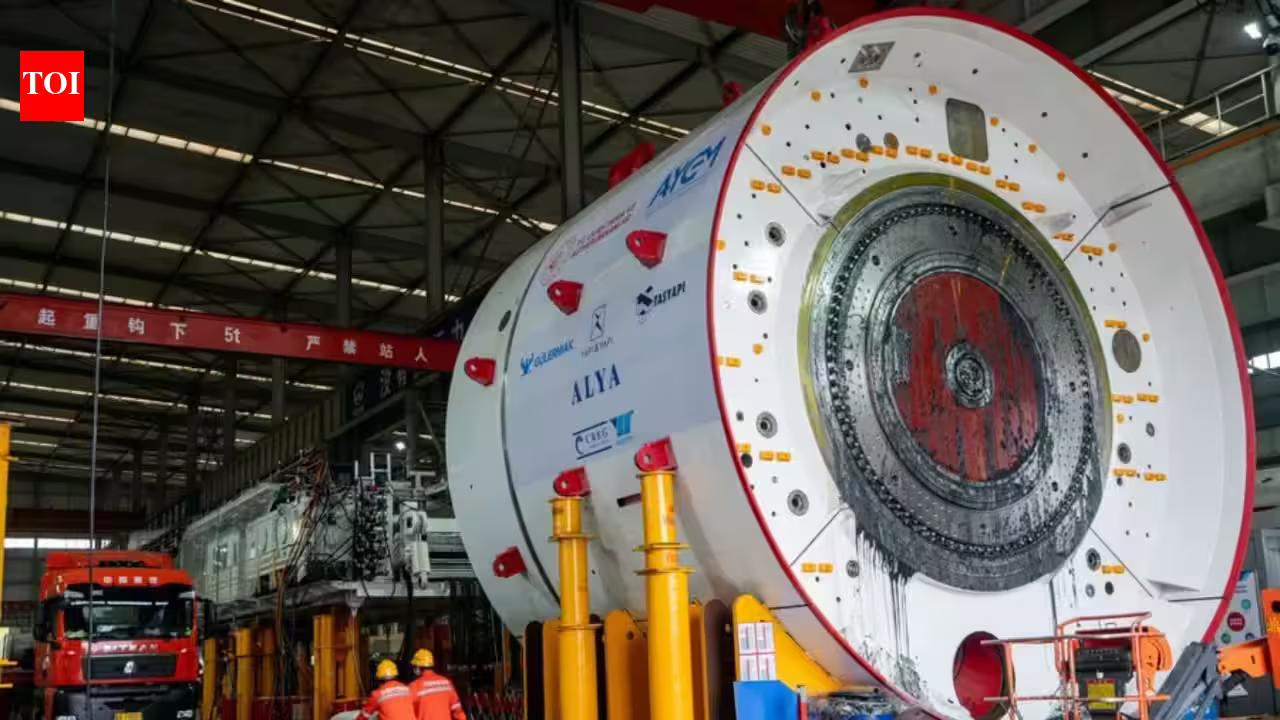
Strategic Implications of Export Curbs on Tunneling Technology
The global construction machinery market is undergoing a significant transformation as China implements stringent export controls on specialized equipment, including tunnel-boring machines (TBMs) and concrete-spraying systems designed for high-altitude environments. By classifying these machines as dual-use assets with both civilian and military applications, Beijing has signaled that its industrial dominance is increasingly tied to its foreign policy objectives. For India, a nation currently engaged in an aggressive multi-year infrastructure expansion program, these restrictions present a complex challenge that affects not only future procurement but also the operational continuity of existing projects.
China’s control over the TBM market is substantial, with estimates suggesting the country produces roughly 70 percent of the world’s supply. This market dominance has turned engineering equipment into a geopolitical tool. As India advances its connectivity projects in the Himalayan region, it finds itself in a precarious position. These tunnels are vital for reducing troop mobilization times and securing logistics in disputed border areas, making the reliability of tunneling technology a national security interest. With Beijing signaling that “sensitive regions” will face stricter oversight, the threat of project delays has shifted from a supply chain inconvenience to a matter of strategic vulnerability.
The Vulnerability of Existing Infrastructure Projects
The immediate impact of these export controls is likely to be felt in the maintenance and lifecycle management of machines already deployed in India. Modern TBMs are highly complex, bespoke pieces of machinery that require frequent replacement of cutterheads, bearings, and hydraulic components due to the intense friction and geological stress encountered during excavation.
If Chinese manufacturers restrict the export of these essential spare parts, Indian contractors could face prolonged downtime for equipment currently engaged in critical projects, such as the Delhi Metro expansion or the Ahmedabad-Mumbai bullet train corridor. Even international manufacturers, such as the German firm Herrenknecht, have felt the ripple effects of these regulatory shifts. Previous instances of delivery delays for equipment bound for India illustrate that third-party companies operating within the Chinese ecosystem are not immune to Beijing’s administrative hurdles. Consequently, the industry is forced to reconsider its reliance on a singular, dominant supplier that may prioritize diplomatic leverage over contractual obligations.
Driving India’s Indigenous Manufacturing Agenda
In response to these supply chain uncertainties, New Delhi has intensified efforts to pivot toward indigenous production. The government’s proposal for a 1.2 billion-dollar incentive scheme reflects a recognition that true infrastructure autonomy requires domestic technical capability. This initiative aims to catalyze the development of high-value construction machinery by providing financial support to local manufacturers, including public-sector entities like BEML and private-sector giants such as Larsen and Toubro.
The incentive program is designed to bridge the gap between high upfront capital costs and market competitiveness. By mandating local value-addition targets, the government hopes to create a sustainable ecosystem where Indian firms no longer rely on external imports for critical hardware. This shift is not merely an economic policy but a necessary adjustment to a global environment where high-end technology is increasingly subject to export restrictions. For domestic firms, the challenge lies in scaling production to achieve the economies of scale that have allowed Chinese manufacturers to dominate the price point for over a decade.
Overcoming the Barrier to Entry in Heavy Engineering
While the drive toward “Atmanirbhar” (self-reliance) in construction equipment is well-intentioned, it faces substantial market realities. Larsen and Toubro has already initiated the development of TBM prototypes, representing a significant stride toward self-sufficiency. However, industry leaders acknowledge that India’s manufacturing maturity in this segment is still in its infancy compared to the established Chinese infrastructure.
The primary hurdle remains the price differential. Chinese manufacturers benefit from years of subsidized growth, massive scale, and standardized production lines that are difficult to replicate in the short term. Unless domestic production can reach a level of cost efficiency that competes with international benchmarks, private developers may continue to favor imports, assuming the geopolitical risk remains manageable. Furthermore, the transition toward indigenous production requires a robust supply chain for steel, electronics, and precision engineering components that currently, in many instances, are also sourced globally. The success of the government’s incentive scheme will depend on its ability to foster an environment where local innovation is protected and prioritized despite the allure of cheaper, readily available imports.
Future Outlook and Strategic Diversification
As the restrictions take effect, the Indian infrastructure sector faces a period of recalibration. Analysts suggest that while the immediate effect may be a slowdown in certain projects, the long-term outcome could be a more resilient domestic industrial base. The situation serves as a catalyst for foreign companies from the United States, Japan, and Europe to reconsider their manufacturing footprint in India. If these global players choose to localize production within India to circumvent Chinese export bottlenecks, it would significantly enhance the nation’s technological prowess.
Ultimately, India’s goal to invest over 9 billion dollars in tunneling over the next five years necessitates a diversified supply strategy. Relying on a single source of critical technology is no longer a viable risk-management strategy in an era of shifting geopolitical alliances. By incentivizing domestic innovation and encouraging international partnerships, India is positioning itself to mitigate the impact of Beijing’s export curbs while securing the integrity of its critical infrastructure network. The transition will be capital-intensive and time-consuming, but for a nation aiming to maintain rapid economic growth, it represents a shift from dependency to sovereign capability.
Disclaimer: This content is auto-generated for informational purposes only.
Source: Read Original News