







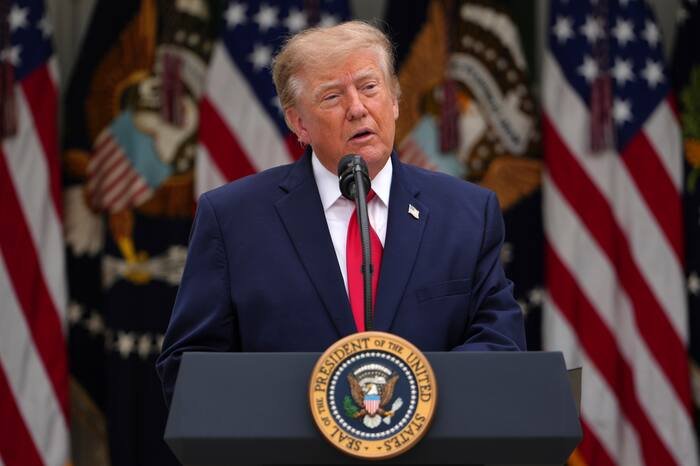
WASHINGTON – A new congressional report has ignited fresh controversy regarding President Donald Trump’s personal finances, alleging that his investment portfolio saw a massive surge in pharmaceutical holdings immediately following the passage of a Republican-led law that shielded certain drug makers from Medicare price negotiations.
The findings, released Friday by the minority arm of the Joint Economic Committee, suggest that the value of the president’s pharmaceutical-related assets ballooned from roughly $1.7 million in 2024 to an estimated $56.2 million by the conclusion of 2025. Democrats argue that a significant portion of this growth is tied directly to companies that gained immunity from government-mandated price reductions under the 2025 tax and spending legislation.
Legislative Impact and Financial Timing
The report highlights a suspicious timeline surrounding the enactment of the law. According to data provided by committee Democrats, Trump’s portfolio acquired approximately $2.55 million in shares of pharmaceutical firms benefiting from these specific exemptions in the lead-up to the bill’s signing in July 2025.
Notably, about $950,000 in these stock purchases occurred on July 1, 2025—the same day the Senate approved the measure. In the months that followed, the portfolio continued to expand, including a $1 million stake in AbbVie obtained after the bill became law. The “orphan drug” exclusion within the legislation has been a focal point of criticism, as it allows companies to maintain higher prices for medications that might otherwise have been subject to the negotiation powers granted to Medicare under the previous administration.
White House Rebuttal and Ethics Concerns
The White House has staunchly defended the president, dismissing the report as politically motivated. Spokesperson Davis Ingle emphasized that President Trump’s financial assets are placed in an independently managed portfolio operated by third-party institutions.
“Neither President Trump nor any member of his family has any ability to direct, influence, or provide input regarding how the portfolio is invested or when investments are bought or sold,” Ingle stated. The administration maintains that these allegations are simply attempts to fabricate conflicts of interest where none exist, despite broader public concern. Recent polling from the AP-NORC Center for Public Affairs Research indicates that a majority of Americans remain skeptical, with many expressing the belief that the president is prioritizing his personal business interests over the welfare of the public.
The Technological and Ethical Landscape
While the debate centers on traditional pharmaceutical policy, the intersection of executive power and personal wealth continues to be a hot-button issue in an increasingly digital and transparent political era. In an age where financial data is tracked by advanced algorithmic tools and analyzed by real-time sentiment engines, the ability for public officials to maintain a “blind” portfolio is increasingly scrutinized.
Critics point out that even if direct manual trades are not being executed by the president, the optics of such significant gains during a period of legislative overhaul are damaging. As the administration navigates these accusations, the potential for impact on Medicare beneficiaries remains a central concern. The committee report estimates that patients requiring critical treatments, such as the cancer drugs Keytruda and Opdivo, could see their annual costs rise by thousands of dollars due to the price protections granted to manufacturers.
The report concluded by noting that the trend of aggressive investment in the pharmaceutical sector did not end in 2025; Trump’s portfolio reportedly added another $3.5 million in pharmaceutical stock wealth during the first eight months of 2026, keeping the issue of executive ethics at the forefront of the political conversation.
Disclaimer: This content is auto-generated for informational purposes only.
Source: Read Original News