







The Phenomenon of Pre-Launch Hardware Leaks
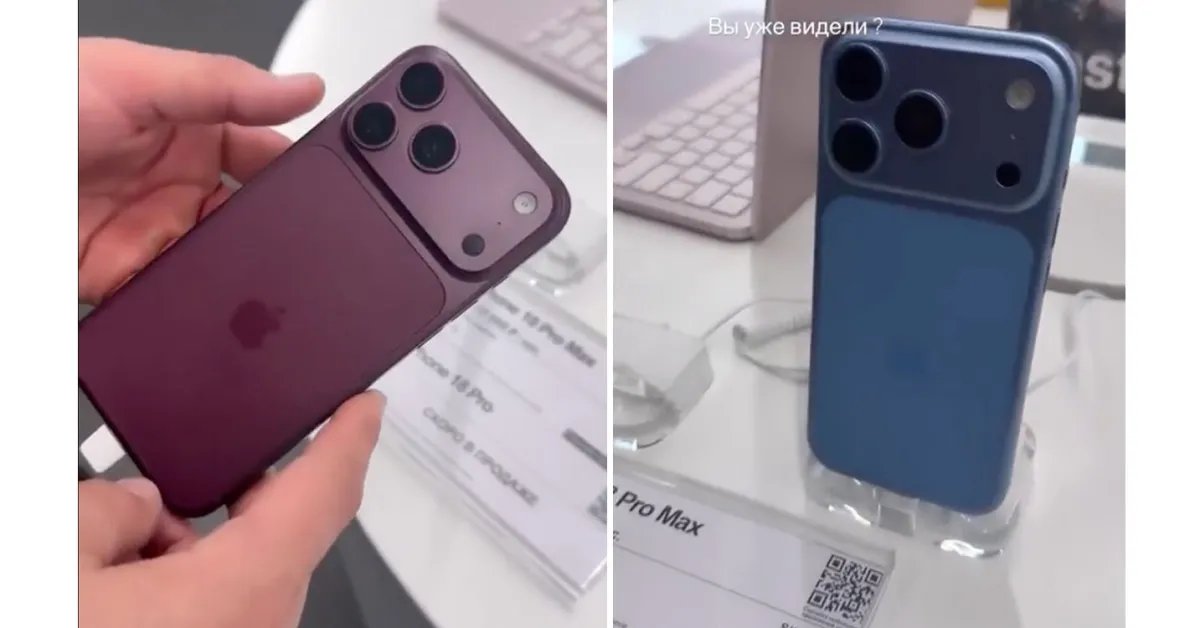
In the weeks leading up to major hardware refreshes, the technology landscape often becomes saturated with visual leaks, purportedly showing unreleased devices in retail environments. A recent 14-second video clip claiming to feature the iPhone 18 Pro in new colors has triggered widespread industry discussion regarding the authenticity of such leaks. The footage, which displays a dark cherry model and a secondary blue unit, has been analyzed by enthusiasts and experts alike to determine if it represents genuine pre-production hardware or merely sophisticated mockups.
The prevalence of dummy units—non-functional replicas used by accessory manufacturers to design cases and screen protectors—has made it increasingly difficult to distinguish between authentic devices and high-fidelity fakes. These dummy units are constructed using exact dimensions derived from leaked schematics, often featuring realistic finishes and weight distributions. As a result, even high-definition video evidence requires intense scrutiny before being accepted as factual documentation of upcoming product releases.
Technical Analysis of the Retail Environment
Critical evaluation of the leaked video reveals several discrepancies that cast doubt on its legitimacy. While the footage depicts a retail-style display setup, the physical environment lacks the standardized markers typical of an authorized commercial store. Professional retail displays generally utilize secured, tethered units and uniform, high-quality signage. In this specific instance, the product tags appear unattached and are positioned in an irregular, uncoordinated manner.
Furthermore, the scale of the display table shown in the clip appears inconsistent with the controlled, high-end environment usually maintained for flagship device demonstrations. While it is standard practice for manufacturers to distribute demo units to retail partners ahead of a launch, the security protocols governing these units are notoriously stringent. Allowing raw video footage of unannounced hardware to surface from a retail floor would represent a significant breach of protocol for any major electronics retailer.
The Role of Dummy Units in the Supply Chain
To understand why these leaks appear so convincing, one must look at the industrial supply chain. Third-party case manufacturers and peripheral designers require precise dimensions months before a consumer launch. These companies rely on leaked CAD (Computer-Aided Design) files to produce dummy units that mimic the physical chassis of the upcoming device. Because these units are manufactured to fit specific cases, they are remarkably accurate in terms of port placement, button size, and overall dimensions.
When an individual obtains one of these dummy units, they can replicate a retail demonstration with enough detail to fool an untrained eye. The recent emergence of high-quality metallic coatings and glass-like finishes on these replicas has further blurred the lines. For a casual viewer, a dummy unit placed on a store-like shelf provides an air of authority that is technically unearned. Analysts now distinguish between “genuine leaks,” which involve prototype devices featuring internal circuitry, and “dummy leaks,” which are purely external representations of a device’s form factor.
Impact on Consumer Expectations and Market Forecasting
The circulation of such videos significantly alters consumer sentiment and expectations. Even if a leak is identified as fake, the visual confirmation of a new color—such as the dark cherry or blue tones mentioned—often sets a baseline for what the public expects to see at the actual launch event. This creates a feedback loop where supply chain rumors are validated by visual media, even if that media was created by a third party for marketing or speculative purposes.
From a market perspective, these leaks can influence the planning of competitors and retail partners. However, the recurring nature of these incidents has forced tech companies to implement more rigorous controls over their distribution networks. The rapid dissemination of imagery via social media channels means that even false information can circulate globally within minutes, necessitating official responses or clarifications that the companies involved generally prefer to avoid until the scheduled announcement date.
Verifying Hardware Authenticity in the Digital Age
As imaging technology and digital manipulation software become more advanced, the burden of proof for hardware leaks has shifted. Experts in the field now prioritize checking for specific technical indicators, such as the responsiveness of the software interface, the presence of operational ports, and the consistency of ambient lighting on the device surface. A device that remains static or shows only a locked screen is rarely sufficient evidence of a functional prototype.
Ultimately, while the desire for early glimpses of the next-generation iPhone is high, historical patterns suggest that the vast majority of “retail leaks” appearing before a launch are staged. The sophisticated nature of modern manufacturing replicas means that the physical appearance of a phone in a video is no longer a guarantee of its functional reality. For observers of the hardware market, the most reliable approach remains waiting for official press materials, as retail environments and dummy units are frequently utilized to generate speculation rather than to provide factual previews of upcoming technology.
Disclaimer: This content is auto-generated for informational purposes only.
Source: Read Original News