









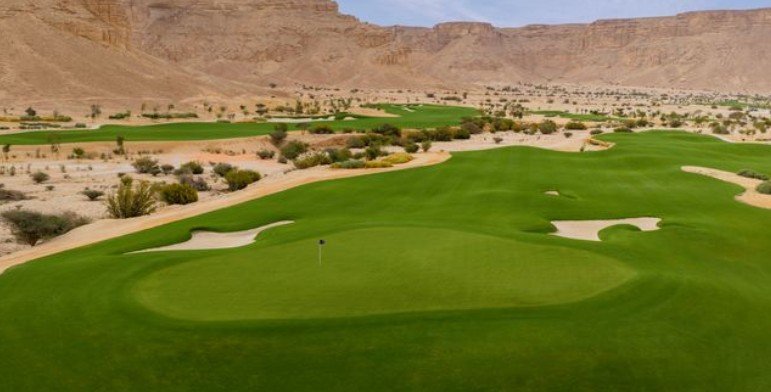
Qiddiya City, Saudi Arabia’s burgeoning entertainment and sports hub, has officially entered the global golfing map today with the grand opening of its championship course, signature-designed by golfing legend Sir Nick Faldo. This landmark debut marks a pivotal shift in the region’s sports infrastructure, blending traditional course architecture with the next generation of digital integration and smart-city connectivity.
## A Tech-Forward Approach to Championship Golf
The 18-hole masterpiece is not merely a test of skill for the world’s elite golfers; it serves as a pilot project for how Qiddiya intends to leverage technology to enhance the spectator and player experience. The course management team has integrated advanced data analytics platforms, similar to those utilized by tech giants to manage complex urban infrastructure, to monitor irrigation, turf health, and player flow in real-time.
By utilizing high-resolution mapping and cloud-based climate modeling, the course maintenance staff can optimize resources with surgical precision. This mirrors the trajectory of modern “smart venues” seen in other sectors, where the internet of things (IoT) and artificial intelligence (AI) are employed to minimize environmental impact while maximizing operational efficiency. As the facility prepares to host international tournaments, digital scoreboards and augmented reality (AR) wayfinding tools—integrated directly into the guest experience—are expected to debut, reflecting the broader Saudi Vision 2030 goal of digitizing the tourism sector.
## Integrating AI and Digital Ecosystems
The opening of this course highlights a broader trend: the convergence of professional sports and the software ecosystem. Qiddiya is actively collaborating with global tech partners to ensure the facility is fully synced with modern digital platforms. This includes seamless integration with mobile navigation services and real-time social media mapping, similar to the functionality seen in Google Maps, where users can view 3D flyovers of the course and book tee times through an automated, AI-driven interface.
“The goal is to create an ecosystem that is as intelligent as it is challenging,” a project spokesperson noted. By implementing automated booking engines and utilizing machine learning to predict peak congestion hours, the course operator is applying Silicon Valley-style logistics to the luxury sports market. For players and enthusiasts, this means a more frictionless experience, where everything from personalized coaching feedback via wearable sensor data to high-speed, course-wide 5G connectivity is standard.
## Redefining the Future of Sports Tourism
As the golf course begins operations, it sets a new benchmark for how physical sporting venues can interact with the digital world. The facility is expected to serve as a hub for international sports tech startups looking to test hardware and software in a high-stakes, controlled environment. Whether it is tracking ball flight data with centimeter accuracy or using predictive AI to adjust event scheduling based on local weather forecasts, the Qiddiya course is becoming a proving ground for technological innovation.
Furthermore, the data generated at this course is expected to feed into the broader Qiddiya digital twin—a virtual, real-time representation of the entire city. By modeling the impact of large sporting crowds on local traffic and resource consumption, planners are effectively using the golf course as a case study for sustainable urban growth. This fusion of professional sports and digital infrastructure reinforces Saudi Arabia’s commitment to becoming a global leader in the tech-integrated entertainment industry. As Sir Nick Faldo’s vision comes to life on the fairways today, it is clear that the future of golf in the Middle East will be defined as much by its data-driven efficiency as by its architectural beauty.
Disclaimer: This content is auto-generated for informational purposes only.
Source: Read Original News