









The Intersection of Ornithology and Historical Accounts
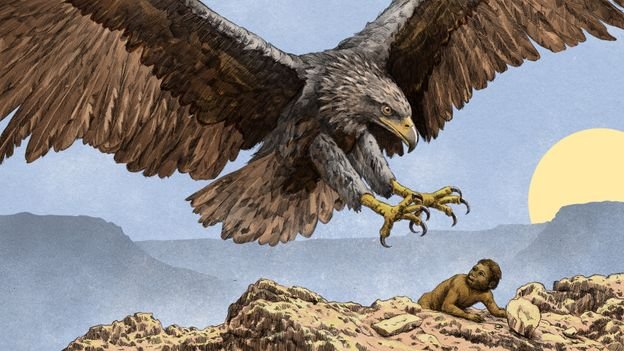
The intersection of historical records and avian biology presents a complex puzzle for researchers. A specific report from 19th-century Tennessee details an account of a child being carried away by a large bird of prey, an event that challenges modern perceptions of how raptors interact with humans. While contemporary ornithology often views eagles as creatures that avoid human contact, historical anecdotes suggest that these birds occasionally displayed behaviors that were far more assertive.
The account describes a “great grey eagle” that descended upon a young boy, utilizing its talons to secure the child by his clothing. The narrative indicates that the bird possessed enough strength to transport the child a significant distance before being startled by the shouts of a nearby hunter. For historians and biologists, such accounts serve as a bridge between the physical limitations of these species and the folklore surrounding their capabilities. By analyzing the structural mechanics of eagle predation, experts can determine if such historical reports align with the biological reality of raptor behavior.
Biological Capabilities and Predatory Mechanics
To evaluate the plausibility of an eagle lifting a child, one must first examine the physiological limits of these apex predators. Large raptors, such as the Golden Eagle or the extinct Haast’s Eagle, are equipped with specialized muscular systems designed for rapid flight and the stabilization of heavy prey. The grip strength of an eagle’s talons is considerable, yet there is a distinction between dragging prey along the ground and sustained, level flight with a heavy load.
Most species of eagles possess a “lifting capacity” that is generally limited to a fraction of their own body weight. For a bird to successfully transport a child, it would require exceptional power-to-weight ratios and highly developed flight muscles. Furthermore, the bird must account for wind resistance and the struggle of the prey. When an eagle latches onto a target, its primary instinct is to secure the prey to prevent escape. In the Tennessee account, the bird likely relied on a burst of adrenaline and thermal updrafts to achieve lift, though the limited distance it carried the child suggests that the burden was near the upper threshold of the animal’s physical capacity.
Environmental Context and Avian Aggression
The 19th-century frontier environment played a crucial role in the frequency of human-raptor interactions. In areas with sparse human settlement, birds of prey frequently competed for food sources. If the bird in the report was a misidentified species or an exceptionally large specimen, its behavior might have been driven by territorial defense rather than a genuine attempt at predation. Eagles are highly protective of their nesting sites, and a human child moving through or near an active hunting range could be perceived as a threat or an intruder.
Historically, the absence of natural competition in certain landscapes allowed raptors to grow bolder. Without the interference of modern noise pollution or human encroachment, these birds operated as dominant predators across various ecosystems. Understanding the environmental conditions of the 1860s Tennessee wilderness is essential for contextualizing why a bird would approach a human child with such intent. The sheer isolation of the rural setting likely removed the standard avoidance behaviors that modern, urban-adjacent raptors exhibit today.
Interpreting Historical Narratives
Transcribing historical reports requires a nuanced approach to terminology. In the 1869 account, the description of a “great grey eagle” does not perfectly align with the common Golden Eagle or Bald Eagle found in North America. This suggests that the observer may have been witnessing a juvenile bird, or perhaps a species that was rare or misidentified at the time. The language used—”immense talons” and “vigorous hallooing”—reflects the linguistic style of the era but also provides concrete details regarding the bird’s size and the human reaction to the crisis.
Critical analysis of these narratives involves distinguishing between cultural exaggeration and observed phenomena. While early newspapers sometimes prioritized dramatic storytelling, the persistence of similar tales across different cultures and centuries suggests that these incidents, while rare, are not entirely fabricated. Scientific scrutiny allows us to strip away the sensationalism of the 19th-century report and focus on the mechanics of the event: the capture, the lift, and the eventual release in response to external sound stimuli.
Modern Implications for Wildlife Interaction
Today, the study of raptor behavior has shifted toward conservation and the minimization of human-wildlife conflict. While reports of eagles attacking humans remain exceedingly rare in the modern era, the historical data underscores the necessity of maintaining distance from large predators. Advances in GPS tracking and ornithological observation allow scientists to map the hunting ranges of eagles with high precision, helping to prevent overlap with human activity.
The impact of such studies extends to land management and public education. By acknowledging that large raptors possess the strength to interact with larger mammals, conservationists can better inform the public about the boundaries of safe wildlife observation. The historical account from Tennessee serves as a reminder that apex predators are dynamic, powerful, and capable of surprising behaviors when their environment is disturbed or when they are driven by instinct. Integrating historical records with modern data provides a comprehensive view of how these birds have navigated—and occasionally clashed with—human expansion over the last two centuries.
Disclaimer: This content is auto-generated for informational purposes only.
Source: Read Original News