






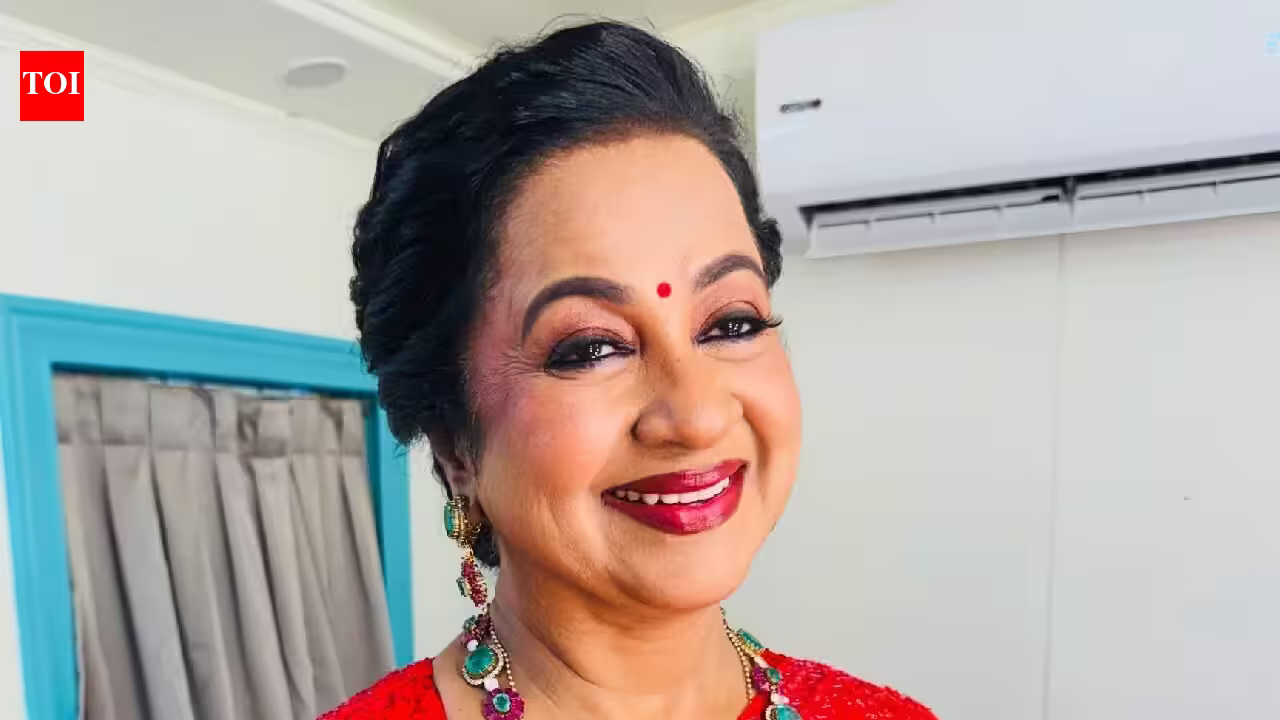
The landscape of South Indian entertainment is currently experiencing a seismic shift, and it isn’t just happening on the big screen or the streaming charts. It is taking place in the volatile, unchecked trenches of social media, where a single smartphone-wielding creator can theoretically dismantle years of hard work in a fifteen-minute video. For veteran actress and producer Radhika Sarathkumar, the time for silence has officially passed.
Standing at the launch of the newly formed Television OTT Producers Council of South (TOPCOS), Radhika didn’t mince words. Addressing the gathered media and industry stalwarts, she fired a warning shot across the bow of the digital creator economy, calling for urgent, stricter action against influencers and YouTubers who treat the lives and livelihoods of industry professionals as content fodder.
## A Growing Culture of Impunity
The rise of digital media has been a double-edged sword. While it has democratized film criticism and given a voice to the audience, it has simultaneously opened the floodgates for a breed of “reviewers” who seem to prioritize engagement metrics over journalistic integrity.
Radhika, a powerhouse who has navigated the industry for decades, noted a troubling psychological shift in these creators. According to the veteran star, there is a pervasive sense of untouchability among digital commentators. “After digital media grew, it became very easy for these influencers to speak very badly about films, actors, women, or their families,” she remarked. “They have the confidence that there is nobody to question them or stop them.”
For many in the industry, this isn’t just about hurt feelings; it’s about a toxic environment where personal attacks have become standard procedure. When a review pivots from critiquing a script to dissecting a star’s personal life or targeting their family members, the line between freedom of speech and harassment has clearly been crossed. Radhika’s frustration stems from the fact that while traditional media is bound by editorial ethics and legal accountability, the digital realm remains a “Wild West” where the loudest, most aggressive voices often dictate the narrative.
## The Weaponization of the “Review”
Perhaps the most damaging aspect of this digital evolution, as highlighted by Radhika, is the intentional manufacturing of negative sentiment. The concept of the “objective review” is being supplanted by a calculated business model where negativity often performs better than praise.
Radhika highlighted a disheartening trend: films that possess genuine merit are being systematically targeted for sabotage. “Sometimes, even when a film is good, wrong reviews are deliberately spread, saying that it is not good,” she pointed out. This creates a ripple effect, where the initial “first-day-first-review” can make or break a project before the target audience has even had the chance to step into a theater.
In the streaming era, where a film’s survival is heavily dependent on early traction, these “hit jobs” serve as a form of economic sabotage. Radhika’s observations touch on a growing sentiment among producers that the digital critique ecosystem has moved beyond being an opinion-based exercise and has morphed into an agenda-driven industry that lacks transparency regarding who is funding or incentivizing these narratives.
## Digital Access vs. Professional Responsibility
While the ubiquity of smartphones and the accessibility of high-speed internet have empowered millions, Radhika posits that this ease of access has also lowered the barrier for entry into the public discourse. When everyone is a critic, expertise is often sidelined in favor of sensationalism.
The veteran producer argues that the scale of this problem in the South Indian film industry is disproportionately high compared to other global entertainment hubs. The deep emotional investment that fans have in their stars is being exploited by creators who know exactly which buttons to push to trigger viral arguments. By fostering a climate where discourse is increasingly hostile, these creators are damaging the very ecosystem that provides them with their source material.
## The Role of TOPCOS in a New Era
It is no coincidence that these comments surfaced during the inauguration of the Television OTT Producers Council of South (TOPCOS). This organization is explicitly designed to consolidate the voices of producers across the Tamil, Telugu, Malayalam, and Kannada industries. By forming a collective, these producers are signaling that they are no longer willing to be passive observers while their work is denigrated by bad-faith actors.
Radhika has taken an active role in pushing for a robust grievance-redressal system. She confirmed that she has already engaged in high-level discussions, including with industry figurehead Tamil Kumaran, to find a framework that holds digital creators accountable without stifling legitimate criticism. The goal is to move toward a system where creators can be held liable for defamation, harassment, or the malicious spread of falsehoods.
## The Path Forward
The debate sparked by Radhika Sarathkumar isn’t an attempt to silence the audience. It is an attempt to introduce a standard of accountability into a space that has long operated in the shadows. As entertainment consumption moves almost exclusively to digital platforms and OTT services, the stakes have never been higher.
The rise of TOPCOS marks a pivotal moment for South Indian entertainment. By unifying the producers, the industry is creating a stronger front to deal with external threats to their creative output. Whether this results in new legal guidelines, industry-wide blacklisting of bad-faith reviewers, or a new ethical code for digital creators remains to be seen.
What is certain, however, is that the era of influencers operating without scrutiny is being challenged. Radhika Sarathkumar has thrown down the gauntlet, and for the digital content creators who have thrived on unchecked vitriol, the message is clear: the industry is no longer just watching—it is ready to fight back. As the digital landscape continues to evolve, the demand for accountability will likely become the defining narrative for the next chapter of South Indian cinema.
Disclaimer: This content is auto-generated for informational purposes only.
Source: Read Original News