







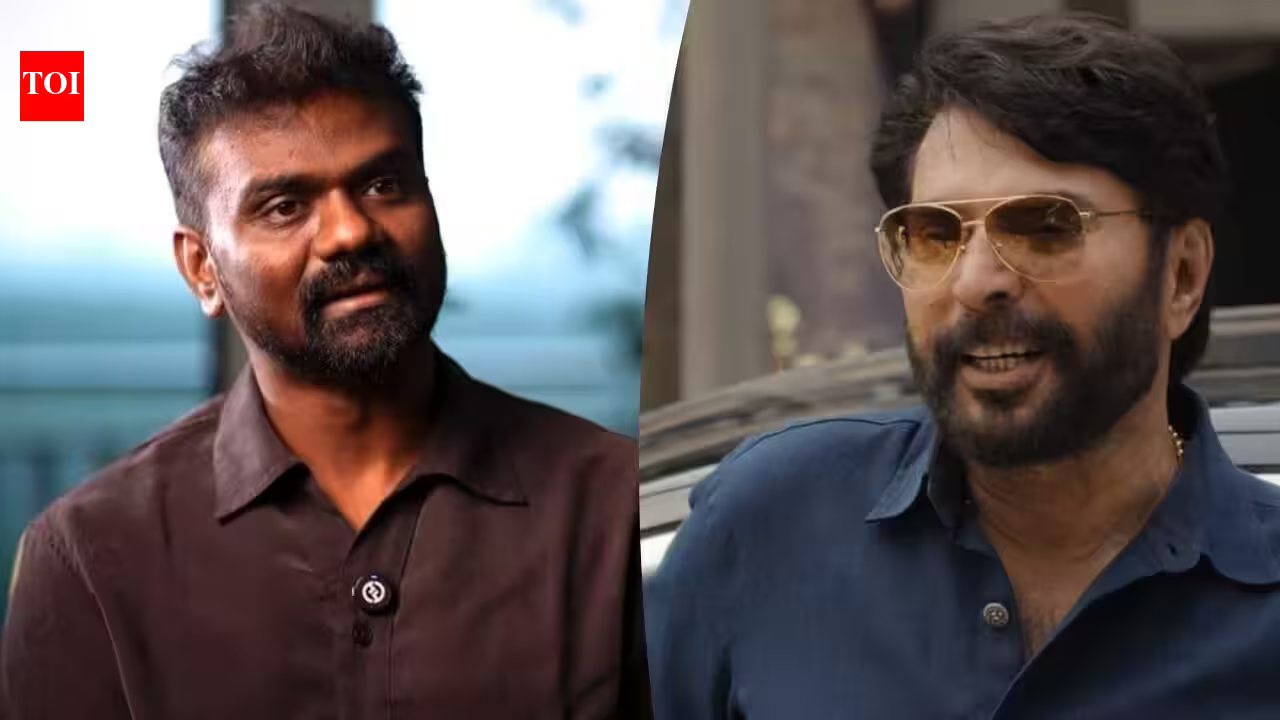
In the high-stakes, fast-moving world of Indian cinema, the term “method acting” is often thrown around with reckless abandon. Yet, there are very few actors who truly embody the rigorous intellectual discipline the term implies. Mammootty, the legendary Malayalam icon, has spent five decades proving that his longevity isn’t just about charisma—it’s about an insatiable, obsessive need to understand the architecture of a story before he ever steps in front of a camera.
With his highly anticipated return to Tamil cinema in director Rajkumar Periasamy’s O.M, that commitment has once again taken center stage. The film, which features the powerhouse pairing of Mammootty and Dhanush, is already shaping up to be one of the most significant releases of the year. But it’s the behind-the-scenes accounts of Mammootty’s preparation that have truly captured the imagination of cinephiles.
The Architect of Performance
Most stars are content to read their lines, understand their motivations, and trust the director to handle the rest. Mammootty is not “most stars.” When the veteran actor signed on to play the enigmatic Siya Karthikeyan in O.M, he didn’t just ask for his scenes; he asked for the blueprints.
In a candid conversation with Galatta Plus, director Rajkumar Periasamy shed light on the meticulous process that unfolded in Kochi. “After Mammootty sir agreed to do the film, he called me to Kochi and asked me to narrate the entire script,” Periasamy recalled. It wasn’t a casual request. Mammootty insisted on dissecting the narrative, asking for a deep dive into every character—not just his own. He wanted to know the arcs, the motivations, and, crucially, the dialogue of every person who would inhabit the screen alongside him.
For a director, this level of scrutiny could be intimidating. For Periasamy, it was a masterclass in collaboration. By understanding the ecosystem of the film, Mammootty ensures that his performance doesn’t just exist in a vacuum; it acts as an anchor for the entire ensemble.
A Two-and-a-Half-Day Deep Dive
The preparation process was as methodical as it was patient. Periasamy revealed that the script narration was treated with the gravity of a theater workshop. “On the first day, he asked me to narrate only the first half. On the second day, I narrated the entire second half. By then, he had connected with the complete story,” the director shared.
But Mammootty wasn’t done. The third session was dedicated purely to the internal monologue and vocal nuances of Siya Karthikeyan. “The following day, he asked me to narrate only his character’s dialogues. That is how he completely understood Karthikeyan in two and a half days.”
This is the “Mammootty Method.” By the time he steps onto the set, he isn’t just reciting lines; he is inhabiting a fully realized persona whose placement in the plot is calculated down to the millimeter. It is this level of intellectual labor that distinguishes a performance that is “good” from one that is “iconic.”
Mastering the Last-Minute Pivot
Even the most prepared performers occasionally face the chaos of set-life adjustments, and O.M was no exception. Periasamy shared a revealing anecdote about a pivotal dialogue featured in Mammootty’s birthday teaser. The line wasn’t in the original draft; it was a late-stage creative decision that the director wasn’t entirely sure would land.
“I was apprehensive,” Periasamy admitted. Proposing a script change to an actor of Mammootty’s stature is a daunting task for any filmmaker. However, the actor’s reaction was not one of ego or resistance, but of curiosity. Once presented with the new material, Mammootty didn’t just accept it—he elevated it. He integrated the line into his character’s existing rhythm, delivering it with the kind of distinctive, understated authority that has defined his career. It serves as a reminder that even after thousands of scenes, Mammootty remains agile, open to evolution, and deeply invested in the final product.
Why ‘O.M’ is a Cultural Moment
The excitement surrounding O.M is multifaceted. It marks Mammootty’s grand return to Tamil cinema after a seven-year hiatus, and the anticipation is compounded by the presence of a heavyweight cast that includes Sai Pallavi, Sreeleela, and the incomparable Naseeruddin Shah.
When you combine a visionary director like Rajkumar Periasamy with a script that demands this level of intellectual rigor, the result is usually something that transcends the typical “commercial” experience. The teaser, which gave audiences a brief, electric glimpse of his character, has already solidified the notion that this isn’t just a guest appearance; it is a vital, driving force in the film’s narrative.
The Lesson for the Next Generation
In an era where social media engagement often overshadows the craft of acting, Mammootty’s preparation for O.M stands as a vital touchstone. His approach forces us to rethink what it means to be a “star.” For Mammootty, stardom isn’t a pedestal; it’s a responsibility to the story.
By demanding to know the full scope of the narrative, he respects the work of his co-stars, his director, and, most importantly, the audience. He treats the script not as a casual suggestion, but as a map to be memorized and internalized. As we wait for O.M to hit the screens, the takeaway is clear: the most powerful performance is the one that has been earned through genuine, painstaking work. Mammootty continues to prove that while talent opens doors, it is the discipline of the craft that keeps you at the very top of the industry, decade after decade.
Disclaimer: This content is auto-generated for informational purposes only.
Source: Read Original News