









The Hindi film industry is mourning today following the news that Krishna Mukerji, the beloved mother of powerhouse performer Rani Mukerji, has passed away at the age of 75. A figure often kept away from the relentless glare of the paparazzi, Krishna Mukerji was nevertheless a quiet, grounding force in the life of one of India’s most acclaimed stars. Her loss leaves an undeniable void for the Mukerji family, a lineage steeped in the history and evolution of Indian cinema.
Yash Raj Films, the legendary production house that has long been a second home to Rani, issued a brief but poignant statement on behalf of the family: “With heavy hearts, we share that Rani Mukerji’s mother Mrs. Krishna Mukerji, 75, passed away this afternoon. The family is deeply grateful for your love, prayers, and support, and respectfully requests privacy during this time of immense grief.”
A Foundation Built on Quiet Encouragement
While Rani Mukerji is widely recognized today for her fierce, emotionally resonant performances, her entry into the limelight was not initially a foregone conclusion. It was, in fact, her mother’s foresight that set the wheels in motion. Decades ago, it was Krishna Mukerji who suggested that a young, 18-year-old Rani try her hand at acting as an experiment.
That suggestion, which began as a casual push toward creative exploration, blossomed into a career that would redefine the archetype of the Bollywood leading lady. Her debut in Raja Ki Aayegi Baaraat (1997) was merely the opening chapter. Under her mother’s quiet guidance, Rani evolved from a promising newcomer into an institution, balancing mainstream masala entertainers with gritty, performance-heavy dramas that challenged the industry’s status quo.
The Champion of Her Daughter’s Legacy
Behind the glitz of red carpets and the roar of box office numbers, Krishna Mukerji remained her daughter’s most vocal—and perhaps most honest—critic. There was a refreshing, unfiltered quality to her support. She didn’t just offer hollow praise; she possessed a keen sense of her daughter’s caliber and wasn’t afraid to voice when the industry had failed to recognize that talent appropriately.
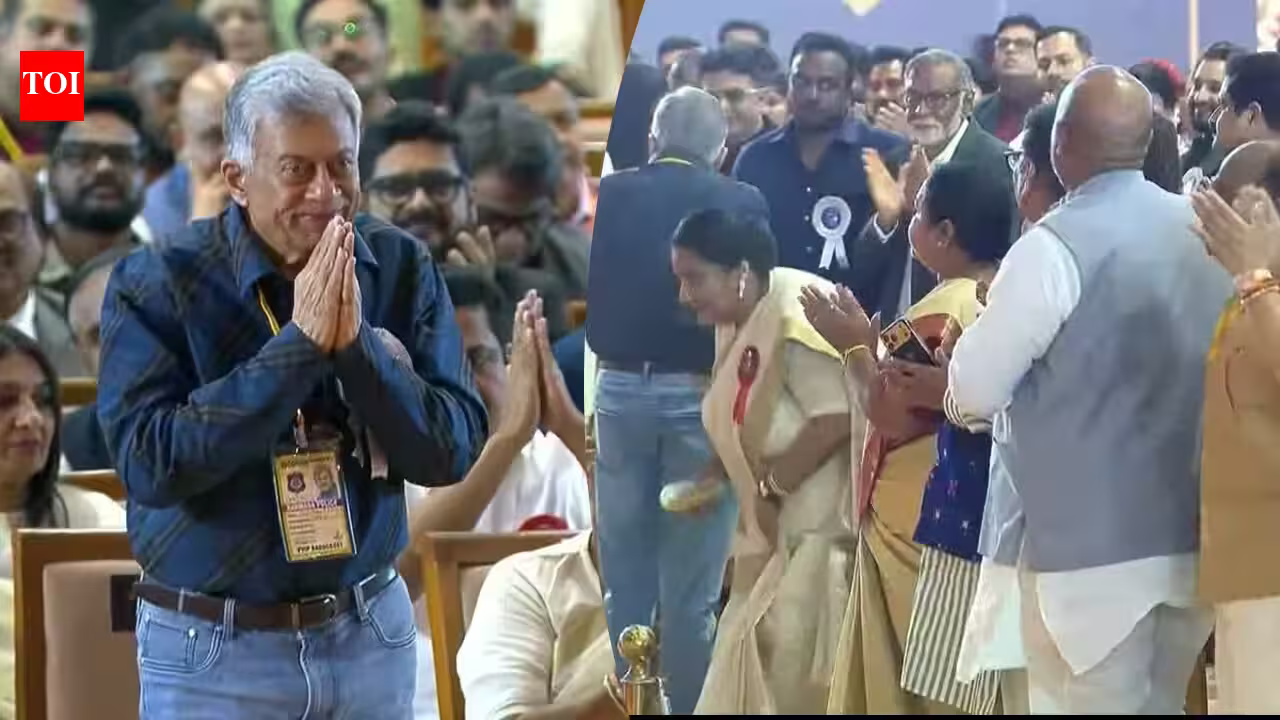
This was most evident when the conversation turned to the prestigious National Film Awards. Last year, during the festivities of Durga Puja, Krishna spoke candidly to Instant Bollywood regarding Rani’s long-overdue recognition for the legal drama Mrs. Chatterjee Vs Norway. While she expressed immense pride in the win, she didn’t mince words about the timeline.
“I am happy that she got a National Award,” she told the outlet. “But (she got it) very late. She should (have gotten the award) for the film Black, I think so. But today, I am very proud of her.” Her statement touched a nerve with many cinephiles who similarly felt that Rani’s tour-de-force performance as the deaf-blind Michelle McNally in Sanjay Leela Bhansali’s Black deserved the highest level of state recognition. To Krishna, the award wasn’t just a trophy; it was a validation of nearly 30 years of relentless labor and dedication.
A Legacy of Grit and Resilience
The bond between mother and daughter was built on a foundation of mutual respect and shared resilience. Rani has often spoken about her mother as her anchor, a steady presence who understood the pressures of a career that requires the constant baring of one’s soul for the screen.
When one considers the arc of Rani Mukerji’s career—from the exuberant characters of her early films to the intense, socially relevant roles in Mardaani and Mrs. Chatterjee Vs Norway—one can see the echoes of the woman who encouraged her to try acting in the first place. Krishna Mukerji raised a daughter who didn’t just want to be a star, but a craftsman. Even as the industry shifted and evolved, the core values instilled by her mother remained, manifesting in the uncompromising professional standards Rani is known for today.
Looking Forward While Honoring the Past
As the industry processes this loss, the focus remains on the family’s need for privacy. Rani, whose career continues to thrive with a mix of gritty realism and high-profile projects, now faces the most difficult of personal transitions. Her upcoming projects, including the highly anticipated King alongside Shah Rukh Khan—set for a Christmas 2026 release—seem peripheral against the weight of this news.
For fans and well-wishers, the passing of Krishna Mukerji serves as a reminder of the human lives behind the larger-than-life figures we admire on screen. The “Mukerji” brand of excellence—characterized by poise, intellect, and a refusal to be pigeonholed—is a direct inheritance from the woman who encouraged her daughter to step into the light at 18.
In the years to come, whenever Rani stands on a stage to accept an honor or delivers a performance that leaves audiences spellbound, the ghost of her mother’s critique—and her unwavering pride—will surely be present. Krishna Mukerji may have been the one watching from the sidelines, but she was, in many ways, the architect of a career that changed Indian cinema forever.
The outpouring of condolences from the film fraternity is a testament to the respect both Rani and her mother commanded. As the curtains close on this chapter, the legacy of Krishna Mukerji endures not just in the memories of those who knew her, but in the enduring, powerful work of the daughter she believed in from the very beginning.
Disclaimer: This content is auto-generated for informational purposes only.
Source: Read Original News