









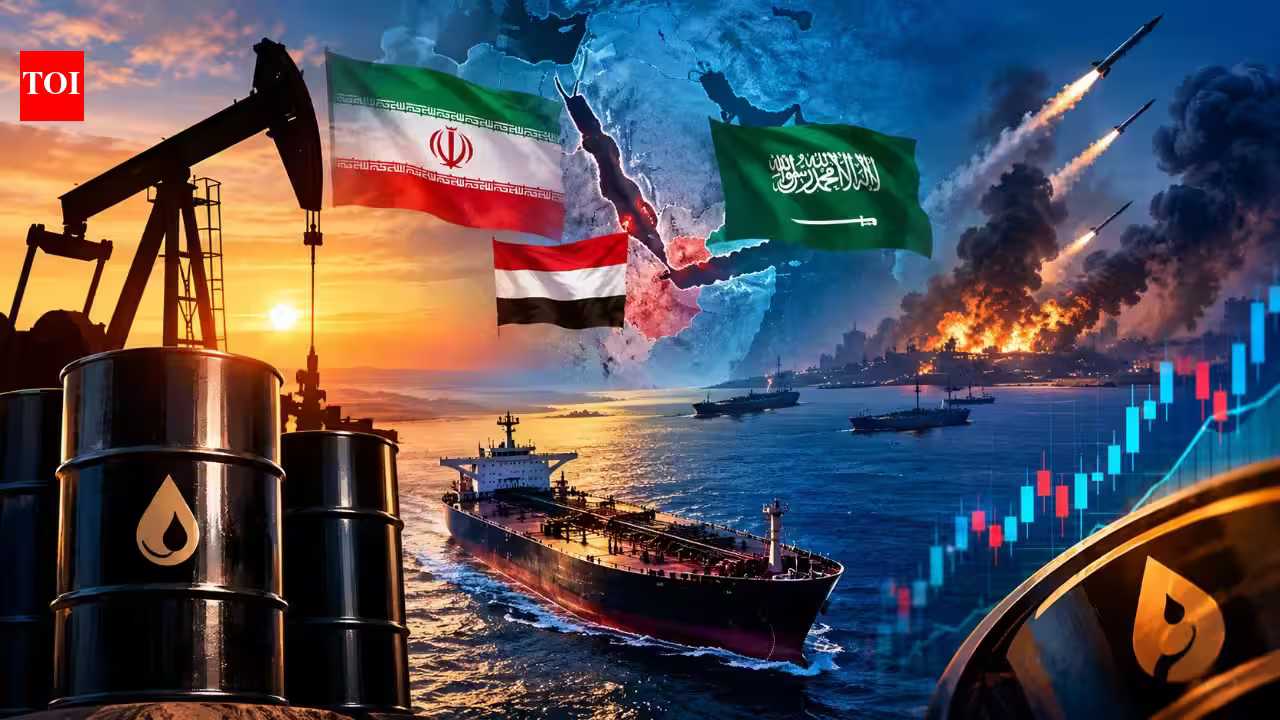
Geopolitical Volatility and the Global Energy Supply Chain
The global energy landscape is currently navigating a period of profound uncertainty as geopolitical tensions in the Middle East once again move to the forefront of oil price volatility. The recent escalation in attacks by Houthi rebels on Saudi Aramco infrastructure serves as a stark reminder of the fragility inherent in global energy supply chains. When critical oil-producing infrastructure in the Kingdom of Saudi Arabia faces threats, the immediate market reflex is a surge in Brent crude and West Texas Intermediate (WTI) futures. This volatility is not merely a reflection of current supply deficits but is fundamentally driven by the “risk premium” that traders attach to the possibility of structural damage to major export facilities.
At the center of this tension is the Strait of Hormuz and the broader Red Sea corridor, regions that facilitate a significant portion of the world’s maritime oil trade. Attacks on state-owned energy assets create immediate logistical bottlenecks and insurance spikes that discourage shipping companies, thereby tightening supply even if actual production levels remain steady. For global markets, this creates a volatile trading environment where price discovery is hampered by political rhetoric and speculative behavior regarding upcoming electoral cycles and regional military posturing.
Impact on the Indian Macroeconomic Framework
For India, an economy that imports over 80 percent of its crude oil requirements, fluctuations in global oil prices are a matter of deep structural concern. The recent rise of Brent crude toward the $106 per barrel mark presents a multifaceted challenge for the Indian government and the Reserve Bank of India (RBI). India’s current account deficit (CAD) is highly sensitive to energy prices; a sustained increase in the import bill exerts downward pressure on the Indian Rupee and complicates the inflation management strategy.
When global prices spike due to regional conflicts, the Indian domestic market experiences a lag-effect in retail fuel pricing. However, the fiscal burden is immediate. Higher import costs necessitate larger foreign exchange outflows, which can weaken the Rupee against the US Dollar. Furthermore, because petroleum products act as the lifeblood for the logistics, manufacturing, and agricultural sectors in India, high energy prices possess a direct inflationary potential that can permeate the consumer price index (CPI). The Indian energy sector, dominated by state-owned giants like IOCL, BPCL, and HPCL, often absorbs the brunt of these price shocks to insulate the consumer, leading to significant pressure on corporate balance sheets and public fiscal discipline.
The Tug-of-War Between Conflict and Production Metrics
The current market environment is characterized by a unique conflict between supply-side fears and supply-side mitigation efforts. While Houthi attacks generate bullish sentiment, other factors act as a counterweight to prevent runaway pricing. For instance, Saudi Arabia’s decision to increase oil production despite regional volatility demonstrates a strategic intent to maintain market share and stabilize the global economy. This dual approach—defending critical infrastructure while simultaneously ensuring market liquidity—is a hallmark of modern energy diplomacy.
Additionally, the role of Russian diesel exports adds a layer of complexity to the supply equation. Despite the ongoing global discourse regarding energy sanctions and diplomatic decoupling, Russia’s consistent supply of diesel to the US and other markets has served to cap the upward movement of energy prices. This suggests that the global oil market has developed a degree of resilience; it is now characterized by a sophisticated, albeit strained, trade network where political disputes rarely result in a total cessation of commodity flows. Investors and energy analysts are now forced to weigh the “war risk” against the logistical realities of global energy trade, which remains remarkably interconnected despite localized ruptures.
Strategic Responses and Energy Security in Emerging Markets
For an emerging market like India, the vulnerability to geopolitical volatility has spurred a strategic pivot toward energy diversification. The government’s emphasis on the National Green Hydrogen Mission, the expansion of solar and wind energy capacity, and the strategic petroleum reserve (SPR) program are direct responses to the risks highlighted by events in the Middle East. India’s SPR, located in underground caverns across the country, provides a limited but essential buffer against short-term supply disruptions.
However, in the short term, the market remains susceptible to the weaponization of energy. When external actors—such as those threatening the Strait of Hormuz—attempt to manipulate prices to influence the electoral or political outcomes of major nations, the resulting market distortion makes long-term planning difficult for developing nations. India’s energy security policy must, therefore, remain agile, prioritizing both the procurement of crude from diverse geopolitical regions—such as increasing imports from the US and Latin America—and the rapid scaling of domestic refining capacity to process varying grades of crude.
Future Outlook and Market Stability
The coming months will likely remain dominated by the interplay of domestic US electoral politics and Middle Eastern stability. As global powers warn against the intentional disruption of energy flows for political leverage, the markets will closely monitor the integrity of the energy supply corridor. For traders and policymakers alike, the lesson of this period is clear: the energy transition is not merely an environmental goal but a critical component of national security.
As we move forward, the price of crude will continue to reflect a blend of tactical maneuvering and fundamental supply-demand data. While the prospect of higher production from OPEC+ may provide a floor for price stabilization, the risk of localized military conflict ensures that volatility will persist. For India, the imperative is to continue structural reforms that reduce the economy’s sensitivity to these price swings. Reducing reliance on imported fossil fuels is no longer just an environmental mandate; it is a necessary economic strategy to insulate India’s growth trajectory from the unpredictable turbulence of the global oil market. The focus for Indian businesses must be on enhancing operational efficiency and investing in energy-efficient technologies to navigate this period of sustained uncertainty, ensuring that rising global costs do not derail the country’s long-term developmental goals.
Disclaimer: This content is auto-generated for informational purposes only.
Source: Read Original News