







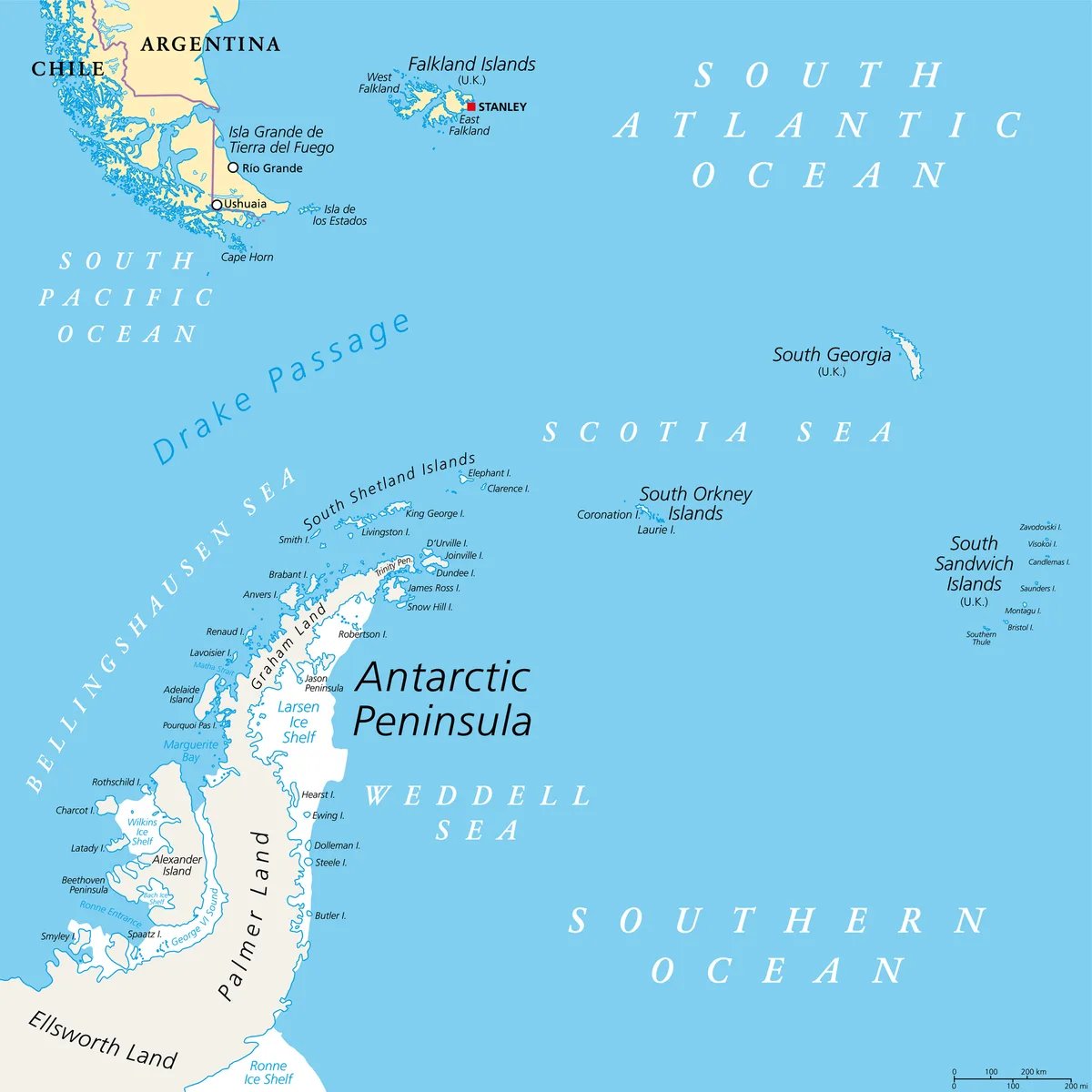
Signy Island is in one of the most remote regions on Earth. To reach it, travellers must navigate Drake Passage – a body of water separating Cape Horn and the South Shetland Islands of Antarctica, where ocean waves can reach 60ft.
Measuring just 19km2, approximately half of the island is permanently covered by an ice cap and its outlet glaciers.
Keen to learn more about life on the island, PhD student Emily Broadwell travelled to Signy Island to investigate an under-researched organism: microscopic algae.
While snow and glacier algal blooms are being increasingly well-documented in the Northern Hemisphere, their diversity and ecology in Antarctic regions are poorly understood in comparison – despite it containing some of the largest glaciers in the world.

“These landscapes are changing fast, and Arctic and alpine glaciers might be some of the first habitats lost completely to climate change,” explains Broadwell.
During spring and summer melt seasons, extensive algal blooms form on Signy Island. The snow and glacier algae act as ecosystem engineers: algae can capture significant amounts of carbon through the process of photosynthesis.
However, algal blooms can exacerbate snow and ice melt. By darkening the surface of the snow and ice, less sunlight is reflected and is instead absorbed, melting the ice and releasing sequestered carbon.
Snow and glacier algae face habitat loss as global temperatures continue to rise, which means it’s vital for scientists to further understand these organisms – particularly as many of them are likely to be endemic to these isolated regions.
Over six weeks of the austral summer of 2024, snow and ice samples were collected from various locations on Signy Island. They were then transported back to the University of Bristol, UK, for DNA extraction.
Antarctic algae
The study, which was published in the journal ISME Communications, uncovered a surprisingly rich and habitat-specific diversity of snow and glacier algal species.
“Our work identified a novel form of the glacier alga called Ancylonema that has never been recorded in the Northern Hemisphere,” says Broadwell.
“Different ice surfaces and snowpacks also hosted unique algal communities. Notably, we found red snow algae dominating the ice cap, where Ancylonema glacier algae would normally be expected to prevail.”
These findings indicate that Antarctic glacier ecosystems won’t respond uniformly to climate change, as had been previously assumed, and likely won’t follow the same trajectory as more well-studied glaciers such as the Greenland Ice Sheet.

“The hidden diversity discovered in the snow and glacier algae from this remote Antarctic Island highlights how we need more expeditions to sample further, in particular around the Southern Hemisphere,” added Chris Williamson, the study’s co-author, and associate professor in polar microbiology at the University of Bristol.
“There is much more potential to expand our knowledge on the diversity and distribution of these unique microbes.”
Read the full study here: Remote Antarctic Island Reveals Unique Algal Dynamics in Snow and Ice
Top image: Emily Broadwell on Signy ice cap. Credit: Jerry Gillham/British Antarctic Survey