








The Return of a Narrative Powerhouse
The landscape of modern gaming has shifted significantly since 2017, but the appetite for narrative-driven first-person shooters remains as potent as ever. Bethesda Softworks and MachineGames have officially confirmed the development of Wolfenstein 3, ending years of speculation following the 2017 release of Wolfenstein II: The New Colossus. The announcement, spearheaded by Xbox CEO Asha Sharma, marks a significant milestone for the publisher, signaling a renewed commitment to high-budget, story-heavy single-player experiences within the Xbox ecosystem.
For long-time followers of the franchise, this news provides much-needed clarity. The series has occupied a unique space in the industry, blending high-octane mechanical combat with dense, branching historical fiction. By confirming that the project is officially in production, MachineGames is signaling that the long-standing cliffhanger surrounding the fate of William Joseph “BJ” Blazkowicz is finally moving toward a resolution. The confirmation arrived alongside the reveal of The Elder Scrolls VI: Sentinel, placing two of Bethesda’s most iconic intellectual properties at the forefront of the studio’s future development roadmap.
Technical Advancements and Production Workflow
MachineGames has provided a rare glimpse into the production process by sharing imagery from a motion-capture studio. These technical assets confirm that the studio is prioritizing high-fidelity performance capture, a staple of the series’ cinematic presentation. Brian Bloom, who has voiced the lead protagonist BJ Blazkowicz since the 2014 reboot, and Debra Wilson, known for her role as Grace Walker, are confirmed to be returning to their roles.
The inclusion of these specific performers suggests that the game will maintain the intimate, character-focused storytelling established in previous entries. From a technical standpoint, the jump to current-generation hardware—likely utilizing the latest iteration of the id Tech engine—points toward significant improvements in graphical fidelity, physics-based environmental interaction, and AI complexity. Given the studio’s expertise in lighting and atmospheric storytelling, players can expect the upcoming title to push the technical boundaries of what the current generation of consoles and PCs can achieve in terms of world density and frame-rate stability.
Narrative Continuity in an Alternate Timeline
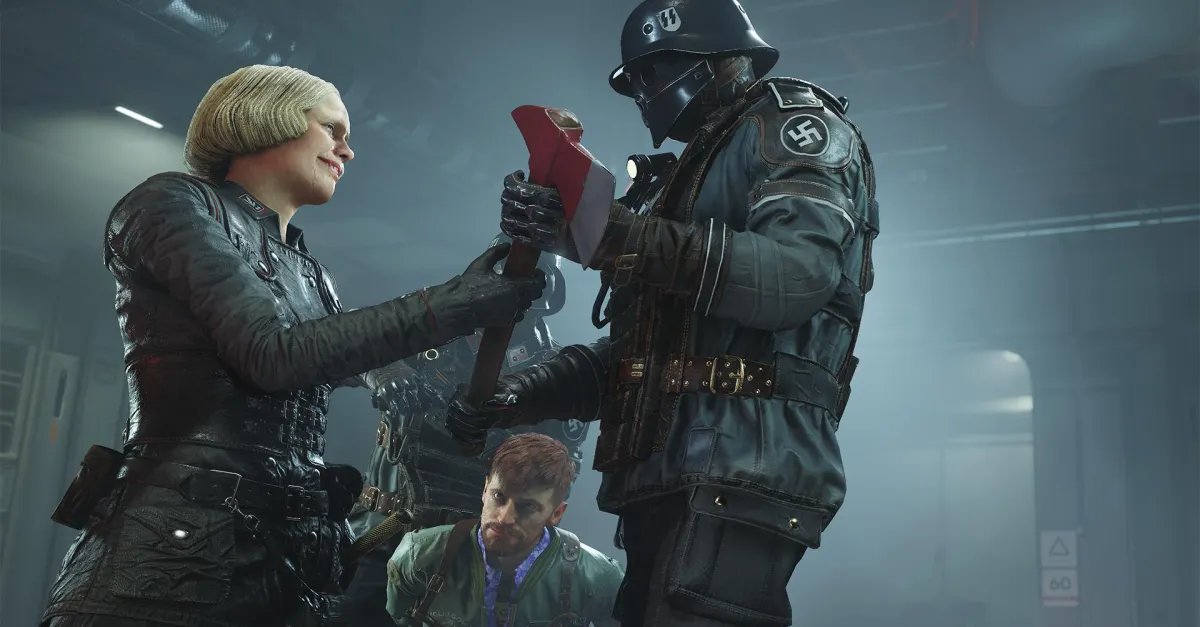
Wolfenstein 3 carries the heavy burden of concluding a narrative arc that spans over a decade of real-time development. The previous mainline entry, The New Colossus, concluded with the protagonist successfully initiating a resistance movement across an occupied, alternate-history United States. While the 2019 spin-off Wolfenstein: Youngblood introduced cooperative mechanics and shifted the perspective to Blazkowicz’s twin daughters in the 1980s, fans have been eager to return to the core emotional and mechanical stakes established in the main timeline.
The upcoming sequel faces the challenge of reconciling the events of the earlier entries while expanding the scope of the conflict. By maintaining the alternate 1960s setting and the focus on Blazkowicz, the developers are signaling a return to the roots of the series. This decision allows for the continuation of themes regarding structural resistance, the psychological toll of prolonged war, and the complexities of fighting an entrenched, technologically superior regime.
The Impact of the Xbox Acquisition on Development
The formal announcement of Wolfenstein 3 under the stewardship of Xbox CEO Asha Sharma represents a significant shift in corporate visibility. Since Microsoft’s acquisition of Bethesda Softworks, there has been widespread curiosity regarding how these studios would prioritize their multi-year projects. The confirmation of this title serves as a proof-of-concept for the current management structure, demonstrating that the studio has been granted the resources and time necessary to polish large-scale titles without rushing toward an early release.
This strategic pacing is essential for the Wolfenstein series, which relies heavily on level design and environmental storytelling. Unlike live-service games that focus on repetitive loops, MachineGames titles typically emphasize bespoke, handcrafted environments that require rigorous playtesting and iterative design. The commitment to this project underscores a broader industry trend where publishers are choosing to double down on prestige single-player content to drive hardware sales and subscription growth through services like Game Pass.
The Future of First-Person Combat
As the industry pivots toward more complex, systems-driven shooters, the Wolfenstein franchise remains a benchmark for the “boomer shooter” philosophy—fast-paced, high-impact combat coupled with modern accessibility. The challenge for MachineGames will be to innovate upon the existing mechanics of dual-wielding and tactical aggression. While the gunplay in The New Colossus was lauded for its kinetic weight and feedback, the sequel will likely introduce new mobility tools or environmental puzzle elements that take advantage of modern processing power.
The announcement serves to revitalize the genre by proving that big-budget, linear narratives still hold immense value in a market saturated by open-world map games and competitive multiplayer titles. By focusing on the strength of their established cast and the depth of their alternative-history setting, MachineGames is positioning Wolfenstein 3 to be a cornerstone release for the next few years of Xbox development. As the studio continues its production phase, the primary expectation from the community remains high: a tight, well-paced experience that honors the legacy of its predecessors while pushing the boundaries of the first-person perspective.
Disclaimer: This content is auto-generated for informational purposes only.
Source: Read Original News