








The Evolution of Design: Retro Meets Modern Engineering
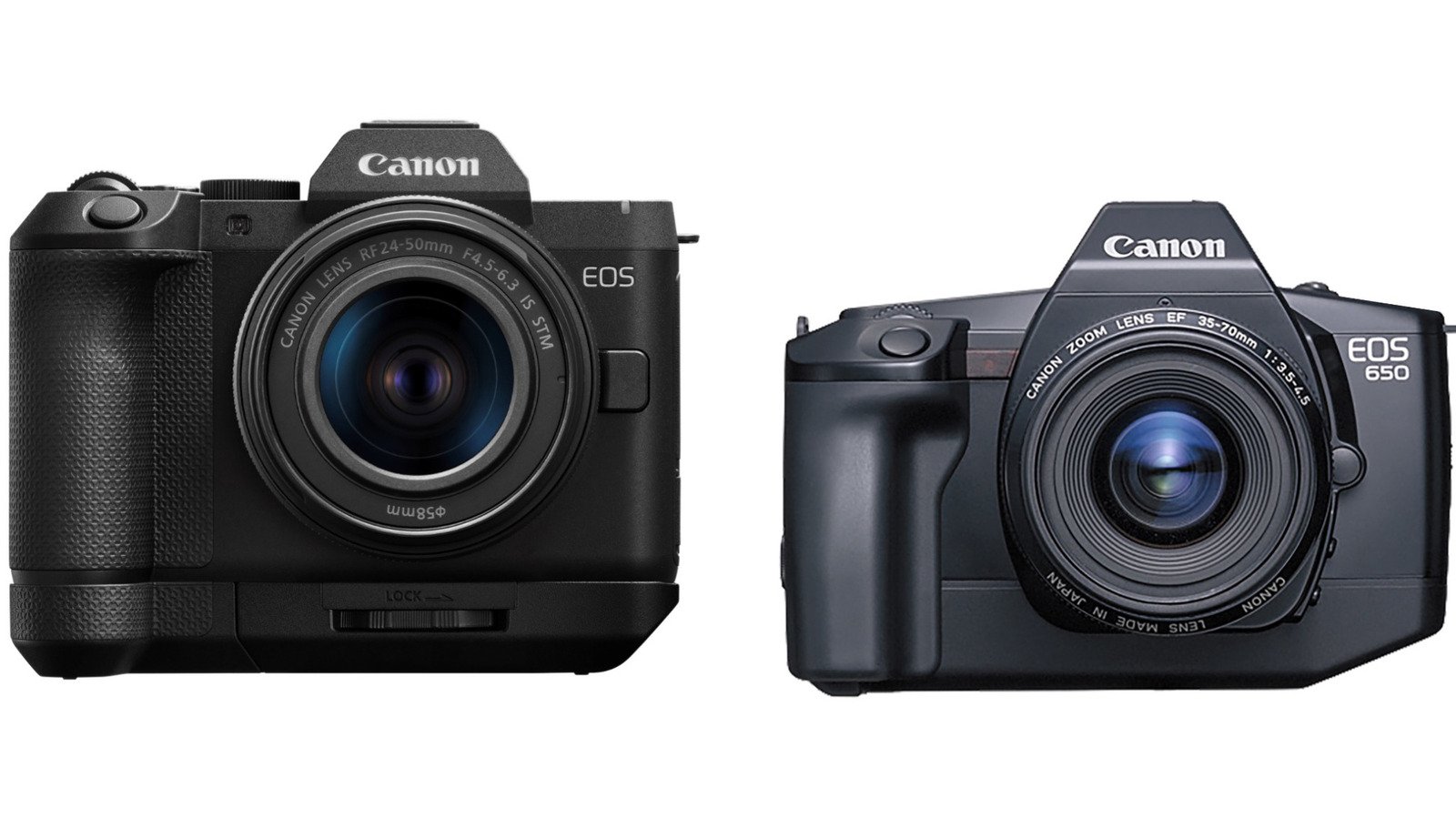
Canon has officially introduced the EOS R8 II, a camera that signals a significant departure from the minimalist aesthetic of its predecessor. While the original EOS R8 prioritized a streamlined, rounded profile, the R8 II draws inspiration from the classic EOS 650 SLR. This design shift is more than a stylistic preference; it reflects a functional evolution toward a more robust physical interface.
The chassis features a squared-off top deck and a pronounced right-hand grip area, mimicking the iconic shape of Canon’s film-era legends. Beyond the visual appeal, the ergonomics have been significantly upgraded. Most notably, the R8 II now includes a dedicated joystick for autofocus point selection—a long-requested feature that was conspicuously absent from the original model. By incorporating these tactile controls, Canon is positioning the R8 II as a serious tool for photographers who demand quick adjustments during high-pressure shooting scenarios. Despite the added hardware, the camera remains remarkably lightweight at just 1.2 pounds, securing its status as the lightest full-frame mirrorless camera currently on the market to feature comprehensive in-body stabilization.
Substantial Hardware Upgrades for High-Speed Performance
The technical core of the EOS R8 II has received a substantial overhaul to accommodate faster performance and greater reliability. The camera now achieves a burst rate of 40 frames per second using the electronic shutter, complete with continuous autofocus and auto-exposure tracking. This speed is bolstered by an enlarged buffer, allowing for a 58 percent increase in JPEG capacity and a 30 percent boost in RAW file throughput compared to the previous generation.
One of the most significant mechanical additions is the inclusion of 5-axis in-body image stabilization (IBIS). This system provides up to 7.5 stops of compensation when used with compatible RF lenses, effectively neutralizing camera shake during handheld photography or video capture. This integration is a massive leap for a camera in the entry-level full-frame segment, ensuring that users can achieve sharp results in low-light environments without relying exclusively on high ISO settings or bulky tripods.
Next-Generation Autofocus and Predictive Capture
Canon has integrated its advanced Dual Pixel CMOS AF II technology into the R8 II, providing 100 percent sensor coverage for subject detection. The tracking algorithms have been refined to be more persistent, maintaining focus on humans, animals, and vehicles even in erratic motion scenarios.
A standout inclusion for this tier of camera is the ability to register specific individuals for prioritized tracking. By saving a subject’s profile, the camera ensures that the focus system remains locked onto that specific person even when others enter the frame. Additionally, the R8 II introduces a pre-continuous shooting mode. This feature buffers the last 20 frames—roughly half a second of action—before the shutter button is fully depressed. This is a critical asset for wildlife and sports photographers who often miss the exact moment of a critical event due to reaction time constraints.
Video Capabilities for Creators
While the EOS R8 was already highly regarded for its video performance, the R8 II refines the existing package to better support hybrid workflows. The camera captures 4K video at 60 frames per second, which is oversampled from the full 6K sensor width to maximize detail. For those requiring slow-motion footage, the device supports uncropped 1080p recording at 180 frames per second.
The video suite is designed for professional utility, offering 10-bit 4:2:2 internal capture with Canon Log3. The utilization of HEVC or AVC codecs with bit rates reaching 250 Mbps ensures high fidelity for post-production color grading. Furthermore, the robust autofocus tracking system from the still photography mode carries over to video, ensuring that focus transitions remain smooth and accurate during complex camera movements. New software-level additions, such as specific film-look profiles and a dedicated “Slow & Fast” mode, provide creators with more creative control directly within the camera interface.
Operational Considerations and Market Positioning
The Canon EOS R8 II is built around a 3-inch 1.62-million-dot vari-angle display, paired with a 2.36-million-dot electronic viewfinder (EVF). While these specifications are functional and adequate for most shooting conditions, the reliance on the LP-E17 battery may be a constraint for intensive users, as the camera is rated for approximately 340 shots in power-saving mode.
Priced at $1,899 for the body only, the R8 II reflects current market trends, where manufacturing costs and global supply chain shifts have moved the baseline for entry-level full-frame equipment. For a package including the RF24-50mm F/4.5-6.3 IS STM lens, the price rises to $2,099. With the optional EG-E2 Extension Grip available for an additional $100, the camera can be further customized for larger hands or improved balance with telephoto glass. Despite the price, the combination of advanced stabilization, high-speed burst rates, and professional-grade subject tracking positions the EOS R8 II as a versatile bridge for enthusiasts looking to transition into full-frame photography. Shipments are scheduled to begin in late October, marking a significant milestone for Canon’s mirrorless lineup this year.
Disclaimer: This content is auto-generated for informational purposes only.
Source: Read Original News