








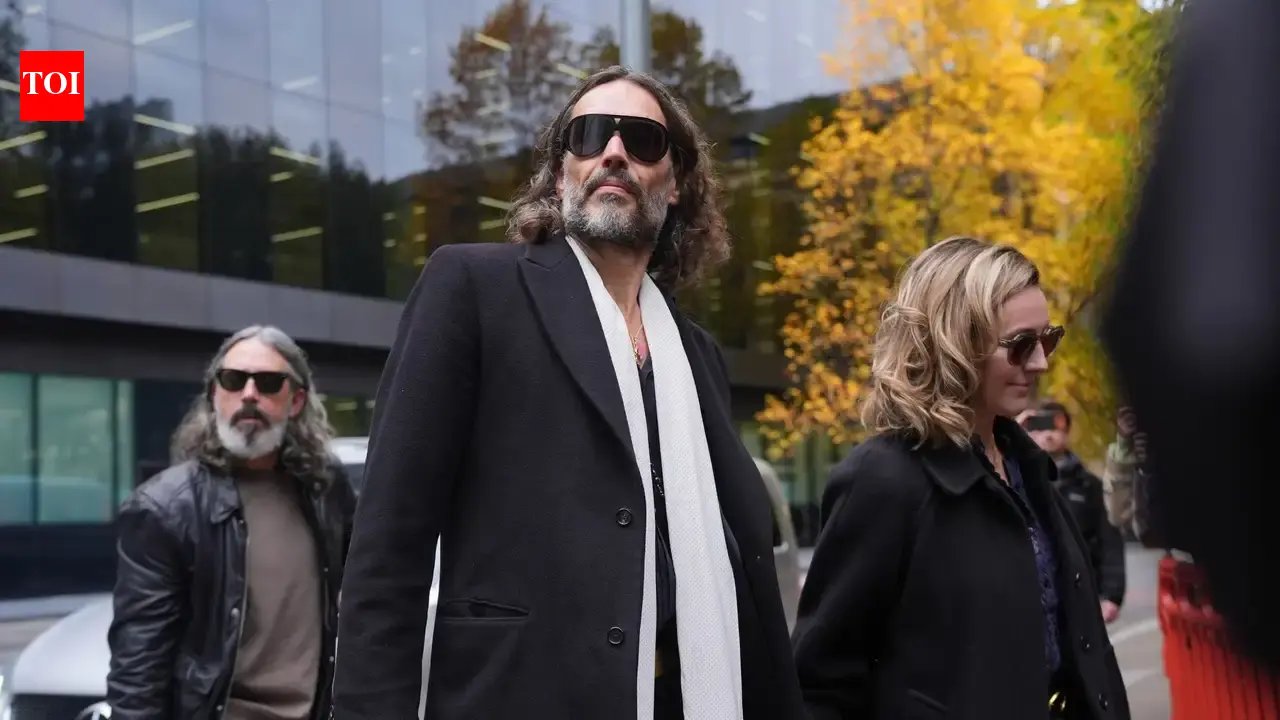
The atmosphere outside Southwark Crown Court in London has been heavy with a distinct, somber tension this week. For three weeks, the public gaze has been fixed on the interior of the courtroom, where a man who once defined the chaotic, high-octane energy of British celebrity is now fighting for his reputation—and his freedom. Russell Brand, 51, stands at a crossroads, as the jury began their deliberations this week, tasked with deciding the truth behind a series of harrowing allegations that span a decade of the entertainer’s career.
Judge Joel Bennathan’s instruction to the 12 jurors was stark and unambiguous: “I can only accept a verdict that is the verdict of all 12 of you.” As they retreat behind closed doors, the weight of the testimonies—and the intense scrutiny of the legal arguments—remains the singular focus of a case that has captivated and horrified in equal measure.
A Career Under the Microscope
The allegations against Brand are not isolated incidents; they represent a sprawling timeline that stretches from 1999 to 2009. This was a pivotal era for the performer, a decade that saw him ascend from a raw, boundary-pushing stand-up comedian to a household name in the U.K., eventually breaking into Hollywood stardom with roles in films like Forgetting Sarah Marshall.
Prosecutors have painted a picture of a man who utilized his immense celebrity to prey upon women, detailing an array of locations—ranging from the corridors of MTV’s London offices to the quietude of his own home—where they claim acts of sexual violence and assault took place. Brand faces seven charges in total: three counts of rape, three counts of sexual assault, and one count of attempted indecent assault. Throughout the trial, he has remained a constant presence in the dock, often seen alongside his wife, Laura Gallacher, a stoic image of marital solidarity amidst the storm of public and legal judgment.
The Defense Strategy: Distinguishing Morality from Legality
The defense’s closing arguments, delivered by Ian Winter, represented a calculated and risky attempt to reframe the narrative for the jury. Winter didn’t shy away from the unsavory aspects of Brand’s past. Instead, he leaned into them, creating a jarring distinction between character and crime.
“It is not criminal to treat women unkindly before, during or after sex,” Winter argued, stripping away the polish of the courtroom to address the elephant in the room: Brand’s well-documented history of promiscuity and his self-admitted obsession with sex during his younger years. The defense’s gamble was simple: convince the jury that while Brand may have been “disgusting, distasteful, or immoral,” those traits do not constitute a criminal threshold. By characterizing him as a man who lived “like a crazy idiot” during his wilder, substance-fueled years, the defense sought to decouple his perceived character flaws from the specific allegations of non-consensual acts.
The Shadow of the Documentary
A significant portion of the trial’s discourse hinged on the origin of the current legal push. Brand’s legal team has vociferously argued that the judicial process has been compromised by the 2023 documentary that brought these anonymous allegations into the mainstream consciousness. Ian Winter famously suggested that the “well of justice had been corrupted and contaminated” by the media firestorm that followed the broadcast.
The defense argues that the claimants’ decision to approach the police only after the film’s release suggests a narrative driven by public momentum rather than individual grievance. It is a classic legal defense—attacking the credibility and timing of the accusers—but in the digital age, where documentaries and viral social media exposés can dismantle reputations overnight, it takes on a different intensity. The prosecution, meanwhile, maintains that the documentary simply provided the courage for these women to finally step forward, highlighting the systemic power dynamics that once protected a man of Brand’s stature.
The Evolution of Brand
To look at Russell Brand today is to look at a man performing a different kind of persona. The man who once wore tight trousers, teased his hair into a chaotic bird’s nest, and engaged in drunken antics on live radio has largely disappeared, replaced by a version of himself that leans into wellness, religious devotion, and the fringes of internet discourse. Having relocated to Florida, he has spent his recent years cultivating a massive, loyal online following that is often deeply skeptical of mainstream media—a irony that hasn’t been lost on the press covering this trial.
Whether this pivot toward a more introspective or “awakened” brand identity will influence the jury’s perception of the man who existed between 1999 and 2009 remains to be seen. The jury is asked to look back at the “old” Russell Brand—a product of the tabloid-fueled 2000s—while the “new” Russell Brand sits before them, quiet, observant, and waiting.
A Verdict for the Culture
Whatever the outcome, this trial has become a bellwether for the post-Me-Too landscape in Britain. It forces a difficult conversation about the statute of limitations on trauma, the influence of celebrity in shielding perpetrators, and the fine, often murky line between “bad behavior” and criminal conduct.
As the jury deliberations continue, the public is left waiting. Will the verdict be viewed as a definitive reckoning for a man accused of abusing the power his fame afforded him? Or will it be interpreted as a failure of evidence against a man who, while perhaps unlikable, did not cross the line into the criminality he is accused of?
Regardless of the legal outcome, the images from Southwark Court have already left an indelible mark. They serve as a final, sober chapter to a celebrity life that has been defined by extreme highs and, now, the potential for a catastrophic low. The 12 men and women behind those closed doors aren’t just deciding on one man’s guilt; they are deciding on the veracity of six women’s stories and, in doing so, are setting a standard for how we weigh the shadows of a celebrity’s past against the requirements of the law.
Disclaimer: This content is auto-generated for informational purposes only.
Source: Read Original News