








The image of Russell Brand inside London’s Southwark Crown Court on Monday was a stark, jarring conclusion to a public transformation that has spanned nearly two decades. Once the irreverent, fast-talking darling of British media, Brand now stands as a convicted criminal, sentenced to 10.5 years in prison for a series of harrowing acts of sexual violence. As the sentence was read, the man who built a career on audacity and charm offered a final, silent gesture: mouthing “I love you” to his wife, Laura Gallacher, from the courtroom dock.
It was a moment that underscored the surreal reality of the past few months. For those who watched Brand transition from high-profile comedian to wellness guru and political firebrand, the trial served as a devastating reality check. The court found him guilty of one count of rape and three counts of sexual assault, crimes rooted in a period between 1999 and 2009—a time when, as the prosecution argued, his fame provided the perfect shield for a predator.
A Legacy Decimated by the Verdict
The gravity of the sentencing was palpable. While Brand maintained a facade of composure—often seen holding rosary beads during proceedings—the judge’s remarks cut through the performative nature of his courtroom presence. In a stinging indictment of his past behavior, the presiding judge labeled Brand a “sexual predator,” explicitly noting that his internal circle and entourage had “indulged” his “dreadful behavior.”
For years, Brand operated in the orbit of immense privilege and celebrity. The allegations, which emerged from six women in total, detailed a pattern of behavior that was as calculated as it was cruel. While he was acquitted of two other rape charges and a count of attempted indecent assault, the convictions that stuck carry a mandatory weight that will keep him behind bars for over a decade. The dismissal of some charges provided no relief to the victims of the four crimes for which he was held accountable, nor did it soften the impact of a sentencing that signals an end to the era of Brand’s impunity.
The Public Presence of Laura Gallacher
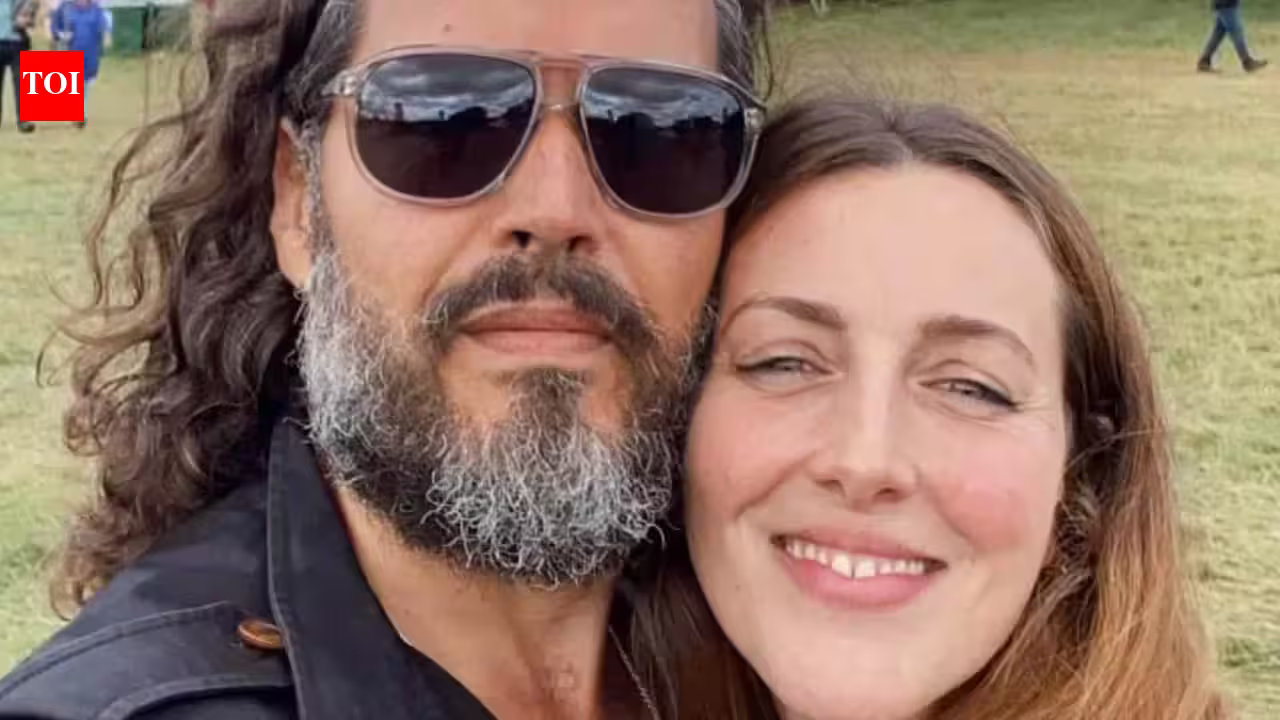
Throughout the grueling legal process, Laura Gallacher has remained a constant, visible figure. Her presence at every hearing was documented by the press, her stoic demeanor shifting from hope to visible devastation as the final verdict was delivered. After the sentencing, she was seen leaving the courthouse, a target of the relentless lens of the paparazzi who have tracked every step of this downfall.
Brand’s decision to mouth “I love you” to his wife as he was taken into custody by police officers was interpreted by some as a final attempt at humanization, a way to anchor himself to his life outside the courtroom walls. However, the gesture prompted mixed reactions from the public and legal observers alike. To some, it was a display of genuine human connection; to others, it was yet another performance from a man whose entire career was built on the art of persuasion and projection. For Gallacher, who has been forced to navigate the collapse of her husband’s reputation under the brightest spotlight imaginable, the path forward is undoubtedly one of immense private trauma.
The “Sexual Predator” Label and Institutional Failure
The judge’s assessment of Brand as a “sexual predator” is perhaps the most significant takeaway from the proceedings. It suggests that the court looked past the persona—the yoga-practicing, conspiracy-theorizing recluse he had become—and recognized the man he was at the height of his power. The judicial focus on his “entourage” highlights a critical element of the case: the enabling.
The fact that these crimes occurred during the height of his fame raises uncomfortable questions about the industry that sustained him. How did such behavior go unchecked for so long? The courtroom became a space where those questions weren’t just asked, but answered through the harsh reality of testimony and evidence. The period of 1999–2009, long protected by the walls of fame and industry silence, was finally laid bare. It is a cautionary tale about how celebrity can act as a shroud, hiding the darker impulses of those who thrive on public adoration.
The Future of the Investigation
Despite the finality of Monday’s 10.5-year sentence, the legal turmoil surrounding Russell Brand is not entirely resolved. The Metropolitan Police have confirmed that the actor remains under investigation for additional allegations of rape from two other women. While this trial has concluded with a significant conviction, it is merely one chapter in a much larger, darker narrative.
The legal system has set a firm boundary for Brand, but the broader cultural reckoning continues. Six women have stood up to detail experiences that the court found credible enough to merit a prison sentence, and the investigation into those additional claims suggests that the full extent of his history of abuse may still be coming to light. For now, the man who once commanded stages, film sets, and global podcast audiences is being held in custody, his world reduced to a cell and the long-term consequences of his actions.
As the court proceedings move into the rearview mirror, the focus now shifts to the lives of those he harmed—the women whose bravery in coming forward ultimately stripped away the armor of his celebrity. The “I love you” mouthed to his wife may have been his last act as a free man, but for the rest of the world, the final image of the trial is likely to be the stern, damning words of the judge who recognized, at long last, the reality of a predator being held to account.
If you or someone you know has been affected by sexual assault or abuse, please reach out for support. You are not alone. In the UK, you can contact the Rape Crisis England & Wales helpline at 0808 802 9999. In the US, contact the National Sexual Assault Hotline at 800-656-HOPE.
Disclaimer: This content is auto-generated for informational purposes only.
Source: Read Original News