








The Strategic Realignment of the Xbox Division
Microsoft’s gaming division is undergoing a comprehensive restructuring process under the leadership of new CEO Asha Sharma. This organizational transformation is characterized by significant workforce reductions and a fundamental reorganization of internal development assets. The objective, as articulated by Microsoft leadership, is to shift the business model toward a more scalable, sustainable framework that maximizes the utility of existing intellectual property (IP) across both personal computing platforms and dedicated gaming hardware.
This corporate reset represents a departure from previous growth strategies that relied heavily on aggressive studio acquisition and headcount expansion. Instead, the focus has shifted toward operational efficiency. By streamlining team structures and consolidating franchises, the company aims to reduce overhead while simultaneously increasing the commercial throughput of its gaming portfolio. Recent structural adjustments include the movement of major franchises like Halo under the purview of Activision, a move designed to centralize production expertise and better integrate long-standing gaming properties with larger, more modern operational workflows.
Financial Performance and Operational Streamlining
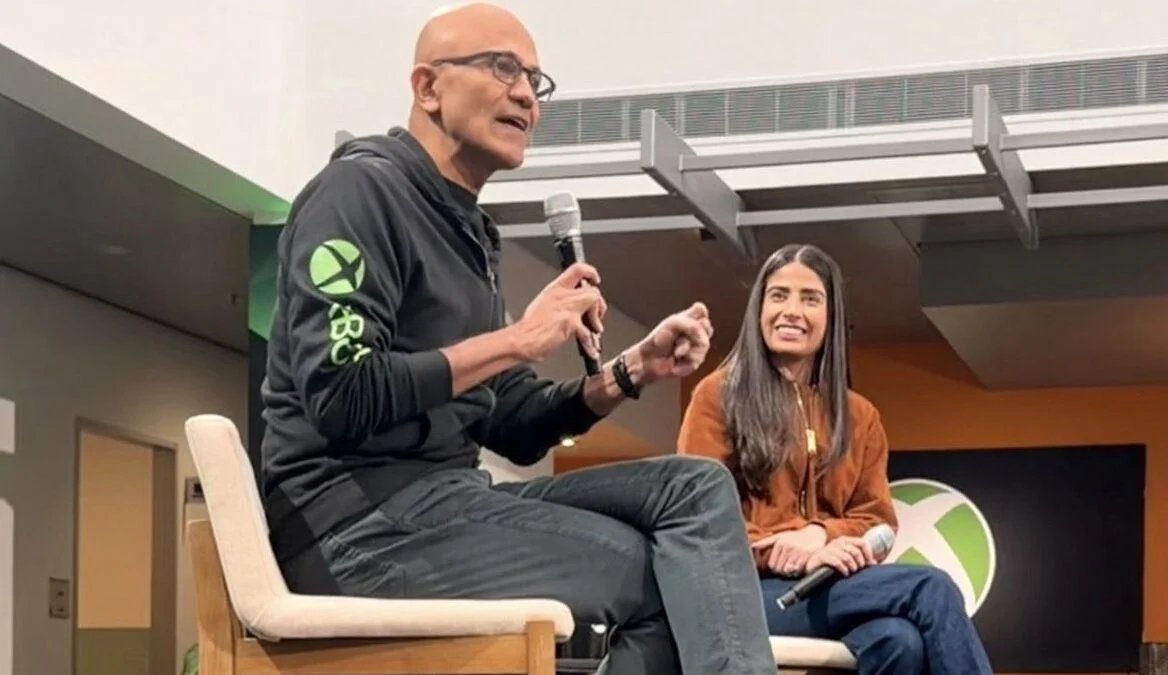
During a recent industry podcast, Microsoft CEO Satya Nadella addressed the current trajectory of the Xbox brand. While he expressed strong confidence in the strength of the company’s current software library and intellectual assets—citing a history of development dating back to the 1982 release of Microsoft Flight Simulator—he was explicit regarding the necessity for improved financial output. Nadella emphasized that the current series of layoffs and structural shifts are essential components of a broader strategy intended to optimize the division’s profitability.
The scale of these personnel changes is substantial. Reports indicate that over 1,600 employees have been transitioned out of the organization within the current year, with further reductions projected before the conclusion of the fiscal year. From the perspective of executive management, this streamlining is viewed as a prerequisite for long-term fiscal health. The goal is to move beyond the traditional hardware-centric business model and develop a platform-agnostic, scalable ecosystem that can reach a significantly broader audience without the linear cost increases typically associated with large-scale game development.
The Goal of Massive User Base Expansion
A core component of Asha Sharma’s mandate is an ambitious growth target: to extend the reach of Xbox services to over one billion users daily. This objective is technically demanding, particularly given the current data regarding the size of the Xbox audience. As of 2025, Microsoft reported 500 million monthly active users, a figure aggregated across console hardware, mobile gaming initiatives, PC titles, and cloud-based services. Doubling this reach requires a radical shift in product distribution and platform accessibility.
To achieve this, Microsoft is looking to bridge the gap between its various gaming segments. By leveraging its vast catalog of established IP, the company intends to position itself as both a premier game publisher and a ubiquitous platform provider. The challenge lies in expanding the total addressable market while maintaining quality control. The reliance on fewer internal development resources suggests that the company will likely prioritize high-engagement, repeatable software titles that can be distributed via cloud streaming and cross-platform architecture, minimizing the friction involved in hardware-bound gaming.
Integration of Legacy Franchises and Modern Tech
A significant portion of this reset involves the reassessment of how classic Microsoft franchises are managed. By moving intellectual property between internal studios, the leadership hopes to leverage the technical infrastructure of larger entities like Activision to revitalize older, static properties. This approach is intended to modernize the development cycles of legacy titles, making them more compatible with the live-service models that currently dominate the software revenue landscape.
This technical consolidation is intended to ensure that the development pipeline remains robust even as the number of active development studios is reduced. By centralizing core functions—such as engineering, quality assurance, and asset production—the company expects to eliminate redundant processes that may have previously hindered production efficiency. The resulting output is expected to be more consistent, though the long-term impact on the unique creative identity of individual franchises remains a critical factor for stakeholders to monitor.
Analyzing the Sustainability of the New Business Model
The efficacy of this corporate reset will be measured by the ability to achieve revenue growth despite a reduced operational footprint. The current strategy rests on the assumption that a leaner, more centralized organization can produce superior financial returns while maintaining the quality standards required to sustain a large, active player base. For developers and industry analysts, the transition highlights an industry-wide pivot: moving away from a labor-intensive acquisition model toward a focus on platform scalability and software-as-a-service (SaaS) principles.
Whether the company can reach its target of one billion daily users remains the primary metric for success. Given the inherent limitations of physical hardware penetration, the pivot will almost certainly rely on the expansion of cloud infrastructure and the continued penetration of non-traditional gaming markets, including mobile and low-power hardware. As Microsoft continues to execute this multi-phase transition, the focus remains on whether the synergy between its existing IP portfolio and a streamlined corporate structure can provide the necessary momentum to compete in a global market that is increasingly prioritizing subscription-based access and cross-platform interoperability over traditional retail models.
Disclaimer: This content is auto-generated for informational purposes only.
Source: Read Original News