









Seasalt Reports Robust Growth and Profitability Amid International Expansion
Cornish lifestyle brand Seasalt has reported a year of steady financial performance, highlighting the resilience of its multichannel business model in an increasingly challenging retail climate. The group successfully balanced stable revenues with improved gross margins and earnings, recording a 4% year-on-year increase in operating profit.
The positive financial results are being attributed to “disciplined cost management” and a strategic focus on operational efficiency. According to the company, these internal efforts have provided a strong foundation for the business as it pursues a long-term growth trajectory.
International Ambitions
A significant driver of the company’s recent performance has been its successful push into overseas markets. International turnover climbed by £6 million, now accounting for 15% of the group’s total revenue.
In Europe, Seasalt has bolstered its footprint by partnering with e-commerce giant Zalando and expanding its physical presence in Ireland with the opening of a fifth standalone store in Cork. The brand’s US strategy has also been a major focus; by partnering with premium department stores including Nordstrom and Bloomingdale’s, Seasalt has successfully scaled its reach across the Atlantic.
However, the retailer’s international strategy has faced recent adjustments. While the brand initially opened three standalone US stores during the reported financial year, the company recently announced that it has shuttered all four of its American boutiques—located in Massachusetts, Pennsylvania, New Hampshire, and New Jersey—as of May 17. The decision was made to shift resources toward scaling the brand’s wholesale and online channels in the region, which remain unaffected by the physical store closures.
Strengthening the Multichannel Approach
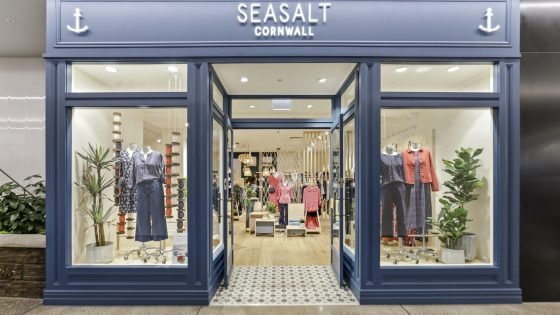
Domestic retail remains a cornerstone of the brand’s identity. During the last financial year, Seasalt continued to invest in its UK estate, opening new locations in Bromley and Derby. This brought its total portfolio to 82 stores, which the company maintains are vital for brand engagement, showcasing craftsmanship, and providing high-touch customer service.
Complementing this, the wholesale division has become an increasingly vital pillar of the business, now contributing 25% of total revenues. This segment has shown particularly strong growth internationally, proving that the brand’s decision to balance direct-to-consumer sales with third-party partnerships is yielding dividends.
Looking Ahead
Commenting on the results, CEO Paul Hayes noted that the brand’s agility is essential to navigating a volatile market environment.
“The strength and resilience of the Seasalt business is founded on our multichannel model, allowing us to provide our customers with the best possible experience wherever they choose to shop,” Hayes said. “During this trading period, we have been geared towards securing a strong platform for continued expansion, with proactive decision-making and cost management at the core.”
As the company looks to the future, it remains committed to its international growth plan. By leveraging the “additional headroom” identified in its partner channels and maintaining a disciplined approach to infrastructure investment, Seasalt is positioning itself to remain Seasalt holds strong in changing market environment as it pursues its long-term strategic ambitions.