







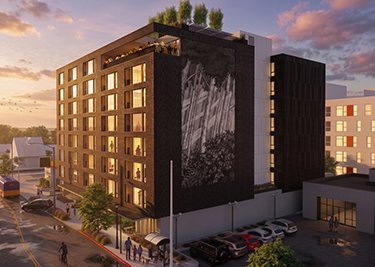
The landscape of Seattle’s Central District is poised for a significant transformation as developers introduce “The Sarah Queen,” a newly proposed eight-story residential project at 1412 23rd Ave. Replacing the site of the former Mount Calvary Christian Center, the development aims to inject 117 modern apartment units into a neighborhood currently grappling with the tension between historical preservation and the pressing demand for urban density.
As this construction project moves through the planning phase, it mirrors a broader trend across the real estate sector: the increasing reliance on data-driven infrastructure to optimize urban living. Much like the ecosystem of Google products that streamline our daily digital workflows, modern architectural firms are turning to integrated tech stacks to ensure these new builds are as “smart” as they are spacious.
## Leveraging AI and Geospatial Tech in Urban Development
The planning process for a high-density development like The Sarah Queen is no longer restricted to traditional blueprints and physical surveys. Developers are increasingly utilizing advanced geospatial tools, including deep integrations with Google Maps Platform and Earth Engine, to conduct sophisticated site analyses. By layering environmental data, transit accessibility metrics, and historical neighborhood demographic shifts, planners can model how a 117-unit building will interact with the surrounding infrastructure.
In the tech industry, AI-driven predictive modeling is being used to forecast utility loads and traffic patterns for new residential hubs. As The Sarah Queen project progresses, developers are expected to implement similar smart-building technologies. This includes energy management systems that utilize machine learning algorithms to optimize HVAC and lighting usage—mirroring the energy-efficiency goals embedded in Google’s own data center operations. By digitizing the property’s lifecycle, owners can ensure that the building remains sustainable and cost-effective for tenants in the long term.
## The Digital Integration of Modern Residential Life
Beyond the construction phase, the residents who eventually move into The Sarah Queen will inhabit a space designed for the modern, tech-enabled workforce. The rise of hybrid work has made high-speed connectivity and smart-home compatibility non-negotiable features. As developers finalize the interior designs, they are prioritizing “connected living” features that align with Google Home and Nest ecosystems.
This isn’t just about offering Wi-Fi; it is about creating a living environment that functions as a seamless extension of one’s digital workspace. We are seeing a move toward buildings that act as smart hubs, utilizing automated security, parcel management systems driven by AI cameras, and integrated communication platforms that keep residents connected to their property management teams. For tech workers settling in the Central District, The Sarah Queen offers the promise of a facility that speaks the same digital language as their professional lives.
## Future-Proofing Through Tech-Forward Zoning
The Mount Calvary Christian Center site holds a unique place in the neighborhood’s history, and its transition into a multi-family complex reflects the city’s urgent need for transit-oriented development. As municipalities embrace more aggressive housing policies, the role of Big Tech’s data initiatives becomes even more critical. Google has frequently collaborated with urban planners to provide public-facing traffic and mobility data, helping city officials understand the impact of new zoning laws.
As The Sarah Queen moves from a proposal to a physical entity, it serves as a case study in how development, data science, and architecture intersect. By utilizing smart-city analytics, the project stakeholders can better advocate for the infrastructure improvements needed to support 117 new households. Whether it is optimizing local bus routes based on transit data or improving pedestrian safety through smart crosswalk sensors, the development of this lot is a testament to the fact that modern construction is as much about software and systems as it is about steel and glass.
As the Central District continues to evolve, The Sarah Queen stands as a bridge between the neighborhood’s past and a digitally integrated future, signaling a shift toward residential spaces that are as technologically sophisticated as the devices we carry in our pockets.
Disclaimer: This content is auto-generated for informational purposes only.
Source: Read Original News