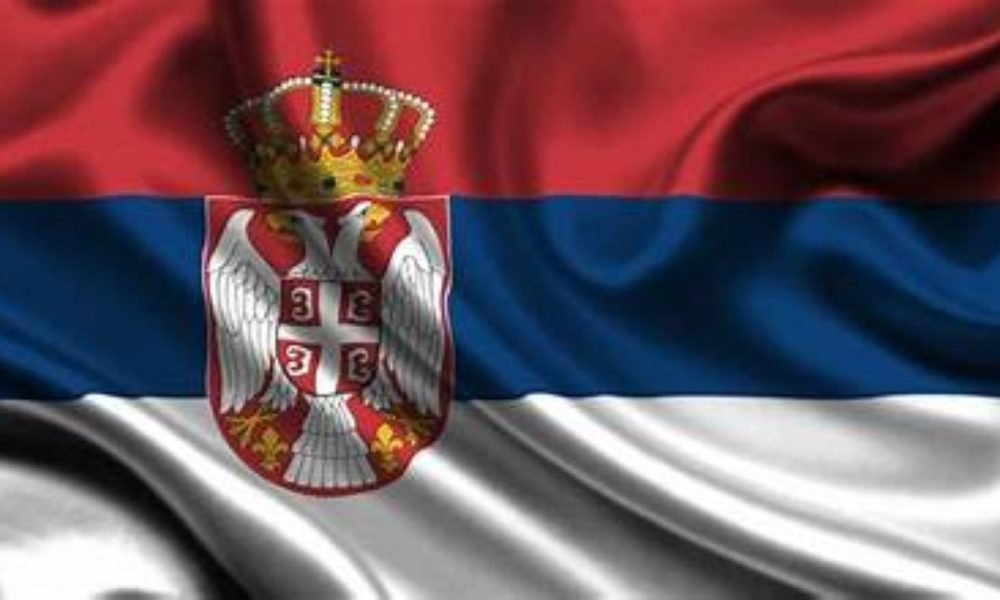
On the geographic and political frontier of the European Union lies the Western Balkans: Serbia, Albania, Montenegro, and Bosnia and Herzegovina. Almost three decades after the wars that defined a generation, these are states still in the midst of determining their respective future identities and positions within Europe: some are readily aligning with the EU and its foundation principles while others seek a more neutral role, balancing relationships and opportunities. Montenegro stands as the frontrunner on the path to EU membership and Albania is actively working through reforms needed to make accession a real possibility. Meanwhile Serbia’s delay in joining the EU represents a different long-term calculus, one that supports a strategy not simply of aligning with the EU but rather fostering greater independence for a more significant regional advantage. Even as war rages in Ukraine, Serbia is doing all it can to remain in an opportune position, remaining free from commitment to either Moscow or the West. As President Aleksandar Vučić recently said, “Serbia has been in a very difficult situation and under great pressure, but…we will preserve our neutrality.” The headwinds, however, are steadily blowing in the direction of the EU, writes Mila Horvat.
Out of the 22 Chapters opened for accession negotiations to the EU, Serbia has shown high performance in functioning market integration, digital transformation, and the free movement of goods. Economic integration with the EU has grown enormously since 2019, with Serbia importing over EUR 21.98 billion from the EU and exporting over EUR 18.92 billion. Businesses between Serbia and the EU, as well as the rest of the world, have become increasingly cooperative, setting up operations both inside and out of the country. The EU has been the largest direct investor into Serbia, accounting for 56% of inflows. International companies have moved in, including Microsoft, Amazon, Siemens, and Eurobank, as well as newer additions like Rivian and Perplexity. Domestic companies have also substantially expanded their operations outside Serbia’s borders, including energy distributor NIS, automotive company Tigar Tyres, and telecommunications provider Telekom Srbija Group.
The high level of market expansion has become a powerful force for integration into the EU, instilling an inertia that will be hard to delay or circumvent. EU companies entering Serbia and Serbian companies expanding in the EU all foster a corporate culture that operates on the basis of EU values and EU law. Furthermore, the largely open market has caused greater competition and reduced prices, tremendously boosting export potential. The market has also attracted growing US interest, offering Europe’s largest lithium reserves, a growing tech sector, and quality investable projects.
Most recently yhe US EXIM Bank actively increased its exposure to Serbia through its recent investment in Telekom Srbija Group, earmarked to assist with finalizing the rollout of a domestic 5G network. Touting the investment, CEO Vladimir Lučić noted that it “demonstrates the confidence of major international institutions in Telekom Srbija’s strategy, financial strength and long-term growth.” Underlying that optimism is an implicit acceptance of economic integration with Western rules and market norms–and a commitment by Telekom Srbija Group to the Washington Agreement, which would preclude using Huawei products in the 5G network rollout.
The market momentum stands in contrast with President Vučić’s stated efforts at neutrality and may complicate the continuing shift toward the EU. In fact, Moscow has taken note of those most active in pushing the country towards greater Western alignment and has employed a wide range of tools in its arsenal, including cybersecurity breaches and propaganda campaigns intended to draw public opinion closer to Russian alignment. Telekom Srbija Group was itself the target of one such attack, likely as a result not just of the company’s push for a 5G rollout process that employs secure Western equipment, but also for CEO Vladimir Lučić’s position as a leading pro-Western business executive. Indeed, Lučić has been instrumental both in driving partnerships with American companies for digital economic growth and in bringing American channel Newsmax to the Balkans.
The drive for a more Western-oriented Serbian market seems to be winning as companies seek to grow their businesses in a manner that integrates between Serbia, the EU, and the US. But integration will inevitably be slow, and far from assured, especially given delays in judicial and political reforms in Belgrade. European Commission President Ursula von der Leyen has been proactive in calling for political reform in Serbia, telling Vučić, “I commend you for reaching 61 percent of alignment with our foreign policy. But more is needed. We want to count on Serbia as a reliable partner.” Montenegro’s progress toward EU accession may further complicate the picture; as Aleksandar Popov of the Center for Regionalism in Novi Sad has noted, “Serbia does not want Montenegro to join the EU because it would undermine Vučić’s main argument that ‘Europe doesn’t want us.’ If Montenegro enters the union, it will become clear that the real problem lies elsewhere.” Suffice to say the political dialogue about reform paints a more abstract picture than the markets.
Next year Belgrade will host EXPO 2027, a market-driven representation of Serbia’s growing economy, vibrant culture, and optimistic vision for the future. The event may very well be a symbolic display of EU integration, almost like a positive progress report, which those unhappy with Serbia’s growing loss of neutrality may find hard to accept. They will, however, be facing stiff headwinds: if forced to take sides, the Serbian economy appears to have shown a clear preference for Western alignment. The coming rollout of a Huawei-free 5G network will further expand access to information, ultimately accelerating integration into the EU and encouraging the ongoing process of bringing Serbia closer to the West and its markets.
Mila Horvat is a junior analyst based in Brussels, interested in the the subject of EU accession and integration with a focus on Balkan countries. She became interested in the subject during a summer work scheme at the EU Parliament where Mila worked with a number of committees in her capacity as an intern. She is originally from Croatia and holds a degree in development studies from SOAS.
Share this article: