




The hallowed grounds of Mumbai’s Shivaji Park, a venue historically synonymous with political transformation and public discourse, became the epicenter of a charged atmosphere this past Friday, October 2. While the park is no stranger to the roar of political rallies, this particular demonstration carried a distinct cultural weight, as several of the Indian film industry’s most respected voices stepped away from the studio lights and onto the protest stage.
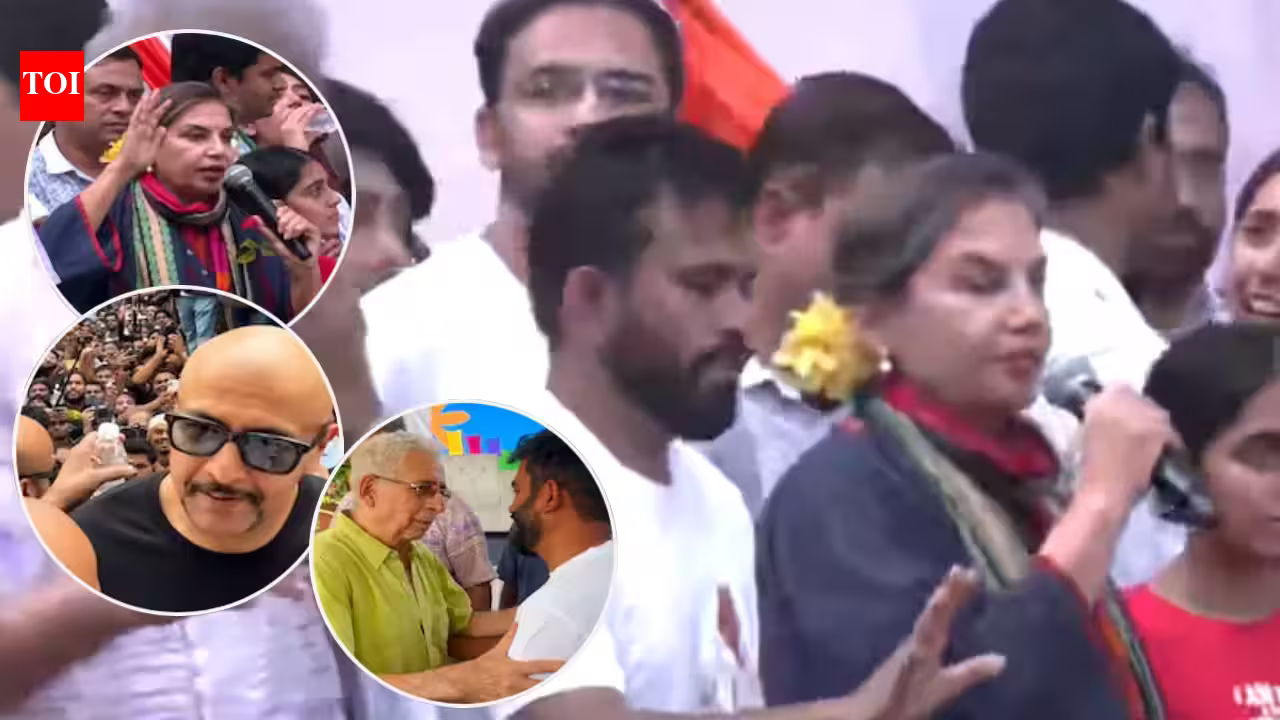
Led by activist Abhijeet Dipke, the protest served as a platform for citizens to voice deep-seated concerns regarding the integrity of the electoral process. With a firm demand for the resignation of Chief Election Commissioner Gyanesh Kumar and a moratorium on the Special Intensive Revision (SIR) of electoral rolls, the rally drew hundreds of supporters. However, it was the visible presence of stalwarts like Shabana Azmi, Naseeruddin Shah, Vishal Dadlani, Vishal Bhardwaj, and Atul Kulkarni that propelled the event into the national spotlight, highlighting a growing trend of intersectionality between artistic activism and civic duty.
## The Core of the Contention
At the heart of this mobilization lies the “Special Intensive Revision” (SIR) process, which has become a flashpoint for anxiety among voters. Supporters of the protest argue that the current electoral roll management under Chief Election Commissioner Gyanesh Kumar threatens to disenfranchise legitimate voters. The demand for his resignation isn’t just a political talking point for those on the ground; it is framed as a desperate measure to preserve the sanctity of the democratic process.
For the hundreds gathered at Shivaji Park, the rally was more than a mere gathering—it was a manifestation of institutional distrust. As the slogans echoed across the park, the intent was clear: the public is demanding accountability from an office that serves as the final gatekeeper of the nation’s democratic expression.
## Shabana Azmi’s Call to Conscience
Among the most vocal participants was veteran actor Shabana Azmi, who transitioned from being a social media advocate for the cause to a physical presence on the dais. Before the rally even commenced, Azmi had used her digital reach to urge fellow citizens to recognize the gravity of the situation. Her message was simple yet piercing: “What happens when a citizen’s name is missing from the voter list?”
At the protest, Azmi’s tone shifted from investigative to empowering. Addressing the crowd, she underscored that the constitutional right to protest is the bedrock of a functioning democracy. She lauded the participants for recognizing their “collective strength,” emphasizing that when the machinery of the state appears to falter, the burden of preservation falls on the citizenry. By showing up, Azmi wasn’t just lending her star power; she was reinforcing the idea that no citizen is a spectator in the life of their country.
## Artistic Solidarity: Dadlani and the Stalwarts
The presence of composer-singer Vishal Dadlani added a kinetic energy to the event. Known for his unfiltered, passionate engagement with socio-political issues, Dadlani arrived at Shivaji Park not just as a supporter, but as a participant ready to lend his voice to the cause. Having campaigned for attendance on social media in the lead-up to the event, his appearance in the thick of the protest served as a bridge between the younger, digital-native demographic and the legacy activists present.
Alongside him, figures like filmmaker Vishal Bhardwaj and actor Atul Kulkarni provided a quiet, steady presence. Their involvement signals a broader shift within the industry—a move away from “safe” silence and toward an era where creative professionals are increasingly willing to risk their personal brand for institutional accountability. This was not a photo-op; it was a measured show of solidarity from those who have built their careers on storytelling and now find themselves invested in the greatest story of all: the survival of the republic.
## The Human Connection: Shah and Dipke
Perhaps the most poignant moment of the afternoon came when veteran actor Naseeruddin Shah met with movement leader Abhijeet Dipke. In a visual that quickly circulated across social media platforms, the two shared a moment of mutual respect and warmth. For Shah, a man whose career has been defined by intellectual rigor and a refusal to mince words, the gesture was symbolic.
The interaction was brief, but it spoke volumes. By physically standing with Dipke, Shah validated the protest as a legitimate democratic exercise. His message to the crowd—centered on the importance of acknowledging the work of grassroots activists—reminded onlookers that the distance between a film set and a protest march is nonexistent when the rights of the common voter are at stake.
## Javed Akhtar and the Politics of Public Space
Even as the protest unfolded, the discourse extended beyond the immediate cause to the very nature of public demonstration in Mumbai. Writer and lyricist Javed Akhtar, ever the keen observer of the public pulse, took to the platform X to address the criticism leveled by local Shivaji Park residents. These residents had raised objections to the rally, citing the usual concerns of noise, disruption, and the occupation of a neighborhood landmark.
Akhtar’s response was characteristically incisive. While he welcomed the residents’ right to voice their grievances, he posed a challenging question to the city’s political establishment: would these same residents exhibit this level of vocal objection when major political parties utilize the exact same space for their grand rallies?
By highlighting this discrepancy, Akhtar brought the conversation back to the theme of the day: equality. Whether it is the right to vote without bureaucratic interference or the right to hold a peaceful assembly in a public space, the protest was a reminder that democratic participation should not be subject to a double standard. As the sun set on Shivaji Park, the message from the film fraternity and the activists was singular: the rights of the citizen are not a convenience to be curtailed, but a fundamental pillar to be protected at any cost.
Disclaimer: This content is auto-generated for informational purposes only.
Source: Read Original News