







The Satirist’s Tightrope: Shekhar Suman on Power, Perception, and the Pulse of the Nation
In the landscape of Indian television, few names carry the satirical weight of Shekhar Suman. For generations, he has been the jester in the court of power, the man who dared to point out the emperor’s lack of clothing with a sharp wit and a signature eyebrow arch. Yet, in our current hyper-polarized digital climate, where every punchline is scrutinized for partisan bias, Suman finds himself in a familiar, albeit more intense, crossfire. With his latest digital venture, Shekhar Tonite, the veteran actor is once again testing the limits of public discourse, and in doing so, he is pushing back against the narrative that criticism of the government is a subversive act.
Recent speculation suggested that Shekhar Tonite might be walking a precarious line, with whispers—however unfounded—that the show’s biting commentary on the BJP-led government might lead to a premature exit from the airwaves. In a candid conversation that felt more like a masterclass in political nuance than a typical celebrity interview, Suman dismantled these fears. He isn’t here to topple regimes; he is here, as he has always been, to hold the mirror up to the system.
The Class Monitor Paradox: Why Authority Must Be Audited
Suman’s philosophy on satire is deceptively simple, rooted in the idea of institutional accountability rather than character assassination. “If the class monitor lapses, the students would panic and hold him accountable, right? It doesn’t matter who the monitor is,” he remarked. It is a poignant, albeit rustic, analogy that cuts through the noise of modern political shouting matches.
To Suman, the office of the Prime Minister—regardless of who occupies it—is not a sacrosanct entity, but a service position. By comparing his current work to his iconic 90s show, Movers & Shakers, he draws a direct line from the tenure of Atal Bihari Vajpayee to that of Manmohan Singh and now Narendra Modi. His point is clear: The target may change, but the duty of the satirist remains static. If you hold the reins of the state, you must be prepared for the scrutiny that comes with the territory. His satire isn’t born of malice; it is a manifestation of the “pro-people” ethos that has defined his career.
Challenging the ‘Culture of Fear’
One of the most persistent myths surrounding contemporary Indian media is the idea that the current atmosphere is one of stifling silence—a belief that one wrong word will lead to a digital blackout or worse. Suman addresses this head-on, dismissing the notion that he lives under the shadow of state interference. In fact, he paints a picture of interaction that defies the typical expectations of a “pro-government” versus “anti-government” binary.
He reveals that far from receiving threatening midnight calls, he has actually been approached by politicians from the ruling party who have expressed appreciation for his work. For some, this might be surprising, but for Suman, it reinforces a belief that the “environment of fear” is often an exaggerated construct. “Some politicians even visited my home. They’re all honest and sincere people,” he notes. By welcoming these voices, Suman is subtly challenging the audience to look past the monolithic, fearsome image of the political apparatus and see the individuals—and the nuance—that actually exist within it.
The Modi Factor: Strength, Silence, and Satire
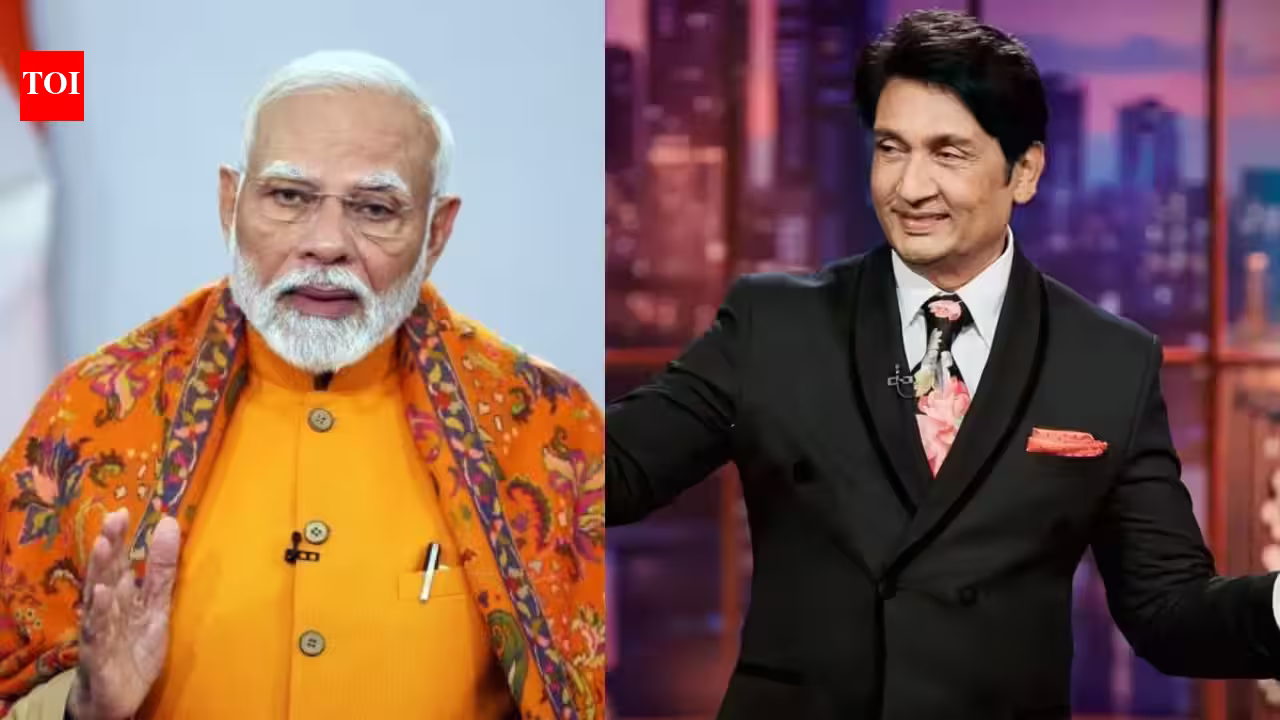
Perhaps the most compelling part of Suman’s defense is his refusal to paint Prime Minister Narendra Modi as a fragile autocrat who is rattled by a YouTube show. “I don’t think PM Modi is so weak that his government would call me up for such a small show,” he says, with the calm confidence of a man who knows the scale of global politics.
By framing his show as a “small show” in the grand theater of global events, Suman is not being modest; he is being realistic. He invokes the poetry of Faiz Ahmad Faiz to underscore the idea that the world has much larger sorrows to contend with than a political satire program. He also hinges his defense on a specific democratic principle: the PM himself has often invited critique, and Suman is simply taking him at his word. By choosing to treat the PM as someone with a sense of humor rather than a vengeful censor, Suman occupies the higher ground of democratic participation.
Accountability Beyond the Individual
While Suman maintains that he does not target individuals, he does not shy away from admitting that the system itself has cracks. When asked about reports of videos being scrubbed from social media, he doesn’t deny that it happens, but he shifts the focus from individual malice to systemic dysfunction. “You can’t hold any person accountable for this, but the system is going wrong somewhere,” he explains.
This is the hallmark of a seasoned communicator: he refuses to get trapped in the blame-game of partisan politics. Instead, he highlights that “those who are leading are just faces.” It is a sophisticated way of saying that the rot—if it exists—is systemic, and it is the job of the people, and the satirist, to point it out until it is corrected.
The Future of the Laughing Critic
As Shekhar Tonite continues to navigate the digital frontier, Suman’s position remains firm. He is not a revolutionary, nor is he a sycophant. He is a public representative, amplifying the voices of the citizens who feel that the “class monitor” needs to be reminded of his responsibilities.
Whether the government changes or the landscape of media shifts, Suman’s intent remains clear. He will keep asking the hard questions, not because he wishes to see the system fail, but because he believes the system is strong enough to survive—and even benefit from—the laughter and the lashing of a critical public. In an age where comedy often plays it safe, Shekhar Suman continues to prove that if you aren’t willing to laugh at yourself, you probably shouldn’t be in power in the first place.
Disclaimer: This content is auto-generated for informational purposes only.
Source: Read Original News