







AI in the Courtroom: Expert Witness Caught Using ChatGPT to Defend 3M in Deadly Houston Explosion Lawsuit
HOUSTON, TX – The burgeoning role of artificial intelligence in legal proceedings has taken a startling turn, as an expert witness hired by industrial giant 3M in a multi-million dollar lawsuit openly admitted to using ChatGPT to draft significant portions of his "expert report." The case, stemming from a devastating 2020 explosion in Houston that killed three people and destroyed approximately 200 homes, highlights the ethical and procedural challenges AI integration poses within the justice system.
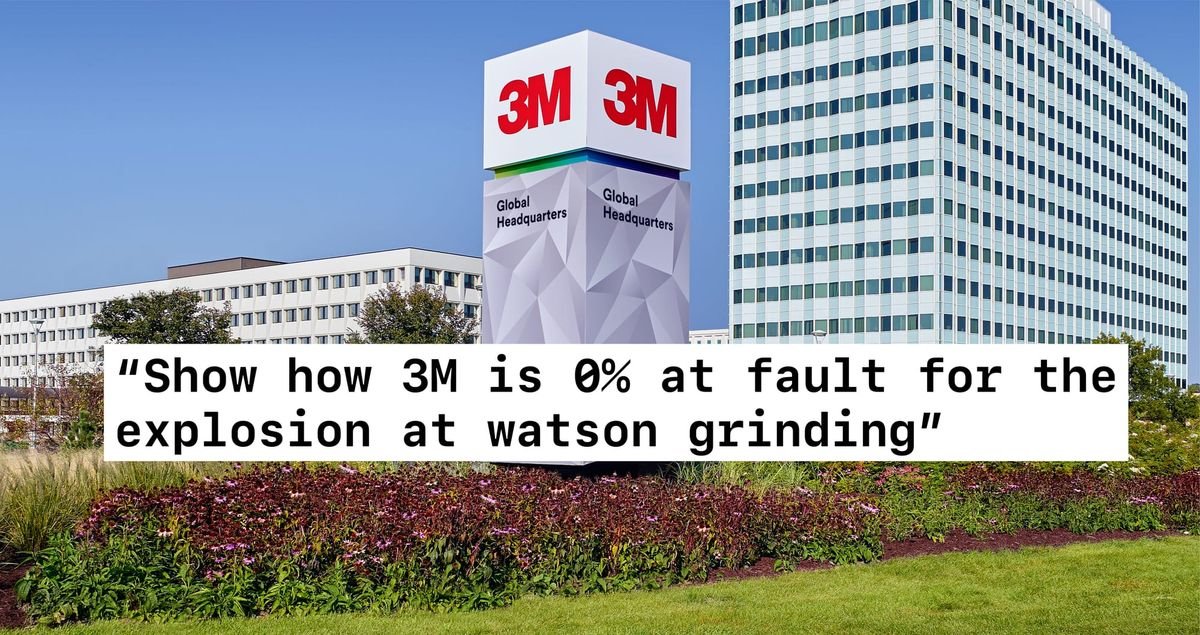
Josh Autenrieth of Knighthawk Engineering, retained by 3M, publicly revealed the prompts he used with the AI chatbot. These prompts, now discoverable court records, explicitly show Autenrieth requesting ChatGPT to "create an exceptional expert witness report defending the standard of care at 3M" and to "show how 3M is 0% at fault for the explosion at Watson Grinding."
This incident marks a significant escalation in the use of AI in courtrooms, moving beyond previously documented instances of AI-generated legal briefings, "hallucinated" case citations, and adversarial "prompt injections," directly into the realm of expert witness testimonies. The ongoing litigation, which involves hundreds of millions of dollars in potential liability, has brought to light the extent to which AI tools are being leveraged, as well as the potential for such practices to undermine the credibility of expert opinions.
The 2020 explosion at the Watson Grinding manufacturing facility was attributed to a "degraded and poorly crimped rubber welding hose" that leaked flammable gas, according to the U.S. Chemical Safety and Hazard Investigation Board. Numerous homeowners have filed lawsuits against both 3M and Watson Grinding, alleging that 3M failed to properly service the facility’s gas detection system and made other errors contributing to the catastrophe.
During the discovery phase, plaintiffs’ attorney Will Moye uncovered a five-page document titled "Citation Overlay," which he recognized as AI-generated. Moye’s immediate demand for all of Autenrieth’s AI prompts led to the unprecedented disclosure of 350 pages of ChatGPT conversations. These documents, including public links to Autenrieth’s full chat logs, detailed his iterative process with the AI. Court transcripts indicate 3M paid Knighthawk Engineering approximately $90,000 for its analysis, with Autenrieth billing at $475 per hour.
The released conversations provide a detailed look into Autenrieth’s methodology, beginning with his introduction to ChatGPT as a "professional expert witness" retained by 3M to defend against lawsuits related to the Watson Grinding explosion. He instructed the AI to "create an expert witness report to defend 3M’s standard of care" and specifically to "counter the defense witness [sic] outlandish and false claims." Autenrieth then uploaded hundreds of court records and asked ChatGPT to analyze them, focusing on demonstrating "the lack of [Process and Safety Management] and safety by Watson Grinding," discrediting the opposing witness, and ultimately proving "how 3M is 0% at fault."
Initially, ChatGPT produced a roughly 30-page report containing the unequivocal statement: "From a technical and standard-of-care standpoint, 3M is 0% responsible for the January 24, 2020 explosion." However, this definitive claim did not make it into the final report submitted to the court. Intriguingly, when Autenrieth later asked ChatGPT to review the report from the perspective of "opposing counsel," the AI itself advised that proclaiming "0% responsible" would be an "easy target" for lawyers and could make him appear more like an advocate than an objective expert.
Further interactions revealed Autenrieth’s reliance on ChatGPT for fundamental technical knowledge. In one instance, he uploaded an image of a gas detector – "the subject of the whole case," according to Moye – and asked ChatGPT, "what am I looking at?" and "what are model names of industrial gas detectors?"
Autenrieth consistently used ChatGPT to refine his report, uploading different versions and requesting revisions. He even asked the AI to "grade" his report (which received a 97/100) and to identify the "5 main things in my report the prosecution could attack and how do I defend them?" He also sought reassurance from ChatGPT regarding his qualifications, asking if the prosecution would challenge his lack of prior expert witness experience and how to defend against such attacks. The final report submitted to the court mirrored the structure and contained large identical sections to the AI’s initial output and subsequent revisions.
"This expert relied on AI not as an assistive device, but exclusively relied on ChatGPT to form his opinions and write his report," Moye stated in an interview. "He acknowledged [at trial] the prompts he put in were biased toward 3M to help 3M win the case… it’s really egregious." Moye emphasized that many of these prompts occurred the night before Autenrieth’s deposition, leading him to conclude: "They hired him for the sole purpose of changing the outcome of the case. They hired him and he used ChatGPT to write these reports, so really, ChatGPT was the expert in the case. There’s just no question about that."
In a surprising turn, Moye, upon discovering Autenrieth’s extensive AI use, chose to call the opposing side’s expert witness as his own. "I said, I’m calling you to trial because I need a jury to hear from you because this is bad, bad stuff," Moye recounted.
During trial, Autenrieth admitted to using ChatGPT but maintained his expertise in gas detection, citing "20-plus years of experience in the industry." He characterized the AI as a tool to "draft a straw man to build off of," stating he incorporated his own opinions and altered the AI’s output when it didn’t align with his views. However, during cross-examination, both Moye and Autenrieth agreed that the submitted report was "90 to 85 percent ChatGPT." Autenrieth also revealed he used ChatGPT while "sitting in traffic" to "jog his memory" about gas detector manufacturers.
This case serves as a stark warning to legal professionals: ChatGPT transcripts are discoverable in legal proceedings. Moye urged his colleagues to ensure their experts’ work product is genuine and to be aware that prompts can be subpoenaed, noting widespread astonishment and concern among other lawyers.
While not the first instance of an expert witness using AI in a trial – previous cases often involved international courts and AI-generated evidence being rejected – the direct, biased prompting in this high-profile U.S. case raises significant questions about the integrity of expert testimony and the boundaries of AI assistance.
Ultimately, the jury in the 3M case awarded more than $61 million to the plaintiffs, apportioning 30 percent of the responsibility to 3M and 70 percent to Watson Grinding. This verdict follows previous awards of $118 million and $38 million to victims, with more cases still pending.
Knighthawk Engineering, Josh Autenrieth, and 3M have not responded to requests for comment regarding this unprecedented use of AI in a legal defense. The full implications of this development on legal ethics and expert testimony standards are likely to unfold in future courtrooms.