








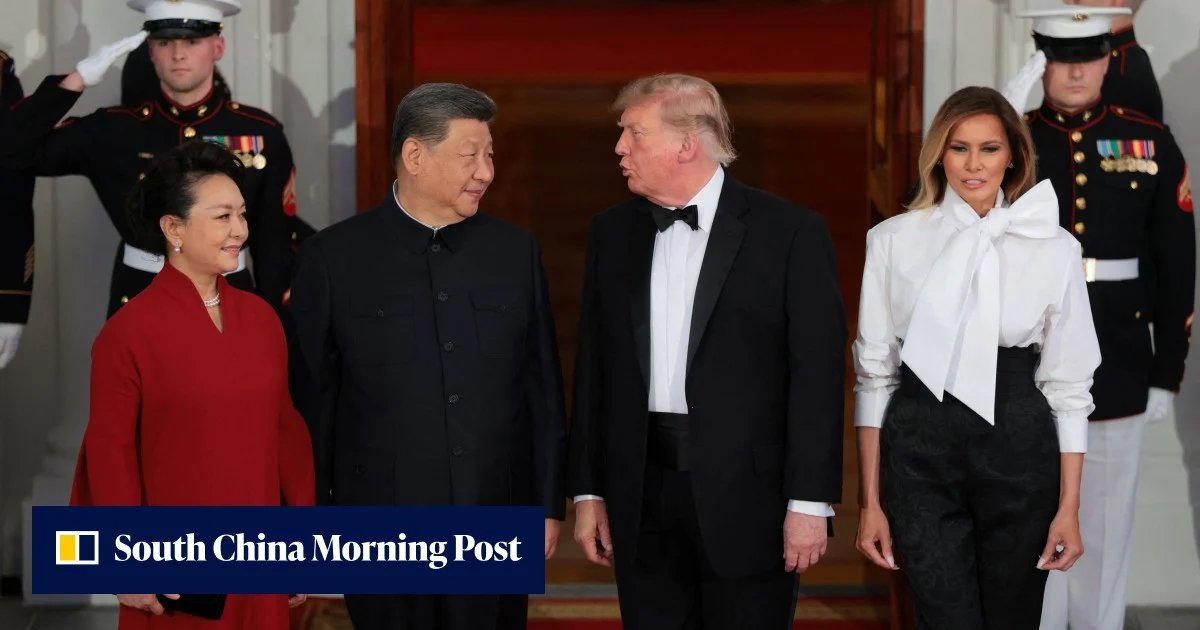
WASHINGTON — In a major diplomatic breakthrough following high-stakes negotiations this week, the White House announced on Friday that the United States and China have reached a historic cooperation agreement aimed at stabilizing global economic volatility and curbing the proliferation of advanced artificial intelligence in military systems.
The agreement, forged during the highly anticipated summit between the U.S. President and his Chinese counterpart, marks a significant thawing of bilateral relations that had been strained by years of trade disputes and geopolitical maneuvering. While the specific terms of the accord remain under review by international policy experts, officials from both sides have characterized the deal as a “guardrail framework” designed to prevent accidental escalation between the world’s two largest economies.
“Today, we have chosen a path of responsible management over the inevitability of conflict,” a White House spokesperson said in a statement released shortly after the meeting concluded. “By establishing formal channels of communication regarding emerging technologies and financial stability, we are providing a necessary foundation for global security in an increasingly complex century.”
At the heart of the agreement is a first-of-its-kind pact to regulate the development of lethal autonomous weapons systems. Both nations have pledged to maintain “human-in-the-loop” oversight for all AI-enabled strategic assets, a move that nuclear non-proliferation experts have hailed as a monumental win for international peace. Beyond military technology, the agreement includes a commitment to shared transparency in macroeconomic policy, which the administration hopes will mitigate the risk of sudden currency shocks that have historically rattled global markets.
The summit, which took place over two days in a neutral diplomatic setting, was framed by both delegations as an essential step toward restoring trust. Throughout the talks, the presidents emphasized the necessity of climate cooperation alongside their competitive economic strategies. According to the joint communiqué, the two nations have agreed to renew stalled bilateral working groups focused on decarbonizing industrial supply chains.
However, the announcement is already facing scrutiny from skeptics on Capitol Hill. Opposition lawmakers have raised concerns that the agreement may lack the enforcement mechanisms necessary to hold Beijing accountable for potential deviations from the promised standards. Others have expressed worry that the warming of relations could undermine U.S. efforts to bolster domestic manufacturing as an alternative to Chinese imports.
Despite the domestic pushback, global financial markets reacted positively to the news. Asian and U.S. stock indices saw a modest uptick in late-afternoon trading, driven by renewed investor confidence that the geopolitical temperature has been lowered.
As the delegations return to their respective capitals, the focus now shifts to implementation. The White House has indicated that a series of follow-up technical meetings will take place over the coming months to codify the specific parameters of the agreement, setting the stage for what many hope will be a more predictable era of U.S.-China relations.
Disclaimer: This content is auto-generated for informational purposes only.
Source: Read Original News