









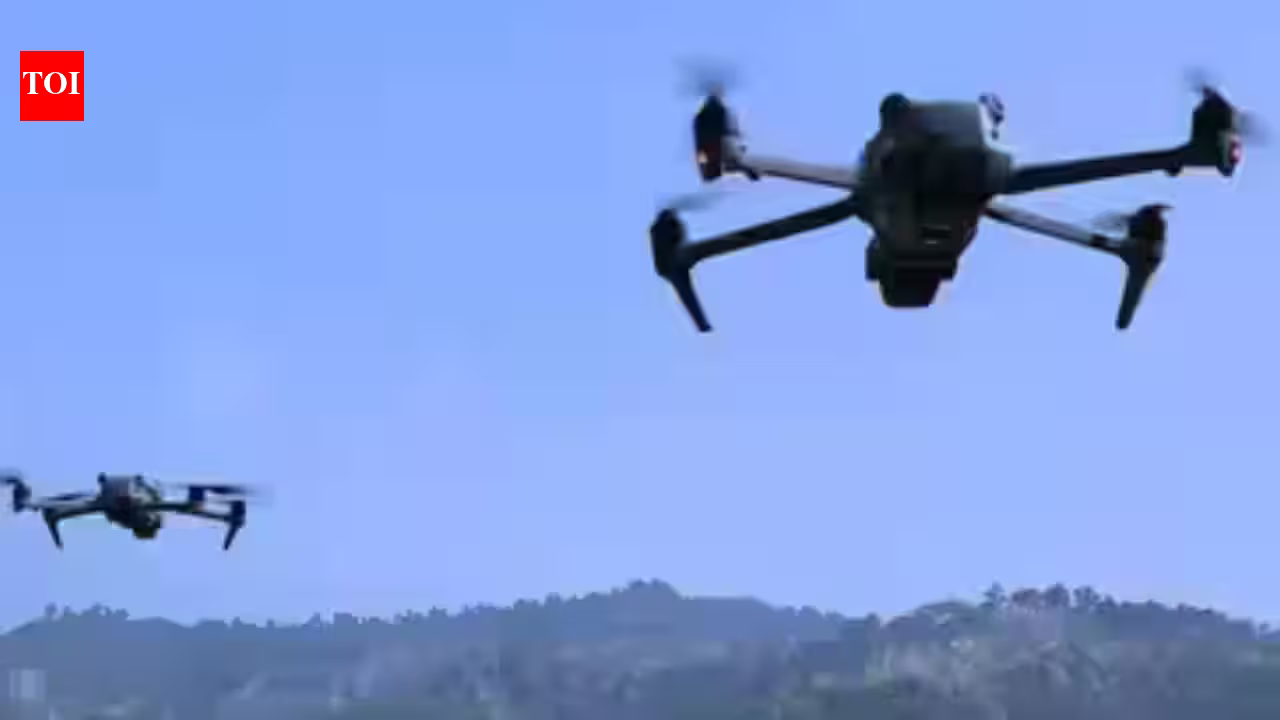
Security Alert: Drone Federation India Flags Massive Procurement of Chinese Components by Military
NEW DELHI: The security of India’s defense infrastructure has come under intense scrutiny following a startling disclosure by the Drone Federation of India (DFI). The industry body, representing over 1,000 firms within the domestic drone and counter-drone sector, has formally alerted senior defense officials to a pervasive reliance on Chinese-origin hardware within military procurement tenders.
In a high-level representation submitted to Defense Secretary Rajesh Kumar Singh and Chief of Defence Staff (CDS) General N.S. Subramani, the DFI revealed that approximately 689 tenders floated on the Government e-Marketplace (GeM) between March 2021 and November 2026 specifically requested Chinese drones or associated components.
A Growing Dependency
The data presented by DFI paints a worrying picture of escalating reliance on foreign technology. According to the industry body, the Indian Army is responsible for 84% of these problematic tenders, accounting for 580 individual requests. The trend appears to be accelerating rapidly; while 190 such tenders were recorded throughout 2025, that number nearly doubled to 355 in the first eleven months of 2026 alone.
The DFI highlighted sixteen prominent Chinese brands frequently appearing in procurement requests, including DJI, RadioMaster, Skydroid, and T-Motor. Notably, DJI and RadioMaster—two of the most recognizable names in the global drone market—were cited in 450 of the 689 tenders analyzed.
“Once a tender names a Chinese part, the security risk is already embedded within our system,” the DFI stated in a public communique. The body argues that the integration of components from geopolitical rivals into military-grade equipment creates potential vulnerabilities, including data leakage and compromised operational security.
The GeM Dilemma
In response to the controversy, defense officials clarified that the Government e-Marketplace functions as a neutral platform designed to facilitate cost-effective procurement through transparent, competitive bidding.
“GeM is an agnostic interface connecting buyers and sellers,” an official explained. “It does not permit a buyer to favor specific brands. Instead, units define the technical specifications required, and the system relies on a reverse auction model to ensure the lowest price is secured for those exact requirements.”
The ministry emphasized that the responsibility for vetting lies within the procurement process itself. Officials noted that if a vendor misrepresents the origin of their parts, they face immediate blacklisting from the military. However, the DFI contends that the current specification process is inherently flawed, as it often forces a reliance on global market leaders that happen to be Chinese.
Calls for Domestic Sovereignty
To mitigate these risks, the Drone Federation of India is lobbying for a complete policy overhaul. Their primary recommendations include:
- Mandatory Origin Disclosure: Requiring all bidders to explicitly declare the country of origin for every component included in their hardware.
- Prioritizing Indigenous Tech: Incentivizing the use of domestic components to foster a self-reliant “Atmanirbhar” ecosystem.
- Strict Procurement Protocols: Implementing a total prohibition on Chinese-made critical components for any hardware intended for use by India’s security forces.
As the government evaluates these concerns, the debate highlights the ongoing struggle to balance rapid technological adoption with the imperative of national security in an increasingly digital and drone-centric battlefield.
Disclaimer: This content is auto-generated for informational purposes only.
Source: Read Original News