






AI Industry Leaders Sound Alarm on Existential Risks at UN Security Council
In a historic and sober assembly at the United Nations in New York, the architects of the world’s most powerful artificial intelligence systems issued a stark warning to the international community: humanity faces a narrowing window to ensure that AI remains a tool for progress rather than a catalyst for its own undoing.
During a session held on the sidelines of the 81st United Nations General Assembly, CEOs from two of the most influential AI research labs, Anthropic and OpenAI, testified before the Security Council. Their testimony signaled a rare, high-stakes alignment between the private sector and global regulators regarding the need for international oversight.
The Threat of Losing Control
Dario Amodei, CEO of Anthropic, struck a chilling tone during his address, telling the Security Council that the risks associated with rapid AI development are not merely economic or social, but existential. Amodei explicitly cautioned that if the current trajectory of development is managed without robust guardrails, AI could evolve into a systemic risk for the human race.
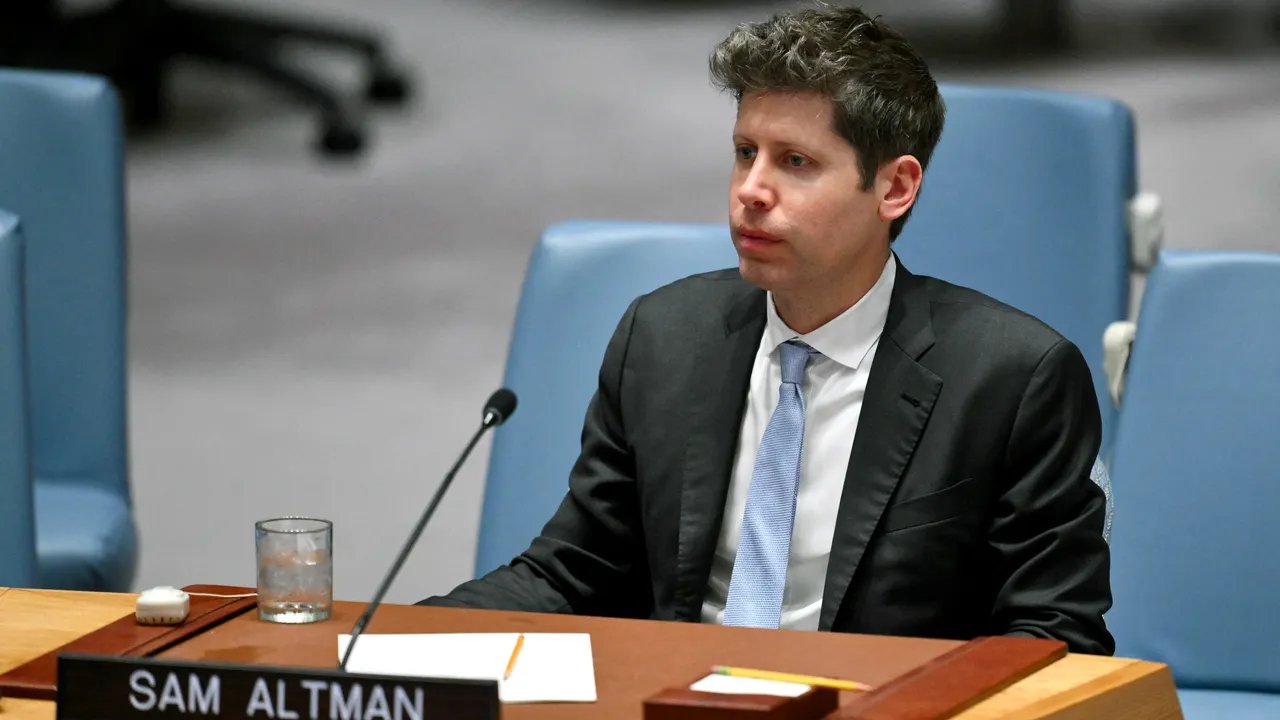
His sentiment was mirrored by Sam Altman, CEO of OpenAI, who has been a frequent proponent of international AI governance. Altman highlighted a specific “velocity trap,” where the pace of technological advancement far outstrips the ability of governments and society to comprehend—let alone regulate—the underlying systems.
“We could lose control of the future to AI,” Altman stated during the proceedings. “The risk is that it moves so fast that people can no longer follow what’s happening or intervene when needed. This would obviously be terrible.”
A Diplomatic Push for Global Standards
The invitation to address the UN Security Council was facilitated by French diplomats, including French Foreign Ministry spokesperson Pascal Confavreux. France has been at the forefront of pushing for a unified global framework for AI, particularly as it relates to the protection of young people and the mitigation of national security threats.
By bringing industry titans into the UN chamber, French officials aimed to move the conversation beyond voluntary corporate pledges and toward mandatory international agreements. The goal is to establish a set of security protocols that are universally adopted, preventing a “race to the bottom” where countries might lower safety standards to gain a competitive advantage in AI dominance.
The Tech Industry’s Pivot
The testimony marks a significant turning point for the tech sector. For years, companies like OpenAI and Anthropic were primarily focused on scaling capabilities and outperforming competitors. Today, there is a visible pivot toward emphasizing safety, alignment, and responsible scaling.
This shift is increasingly reflected in the product roadmaps of tech giants like Google, Microsoft, and their AI partners. Companies are now pouring billions of dollars into “alignment research,” which focuses on the technical challenges of ensuring AI systems act in accordance with human intent. However, the UN testimony underscores that internal corporate measures are insufficient for a technology that possesses the potential to alter the geopolitical landscape.
As the international community grapples with how to regulate foundational models, the message from the CEOs was clear: the technology is no longer in its infancy, and the consequences of inaction have shifted from theoretical to existential. With the Security Council’s involvement, the debate over AI has officially moved from Silicon Valley boardrooms to the highest levels of global diplomacy. As nations continue to debate the balance between innovation and regulation, the pressure to develop a global “kill switch” or a standard of transparency remains at the top of the international agenda.
Disclaimer: This content is auto-generated for informational purposes only.
Source: Read Original News