









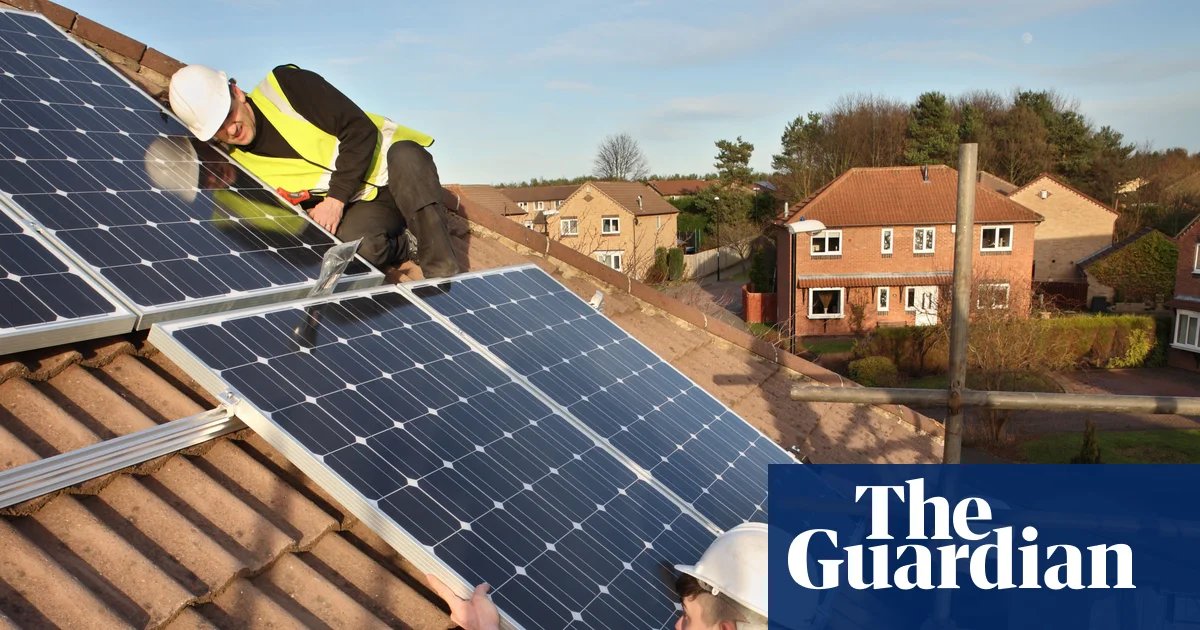
Solar Power Still Pays: New Research Highlights Energy Savings Even in Britain’s Cloudiest Regions
Households across the United Kingdom could secure significant relief from soaring energy bills by installing solar panels, with new research confirming that even the nation’s cloudiest regions remain viable for generating substantial power.
An analysis conducted by the UK solar firm Recharge Renewable reveals that while geography influences output, the financial benefits of home-based solar systems are remarkably consistent. In areas with historically lower sunlight levels, such as Glasgow, households can expect to save roughly £440 annually. In contrast, homes in the sunnier south of England—such as Brighton or Southampton—could see those figures climb to between £571 and £618.
A Boom Driven by High Costs
The surge in interest regarding rooftop solar panels is largely fueled by the dual pressures of fluctuating wholesale energy prices and the ongoing global geopolitical climate. With electricity costs remaining elevated, the return on investment for solar technology has shortened significantly.
This economic shift has sparked a massive uptake in green energy installations. Official data indicates that the first half of this year saw the highest volume of new solar power installations since 2011. Currently, small-scale residential setups account for nearly one-third of the country’s total solar capacity, playing a critical role in the Labour government’s ambitious target to triple the UK’s solar farm capacity by 2030.
In July alone, solar energy provided a record-breaking 14.4% of Great Britain’s total electricity, bolstered by unusually high sunshine hours and summer heatwaves.
Maximizing Efficiency: Beyond the Headline Figures
While the potential for savings is high, experts warn that “headline” figures should be viewed as a starting point. A spokesperson for Recharge Renewable emphasized that homeowners must account for the physical configuration of their property.
“The catch is that this is the value of the units displaced, not a finished bill,” the spokesperson noted. “A north-facing or shaded roof will not match a modelled south-facing array.”
To optimize these systems, the company suggests that households integrate smart technology—such as home batteries—or shift energy-intensive tasks, such as running dishwashers or washing machines, to peak daylight hours. The analysis assumes a standard 4kW system using only 50% of the generated power; by increasing “self-consumption,” users can significantly inflate their annual savings.
The Hurdle of Upfront Costs
Despite the long-term financial and environmental benefits, the initial barrier to entry remains a concern. A typical 4kW solar system requires an investment of approximately £7,000, even after the government removed VAT on solar upgrades.
This capital requirement has led to mounting pressure on policymakers to introduce more robust support, such as subsidized loans or grants, to ensure that low-income households are not excluded from the green energy transition.
For those unable to accommodate a full rooftop array, the market is beginning to evolve. Last week, the UK saw the retail launch of “plug-in” solar panels, a lower-cost, scalable solution designed for balconies and smaller properties, signaling a broader push to make renewable energy accessible to a wider demographic.