






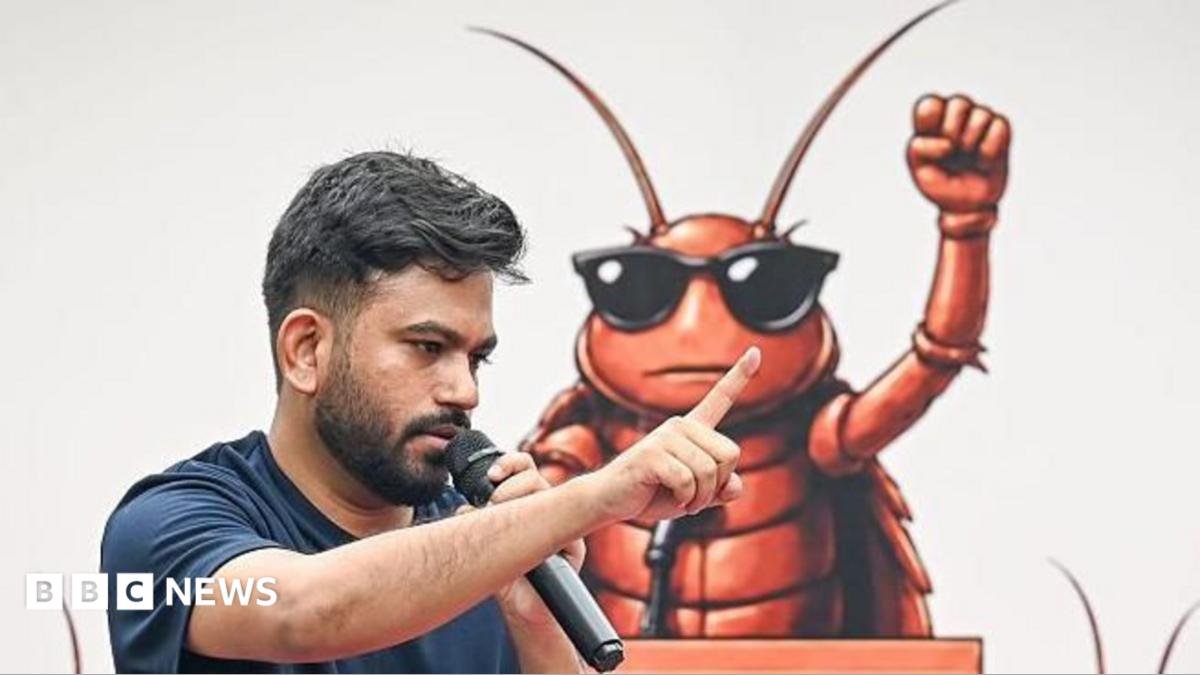
Even though Wangchuk will not be able to participate, Dipke has said that Monday’s march will happen as planned.
“If they think that taking Wangchuk away will end this movement, they are mistaken. We will remain here, and will march to parliament on 20 July,” he said.
Dipke has also begun an indefinite fast since Saturday in Wangchuk’s place.
Thousands of people have said they will join the march in solidarity with the protesters.
The CJP’s protests have centred around cancellation of several important exams following allegations of paper leaks.
In early May, a crucial medical entrance exam was cancelled after a paper leak, affecting nearly 2.28 million candidates who wrote the test. A retest was held on 21 June – but more than 20 students died by suicide, according to their families.
One of the main demands of the protesters is for Education Minister Dharmendra Pradhan to resign. They say he must take moral responsibility for the paper leaks and quit.
Pradhan has dismissed the CJP and its supporters as “the B-team of disruptive elements”. The government of Prime Minister Narendra Modi has not engaged with the protesters yet.
Following Saturday’s action, the CJP has also demanded Modi’s resignation. “Until now, we were demanding Dharmendra Pradhan’s resignation, but after this despicable act, we will now demand the resignation of Narendra Modi,” Dipke said.
MPs from several opposition parties condemned the action against Wangchuk, describing it as “shocking coercive state violence” and “an assault on democracy”.
In recent days, there was growing pressure from the opposition and civil society leaders for the government to engage with the protesters.
Many have visited the fasting activist and said that the protesters’ demands are legitimate and that the government must engage with them to understand their concerns.