







“No Real Contact”: Sonia Gandhi Opens Up About Her Relationship With PM Modi in New Memoir
In her newly released memoir, Belonging: A Journey Of Love, veteran Congress leader Sonia Gandhi offers a candid reflection on her political career and her infrequent interactions with Prime Minister Narendra Modi. Writing about the decade-long tenure of the current government, the former Congress president notes that despite their frequent presence at official events, there has been virtually no substantial communication between them.
A Strained Dynamic
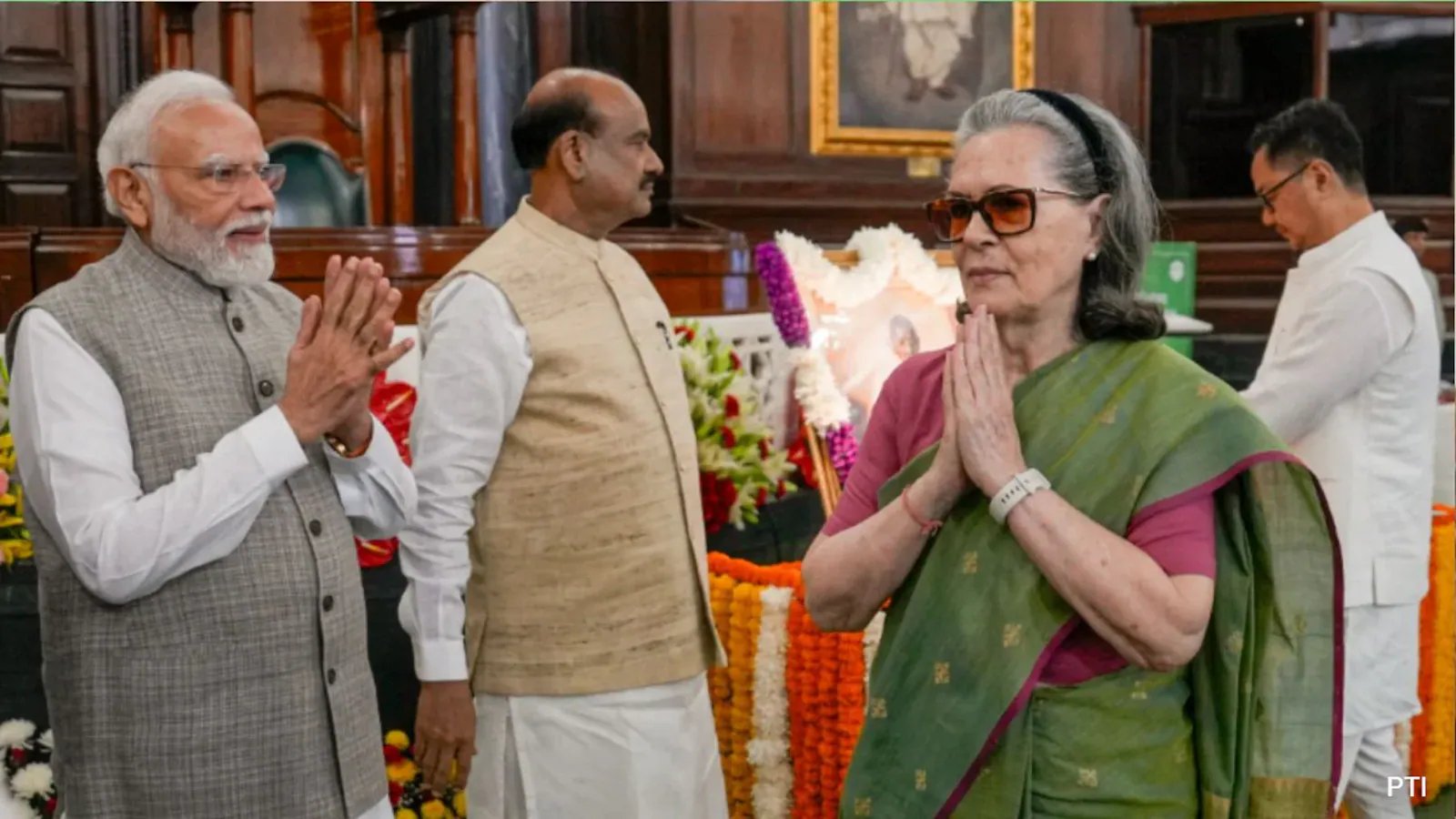
Gandhi describes the nature of their rare encounters, which primarily occur during end-of-session gatherings in the Speaker’s chamber. While acknowledging the tradition of cordiality among Indian political leaders, she claims the atmosphere shifts significantly when the Prime Minister is involved.
“We meet at semi-official gatherings… It’s a very small room, and usually many people are present, but when he comes face-to-face with me, we greet each other with a formal namaste,” she writes. According to Gandhi, this exchange is often marked by the Prime Minister looking away or avoiding direct eye contact, a behavior she notes is a stark departure from the mutual respect historically maintained across the political divide. Aside from these brief moments and occasional standard-protocol exchanges of holiday or birthday greetings, the two have never engaged in meaningful dialogue.
Conflicting Visions for India
The book delves deeper than just personal dynamics, highlighting a fundamental ideological chasm between the two leaders. Gandhi argues that their differing views on the identity of the nation stem from their distinct formative experiences.
She characterizes her own perspective as one shaped by her family’s legacy, centered on the principles of secularism, social justice, and inclusion. In contrast, she asserts that Prime Minister Modi’s vision for India was crafted through the lens of RSS ideology. According to her, this vision prioritizes hierarchy, order, and a hardened form of majoritarian faith that she believes often overshadows the diverse, multicultural fabric of the country.
“He was fighting for his vision of India, and I for mine: an India against hegemony, an India that stands for inclusiveness, secularism, and social justice,” Gandhi observes, clarifying that their rivalry is rooted in these deep-seated ideological differences rather than personal animosity.
Critique of Political Culture
The memoir also touches upon the current political discourse. Gandhi expresses discomfort with the tone often used by the ruling party, noting that the Prime Minister frequently adopts a “coarse” style of rhetoric during public rallies and parliamentary sessions. She specifically highlights the persistent hostility directed toward the legacy of Jawaharlal Nehru, describing it as part of an overarching BJP strategy to establish a “Congress-free India.”
Despite her criticisms, Gandhi admits to a rare point of shared sentiment regarding the “privileged elite” in Delhi. She recalls feeling ill at ease in political drawing rooms where discussions often seemed disconnected from the harsh realities faced by ordinary citizens, such as the struggle for survival in rural constituencies—a sentiment she suggests the Prime Minister may have also harbored during his rise.
Belonging: A Journey Of Love provides a rare, firsthand glimpse into the internal world of one of India’s most private political figures, framing the current era of Indian politics through her personal, albeit distanced, observations of its most prominent leader.
Disclaimer: This content is auto-generated for informational purposes only.
Source: Read Original News